Vrindawan Coaching Center

Carbonate and Bicarbonate

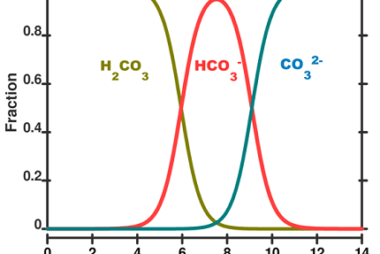
Carbonate (CO32-) and bicarbonate (HCO3-) are both ions that contain carbon and oxygen atoms. The main difference between the two is the number of hydrogen atoms they contain. Bicarbonate (HCO3-) has one hydrogen ion (H+) attached to the carbonate ion (CO32-). Bicarbonate is an important component of the pH buffering system in the body, which…
Halides (excluding fluoride)

Halides are compounds that contain halogens, which are elements in group 17 of the periodic table. The halogens include fluorine, chlorine, bromine, iodine, and astatine. Excluding fluoride, halides refer to compounds that contain any of these other halogens. Some examples of halides excluding fluoride include: These halides can be found in a variety of compounds,…

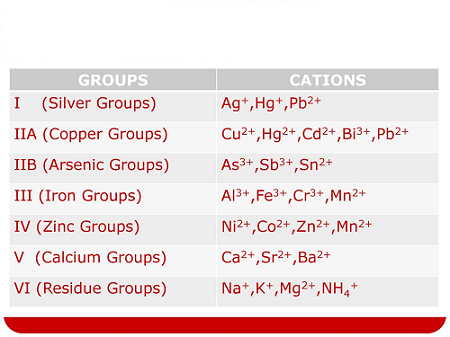
Groups I to V (only Ag+ , Hg2+, Cu2+, Pb2+, Fe3+, Cr3+, Al3+, Ca2+, Ba2+, Zn2+, Mn2+ and Mg2+)

The groups I to V you are referring to are likely the first five groups of the periodic table. These groups contain a variety of cations with different properties and reactivities. Group I cations include silver (Ag+), which is often used in jewelry and silverware, and mercury (Hg2+), which is a toxic heavy metal. Both…

Refining

Refining generally refers to the process of making something more pure or precise. It can refer to a variety of different contexts, including refining metals, refining oil, refining language or communication, refining ideas or concepts, refining processes or systems, and so on. In the context of refining metals, it typically involves the process of removing…

Cyanide process (silver and gold)

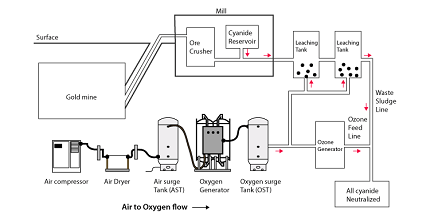
The cyanide process is a hydrometallurgical technique used to extract gold and silver from low-grade ores by converting them into soluble cyanide complexes. This process was first developed in the late 19th century and has since become the most commonly used method for extracting gold and silver from ores. The process involves the following steps:…

Thermodynamic (iron, copper, zinc)

Thermodynamics is the study of the relationships between energy, work, and heat in a system. Iron, copper, and zinc are all metallic elements with different thermodynamic properties. Iron has a high melting point of 1538°C and a boiling point of 2862°C. It has a specific heat capacity of 0.449 J/g·K and a heat of fusion…

Extraction of crude metal from concentrated ores

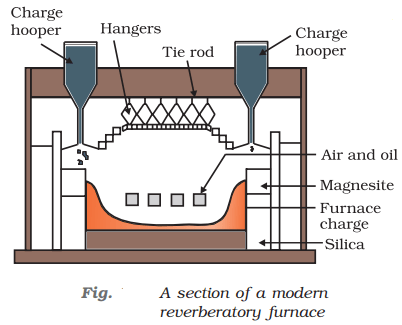
The extraction of crude metal from concentrated ores involves several steps that depend on the nature of the ore and the metal to be extracted. Here is a general process for extracting crude metal from concentrated ores: These are the basic steps involved in extracting crude metal from concentrated ores. However, the specific process used…

Metal ores and their concentration

Metal ores are naturally occurring minerals that contain one or more metals in sufficient quantity to make them economically viable for extraction. The concentration of metal ores refers to the process of separating the desired metal from the other minerals in the ore. There are several methods used to concentrate metal ores, including: Overall, the…

Importance and applications

Importance: As an AI language model, I can tell you that the importance of language models like myself lies in their ability to understand and generate human language, making them valuable tools for a wide range of applications, from natural language processing to machine learning and artificial intelligence. One of the primary benefits of language…

Stability

Stability refers to the ability of a system, structure, or entity to maintain its equilibrium or resist being disturbed or changed. In different fields, the concept of stability can have different meanings and applications. In physics, stability refers to the ability of an object to maintain its position or motion in the face of external…