Vrindawan Coaching Center

Ligands

Ligands are molecules or ions that bind to a receptor site on a protein or other macromolecule to form a complex. This binding process is typically reversible and leads to a change in the conformation or activity of the macromolecule. In biochemistry, ligands can be classified as agonists or antagonists depending on their effect on…

Linear

“Linear” refers to something that is arranged or operates in a straight line or a sequence of consecutive steps. In mathematics, linear typically refers to a function or equation that represents a straight line on a graph. For example, the equation y = mx + b is a linear equation, where “m” represents the slope…

Hybridization and Geometries

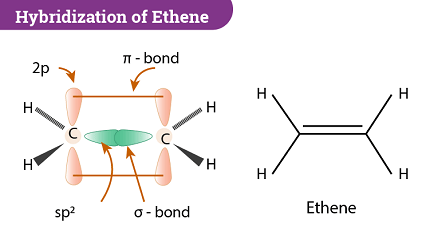
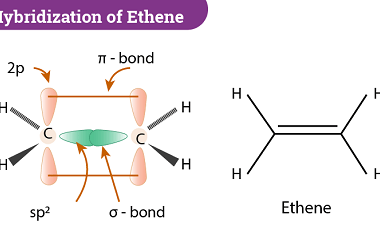
Hybridization is a concept in chemistry that describes the mixing of atomic orbitals to form new hybrid orbitals. Hybridization is important because it allows us to explain the geometry of molecules and the types of bonds that are present. The hybridization of an atom is determined by the number of electron groups around it, where…

Cis-trans and Ionization isomerism

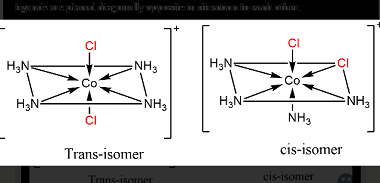
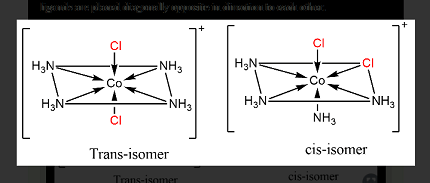
Cis-trans isomerism is a type of stereoisomerism that arises due to the restricted rotation around a double bond or in a cyclic compound. In cis-trans isomers, the relative positions of substituent groups or atoms differ around a double bond or in a cyclic structure. In other words, the cis isomer has substituent groups or atoms…

Nomenclature

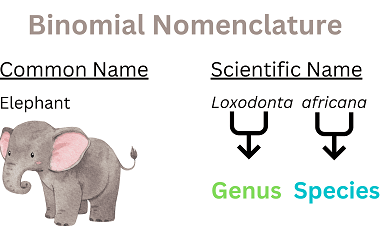
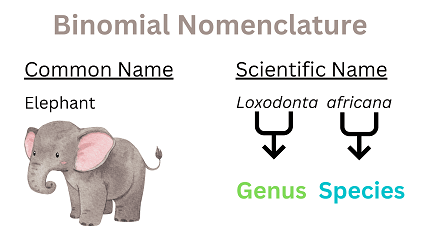
Nomenclature is the system of naming things, such as organisms, chemicals, or structures, in a specific field or discipline. It is an important aspect of communication and allows for clear and consistent identification of entities within a particular area of study. For example, in biology, the binomial nomenclature system is used to name species, with…

General characteristics

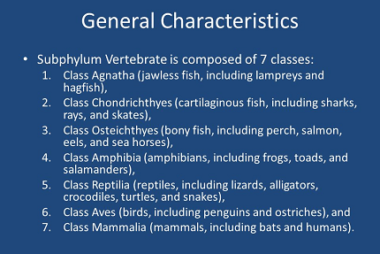
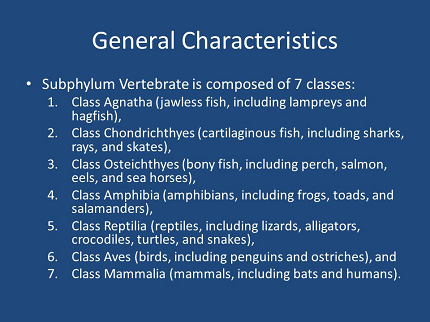
As an AI language model, I don’t have physical characteristics, but here are some general characteristics that describe me: What is Required f-Block Elements General characteristics The f-block elements, also known as inner transition elements, have the following general characteristics: When is Required f-Block Elements General characteristics The general characteristics of required f-block elements are…

Oxidation states

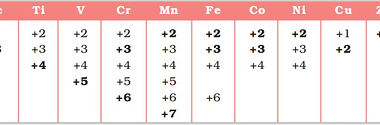
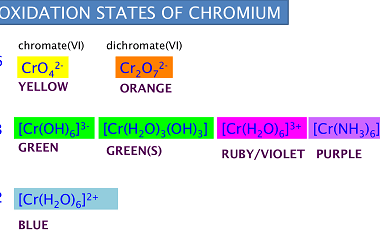
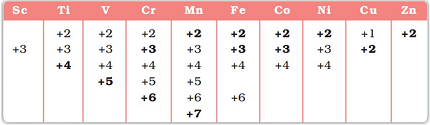
The f-block elements, also known as the inner transition metals, have a partially filled f sublevel, which gives rise to a variety of oxidation states. The oxidation states exhibited by these elements can vary widely depending on the element and the specific compound. The most common oxidation state for f-block elements is +3, which is…

Manganese

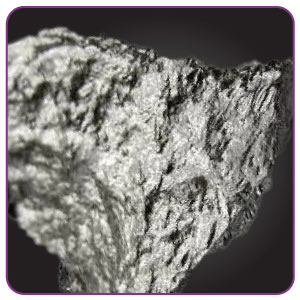
Manganese is a chemical element with the symbol Mn and atomic number 25. It is a hard, brittle, silvery-gray metal that is widely distributed in the Earth’s crust. Manganese is an essential trace element that is involved in many biological processes, including bone formation, metabolism, and the antioxidant defense system. Manganese is commonly used in…

Reactions of oxoanions of chromium

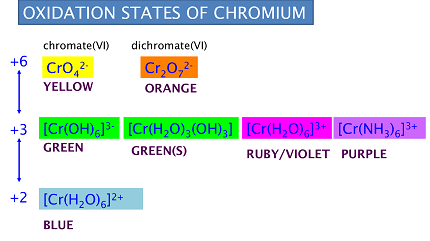
Chromium can form several oxoanions, including chromate (CrO4^2-) and dichromate (Cr2O7^2-). The reactions of these oxoanions depend on the conditions under which they are present. In acidic solutions, chromate ions can be converted to dichromate ions by the addition of hydrogen ions: CrO4^2- + 2H+ ⇌ Cr2O7^2- + H2O Dichromate ions are also able to…

Structure

The d-block elements, also known as transition metals, are characterized by their partially filled d orbitals. The d-block elements are located in the middle of the periodic table and include the elements from groups 3 through 12. In terms of their atomic structure, the d-block elements have a typical metallic structure. They have a close-packed…