Vrindawan Coaching Center

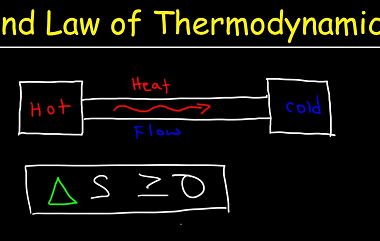
Second law of thermodynamics

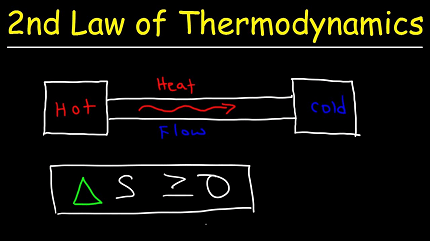
The second law of thermodynamics is a fundamental principle in physics that states that in any spontaneous process, the total entropy of a closed system will always increase over time, or remain constant in ideal cases. Entropy is a measure of the disorder or randomness of a system, and the second law of thermodynamics tells…

Lattice enthalpy

Lattice enthalpy is a measure of the energy required to separate the ions in a solid ionic compound to an infinite distance from each other. It is a type of enthalpy of dissociation and is a measure of the strength of the ionic bonds in the compound. Lattice enthalpy is a negative quantity, which means…

Fusion and Vapourization

Fusion and vaporization are two different physical processes that involve changing the state of matter. Fusion, also known as melting, is the process by which a solid substance is transformed into a liquid as a result of heat being applied to it. The heat energy causes the molecules of the solid to vibrate more rapidly,…

Standard state

The standard state of a substance is a reference state used in thermodynamics, which is typically defined as the most stable physical state of the substance at a pressure of 1 bar and a specified temperature, usually 25°C (298.15 K). For pure substances, the standard state is often the most common state of the substance…

Enthalpy

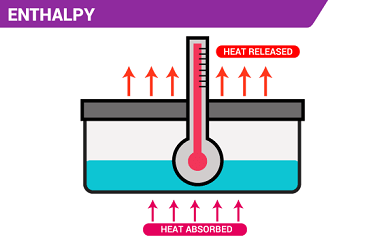
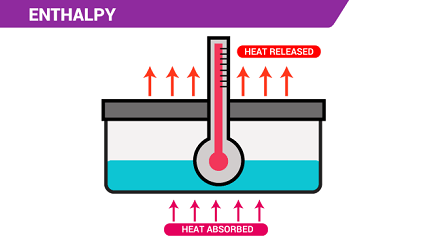
Enthalpy (H) is a thermodynamic property that describes the total heat content of a system at constant pressure. It is defined as the sum of the internal energy (U) of the system and the product of the pressure (P) and volume (V) of the system: H = U + PV Enthalpy is a state function,…

Work (pressure-volume only) and Heat

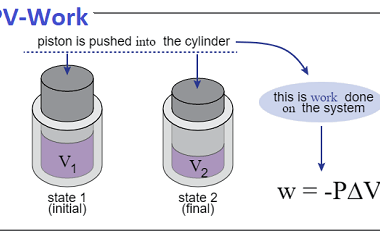
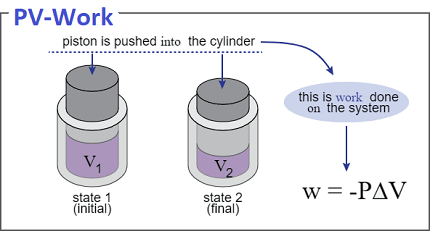
Work and heat are both important concepts in thermodynamics. In thermodynamics, work is defined as the energy transferred when a force is applied over a distance, while heat is defined as the energy transferred between two objects at different temperatures. In terms of pressure and volume, work is calculated as the product of the pressure…

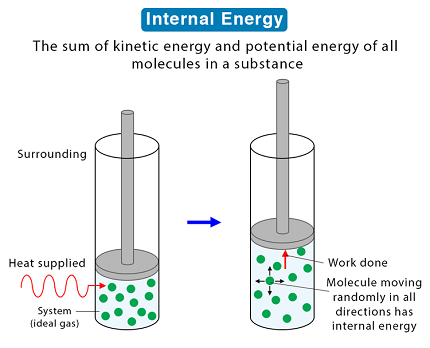
Internal energy

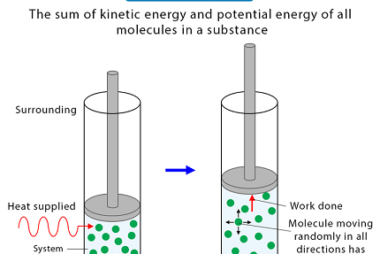
Internal energy refers to the total energy that is contained within a system. This energy includes the kinetic and potential energies of the particles within the system, as well as any other forms of energy that may be present, such as chemical energy, thermal energy, and nuclear energy. The internal energy of a system is…

Square planar

Square planar refers to the geometry or arrangement of atoms or ligands around a central atom in a molecule or ion, where the central atom is located at the center of a square plane. In a square planar arrangement, the central atom is surrounded by four ligands or atoms that are arranged in a flat,…

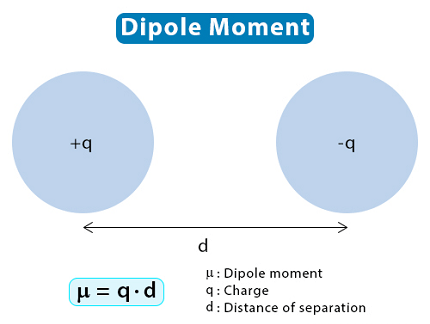
Dipole moment

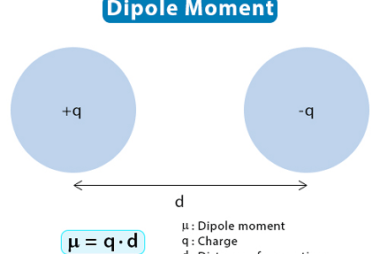
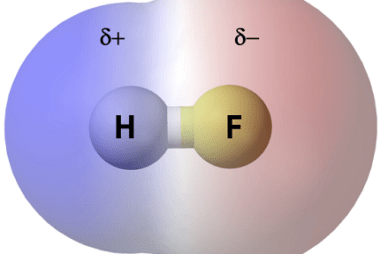
A dipole moment is a measure of the polarity of a molecule. It is defined as the product of the magnitude of the partial charges on two atoms in a molecule and the distance between them. In other words, a dipole moment is the separation of positive and negative charges in a molecule, which results…

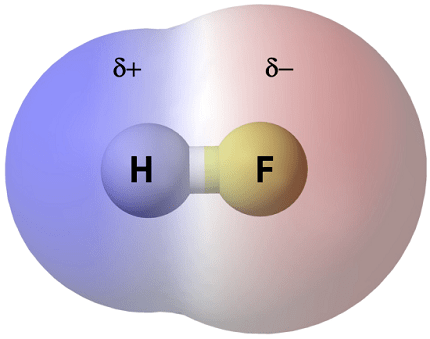
Polarity in molecules

In chemistry, polarity refers to the separation of electric charge within a molecule or compound. A molecule can be polar or nonpolar depending on the electronegativity of its constituent atoms and the molecular geometry. When two atoms with different electronegativities are bonded together, the electron pair in the bond is not shared equally, resulting in…