Vrindawan Coaching Center

Bio-degradable polymers

Biodegradable polymers are types of plastic materials that can be broken down by microorganisms into natural substances such as water, carbon dioxide, and compost. Unlike traditional plastics that can persist in the environment for hundreds of years, biodegradable polymers are designed to degrade relatively quickly, often within a few months to a few years. There…

Bakelite

Bakelite is a type of thermosetting plastic that was invented in 1907 by Belgian-born chemist Leo Baekeland. It was the first synthetic plastic ever created, and it quickly became popular due to its durability, heat resistance, and electrical insulating properties. Bakelite is made by combining phenol and formaldehyde under heat and pressure. The resulting material…

Teflon

Teflon is a brand name for a type of synthetic polymer known as polytetrafluoroethylene (PTFE). It is a highly non-reactive and heat-resistant material that is often used in a variety of applications where a non-stick surface is required. Teflon is commonly used as a non-stick coating for cookware, as well as in industrial applications such…

Homo and Copolymers

Homo and copolymers are types of polymers, which are large molecules made up of repeating subunits called monomers. The main difference between homo and copolymers lies in the composition of the monomers. A homopolymer is a polymer made up of only one type of monomer. For example, polyethylene is a homopolymer made up of repeating…

Types of polymerization (Addition, Condensation)

Polymerization is the process of combining small molecules known as monomers to form a polymer. There are two main types of polymerization: addition polymerization and condensation polymerization. Examples of addition polymers include polyethylene, polypropylene, polyvinyl chloride (PVC), and polystyrene. Examples of condensation polymers include nylon, polyester, and polyurethane. In general, addition polymerization tends to produce…

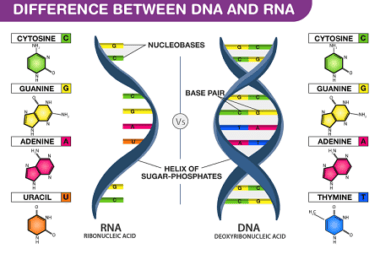
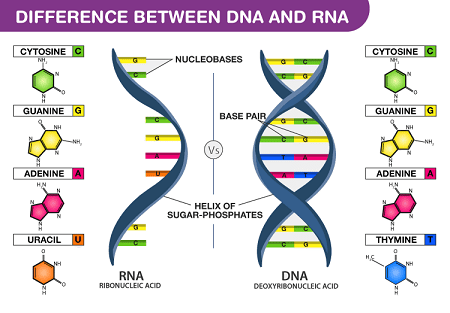
Structure of DNA and RNA

DNA (deoxyribonucleic acid) and RNA (ribonucleic acid) are the two types of nucleic acids that are found in all living organisms. They play a critical role in storing, transmitting, and expressing genetic information. The structure of DNA is a double helix, consisting of two complementary strands of nucleotides. A nucleotide is composed of a nitrogenous…

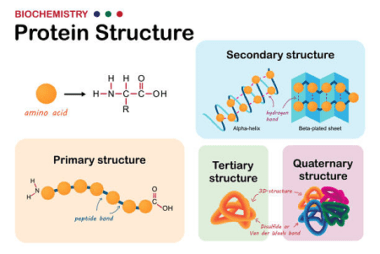
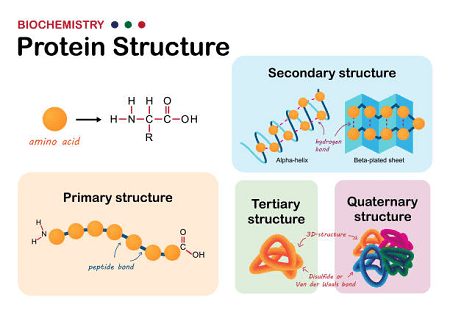
Structure of peptides (Primary and Secondary)

Peptides are short chains of amino acids that are linked together by peptide bonds. The structure of a peptide can be described at several levels: primary, secondary, tertiary, and quaternary. Overall, the secondary structure is determined by the primary sequence of amino acids, as well as by the environment of the peptide (e.g., temperature, pH,…

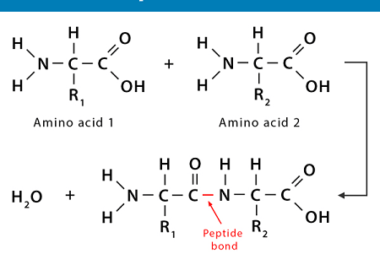
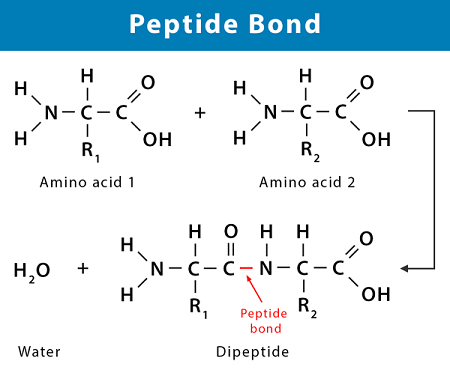
Peptide linkage

Peptide linkage, also known as amide linkage, is the covalent bond that forms between the carboxyl group (–COOH) of one amino acid and the amino group (–NH2) of another amino acid during protein synthesis. The bond is formed through a dehydration synthesis reaction, which involves the removal of a water molecule. The resulting bond between…

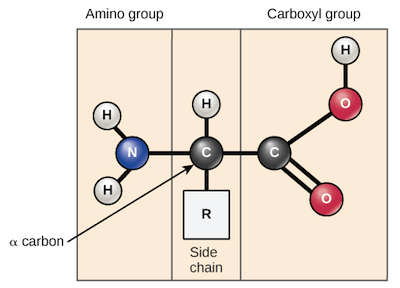
Proteins: Amino acids

Proteins are complex molecules that are essential to life. They are made up of long chains of smaller molecules called amino acids. There are 20 different amino acids that can be combined in various ways to form different proteins. Each amino acid has a unique chemical structure and properties that determine its role in protein…

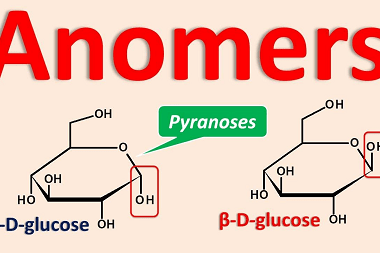
Anomers

Anomers are a type of stereoisomers that differ in the spatial orientation of the substituents at the anomeric carbon atom in a cyclic sugar molecule. The anomeric carbon is the carbon atom that is involved in the formation of the cyclic hemiacetal or hemiketal ring in monosaccharides. There are two anomers: α-anomer and β-anomer. The…