Vrindawan Coaching Center

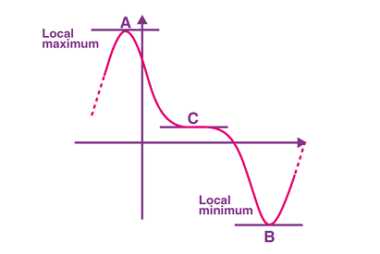
Maximum and Minimum values of a function

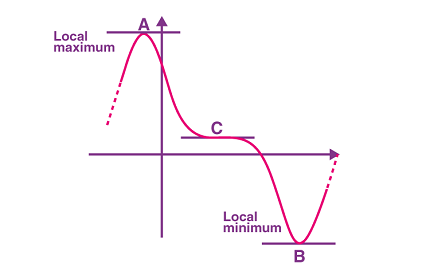
The maximum and minimum values of a function refer to the largest and smallest values that the function takes on, respectively. To find the maximum and minimum values of a function, we can use the following steps: It’s important to note that a function may not have a maximum or minimum value if it is…
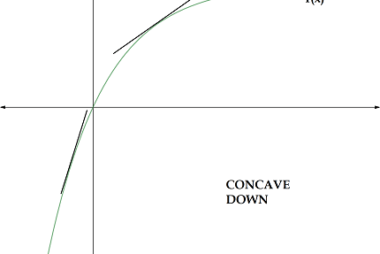
Derivatives of order two

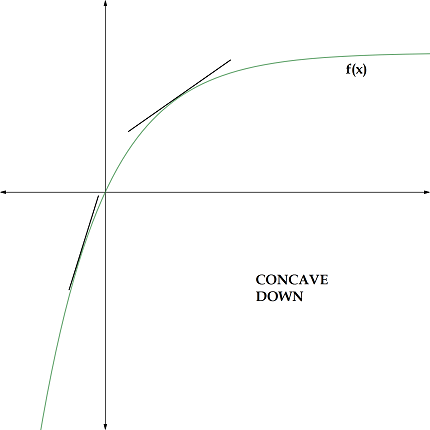
The derivative of a function f(x) gives the rate of change of f(x) with respect to x. The derivative of order two, or the second derivative of f(x), represents the rate of change of the first derivative of f(x) with respect to x. Mathematically, the second derivative of f(x) is denoted as f”(x) or d^2/dx^2…

Differential Calculus Trigonometric

Differential calculus is a branch of calculus that deals with the study of rates of change and slopes of curves. Trigonometry is a branch of mathematics that deals with the study of triangles and the relationships between their sides and angles. The two subjects are related in that trigonometric functions, such as sine, cosine, and…

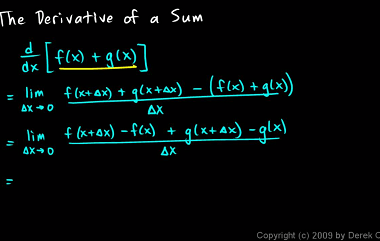
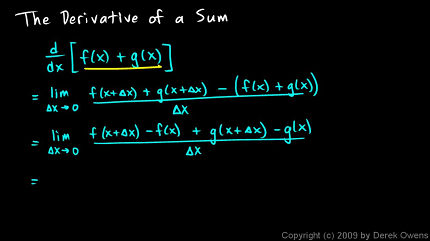
Derivative of the sum

Let f(x) and g(x) be two functions that are differentiable at x. The derivative of their sum, h(x) = f(x) + g(x), is given by: h'(x) = f'(x) + g'(x) In other words, to find the derivative of the sum of two functions, you simply take the derivatives of each function individually and add them…

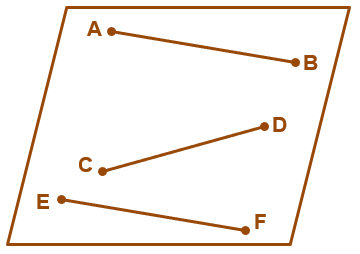
Coplanar lines

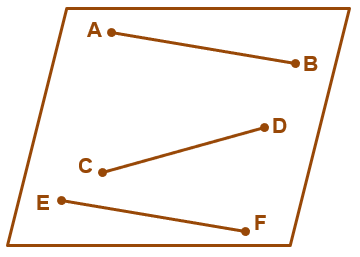
Coplanar lines are lines that lie on the same plane. In other words, any two points on each of the lines can be connected with a straight line that lies entirely in the same plane. For example, if two lines intersect, they are coplanar because the plane containing one line also contains the other line.…

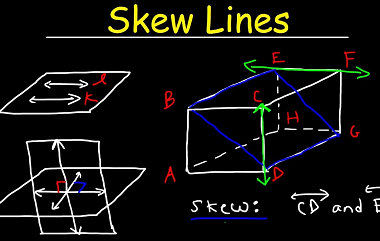
Skew lines

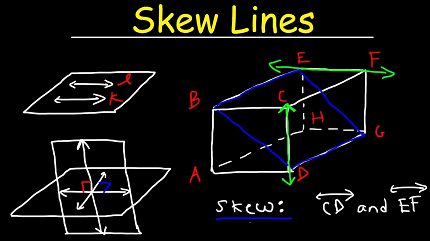
Skew lines are two non-intersecting lines that are not parallel to each other. In other words, skew lines are two lines in three-dimensional space that do not lie in the same plane and do not intersect each other. Skew lines are important in geometry and can be used to solve various problems, such as finding…

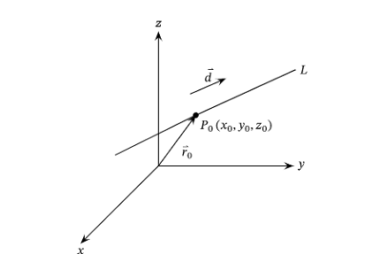
Equation of a straight line in space

In three-dimensional space, the equation of a straight line can be written in vector form as: r = a + t(b-a) where “r” is a position vector that represents any point on the line, “a” is the position vector of a known point on the line, “b” is the position vector of another known point…

Three dimensions: Distance between two points

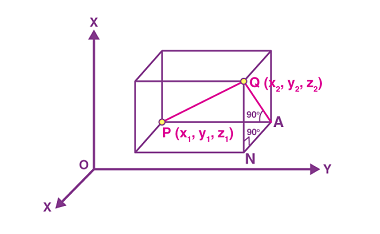
The distance between two points in three-dimensional space can be found using the following formula: d = √((x2 – x1)^2 + (y2 – y1)^2 + (z2 – z1)^2) where (x1, y1, z1) and (x2, y2, z2) are the coordinates of the two points, and d is the distance between them. To use the formula, you…

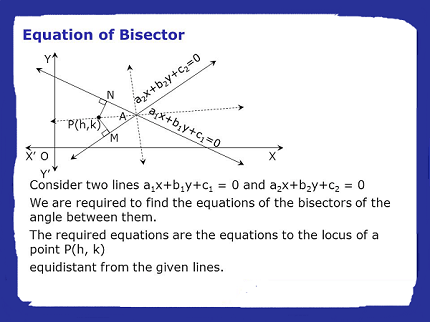
Equation of the bisector of the angle between two lines

Suppose we have two lines in a Cartesian coordinate system, given by the equations: a1x + b1y + c1 = 0a2x + b2y + c2 = 0 The angle between these two lines can be found using the formula: tan(theta) = |(m2 – m1)/(1 + m1*m2)| where m1 and m2 are the slopes of the…