Vrindawan Coaching Center

Energies

Energy is a fundamental concept in physics, and it refers to the ability of a system to do work. There are various forms of energy, including: These different forms of energy can be converted from one form to another, and the total amount of energy in a closed system is conserved, meaning it cannot be…
Qualitative quantum mechanical picture of hydrogen atom

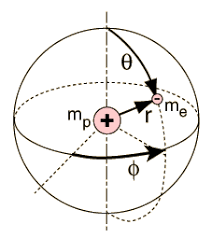
The hydrogen atom is one of the simplest quantum mechanical systems and can be described qualitatively using several key concepts. First, the electron in the hydrogen atom is not confined to a specific location in space but rather exists in a “cloud” of probability called the electron density. The electron density gives the probability of…

Spectrum of hydrogen atom

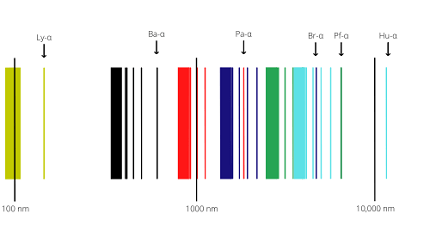
The spectrum of a hydrogen atom refers to the specific frequencies of electromagnetic radiation that are emitted or absorbed when an electron in a hydrogen atom changes from one energy level to another. The spectrum of hydrogen can be divided into several series, including the Lyman, Balmer, Paschen, Brackett, and Pfund series. The Lyman series…

Viscosity

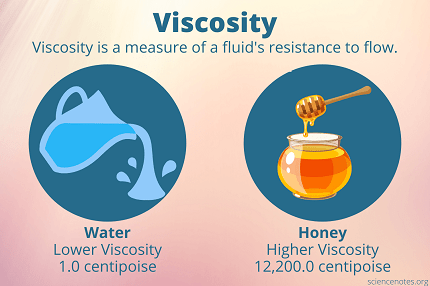
Viscosity is a measure of a fluid’s resistance to flow. In simpler terms, it is the internal friction between different layers of fluid as they move past each other. Viscosity is commonly measured in units of poise or centipoise, and is dependent on factors such as temperature, pressure, and composition of the fluid. Fluids with…

Surface tension

Surface tension is a physical phenomenon that refers to the tendency of the surface of a liquid to resist an external force. It is caused by the cohesive forces between the liquid molecules, which cause them to stick together and create a “skin” or “membrane” on the surface of the liquid. The surface tension of…

Intermolecular interactions

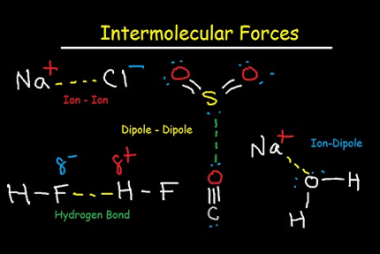
Intermolecular interactions are the forces of attraction or repulsion between molecules. These interactions are responsible for many of the physical and chemical properties of materials, such as boiling and melting points, solubility, and viscosity. The types of intermolecular interactions that occur between molecules depend on the molecular structure and the properties of the molecules involved.…

Diffusion of gases

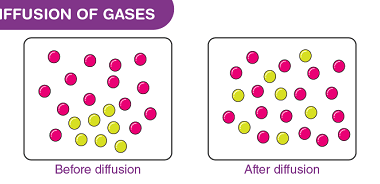
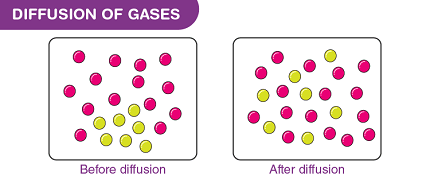
Diffusion is the process by which molecules or particles move from a region of high concentration to a region of low concentration. Diffusion of gases is an important physical process in various natural and industrial processes, including respiration, combustion, and chemical reactions. In gases, diffusion occurs due to the random motion of gas molecules, also…

Root mean square and most probable velocities and their relation with temperature

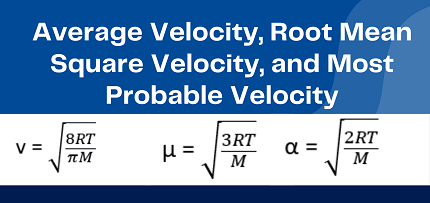
Root mean square (RMS) velocity is a measure of the average speed of gas molecules in a sample at a given temperature. It is calculated as the square root of the average of the squares of the individual velocities of the molecules in the gas. Most probable velocity, on the other hand, is the speed…

Average

“Average” is a statistical term that refers to a measure of central tendency, which is the typical or common value in a set of data. There are several types of averages, including the mean, median, and mode. The choice of which average to use depends on the type of data and the purpose of the…

Van der Waals equation

The van der Waals equation is an equation of state that describes the behavior of real gases, taking into account the non-ideal behavior of gases due to intermolecular forces. It was proposed by Johannes Diderik van der Waals in 1873. The equation is given by: (P + a(n/V)^2)(V – nb) = nRT where P is…