Vrindawan Coaching Center

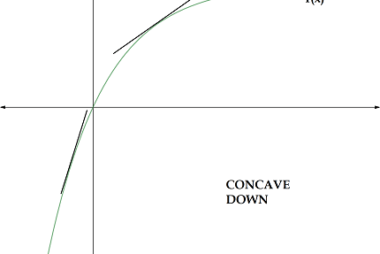
Derivatives of order two

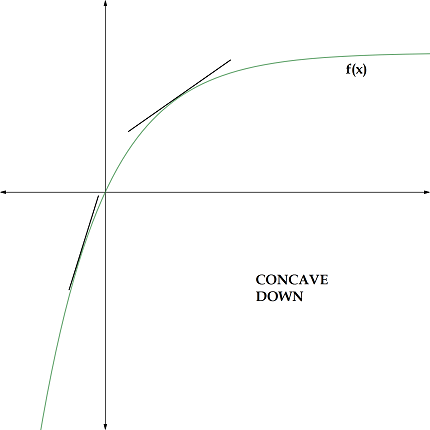
The derivative of a function f(x) gives the rate of change of f(x) with respect to x. The derivative of order two, or the second derivative of f(x), represents the rate of change of the first derivative of f(x) with respect to x. Mathematically, the second derivative of f(x) is denoted as f”(x) or d^2/dx^2…
Differential Calculus Trigonometric

Differential calculus is a branch of calculus that deals with the study of rates of change and slopes of curves. Trigonometry is a branch of mathematics that deals with the study of triangles and the relationships between their sides and angles. The two subjects are related in that trigonometric functions, such as sine, cosine, and…

Rational

Rationality refers to the ability to think logically, make sound judgments, and make decisions based on reason rather than emotions or impulses. It involves using critical thinking skills to analyze information, evaluate evidence, and draw conclusions based on facts and evidence. In general, a rational person is someone who can separate their emotions from their…

Derivative of the sum

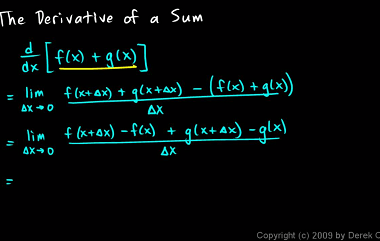
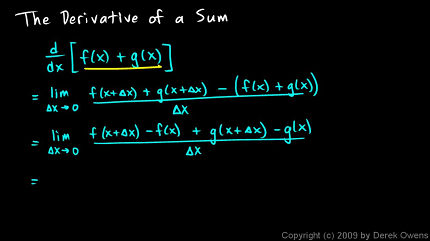
Let f(x) and g(x) be two functions that are differentiable at x. The derivative of their sum, h(x) = f(x) + g(x), is given by: h'(x) = f'(x) + g'(x) In other words, to find the derivative of the sum of two functions, you simply take the derivatives of each function individually and add them…

Differential Calculus Difference

Differential calculus is a branch of mathematics that deals with the study of rates of change and slopes of curves. It focuses on finding the derivative of a function, which is the instantaneous rate of change of the function at a particular point. The derivative gives us information about the steepness of a curve at…

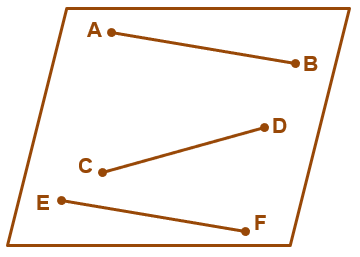
Coplanar lines

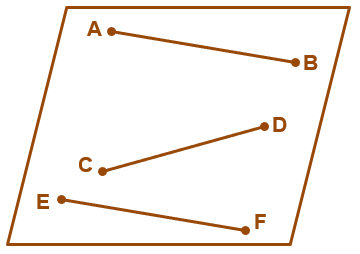
Coplanar lines are lines that lie on the same plane. In other words, any two points on each of the lines can be connected with a straight line that lies entirely in the same plane. For example, if two lines intersect, they are coplanar because the plane containing one line also contains the other line.…

Equation of a plane

The equation of a plane in three-dimensional space can be expressed in the general form: Ax + By + Cz + D = 0 where A, B, and C are the coefficients of the variables x, y, and z, respectively, and D is a constant. Alternatively, the equation of a plane can also be expressed…

Direction cosines and Direction ratios

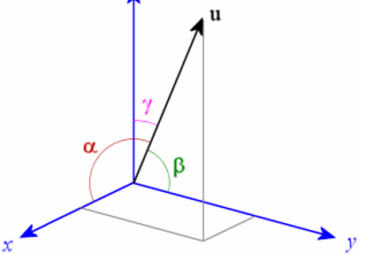
Direction cosines and direction ratios are used to describe the orientation of a line or a vector in three-dimensional space. Direction cosines are the cosines of the angles that a given line or vector makes with the positive x, y, and z axes of a Cartesian coordinate system. For example, if the angles that a…

Three dimensions: Distance between two points

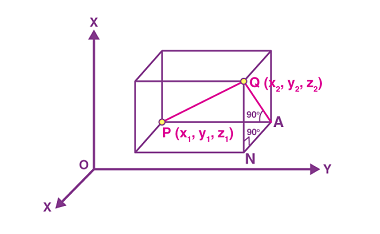
The distance between two points in three-dimensional space can be found using the following formula: d = √((x2 – x1)^2 + (y2 – y1)^2 + (z2 – z1)^2) where (x1, y1, z1) and (x2, y2, z2) are the coordinates of the two points, and d is the distance between them. To use the formula, you…

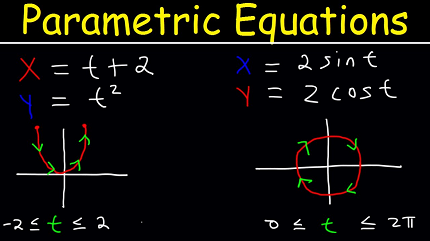
Parametric Equations

Parametric equations are a way to represent a set of equations with one or more parameters. In mathematics, they are often used to describe curves and surfaces in space. Parametric equations are usually written in the form: x = f(t) y = g(t) where t is the parameter, and f(t) and g(t) are functions that…