Vrindawan Coaching Center

Werner’s theory

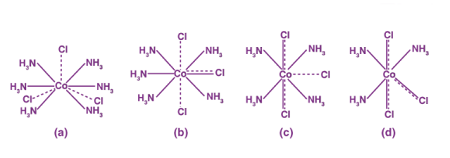
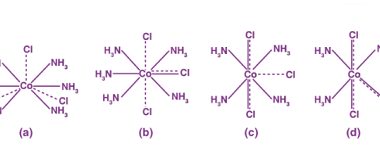
There are several theories associated with the name “Werner,” so it’s important to specify which one you’re referring to. However, I’m assuming that you’re referring to the “Werner’s Theory of Coordination Compounds” proposed by Alfred Werner. Alfred Werner was a Swiss chemist who developed the theory of coordination compounds in the early 1900s. According to…
General characteristics

As an AI language model, I don’t have physical characteristics, but here are some general characteristics that describe me: What is Required f-Block Elements General characteristics The f-block elements, also known as inner transition elements, have the following general characteristics: When is Required f-Block Elements General characteristics The general characteristics of required f-block elements are…

Oxidation states

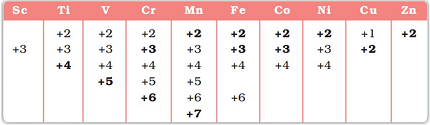
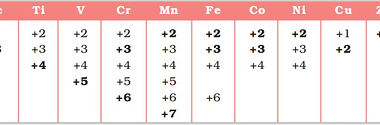
The f-block elements, also known as the inner transition metals, have a partially filled f sublevel, which gives rise to a variety of oxidation states. The oxidation states exhibited by these elements can vary widely depending on the element and the specific compound. The most common oxidation state for f-block elements is +3, which is…

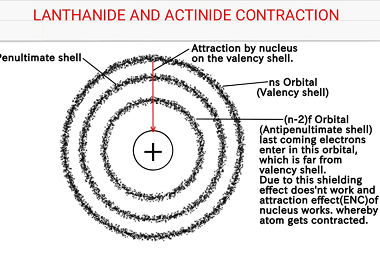
Lanthanoid and Actinoid contractions

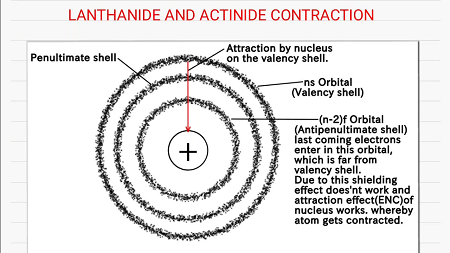
The lanthanoid contraction and actinoid contraction refer to the phenomenon of decreasing atomic radii of the elements in the lanthanide and actinide series, respectively. The lanthanoid contraction is caused by poor shielding of the nuclear charge by the 4f electrons, which results in a stronger attraction between the nucleus and the valence electrons. As a…

Manganese

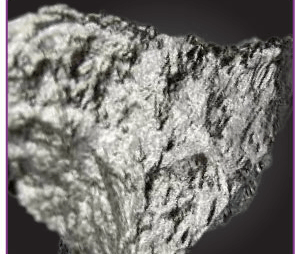
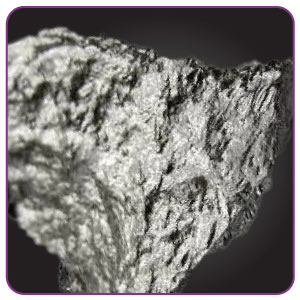
Manganese is a chemical element with the symbol Mn and atomic number 25. It is a hard, brittle, silvery-gray metal that is widely distributed in the Earth’s crust. Manganese is an essential trace element that is involved in many biological processes, including bone formation, metabolism, and the antioxidant defense system. Manganese is commonly used in…

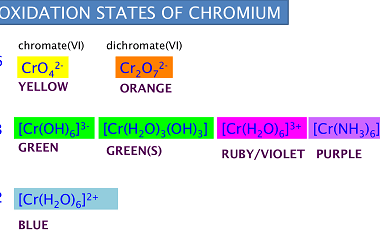
Reactions of oxoanions of chromium

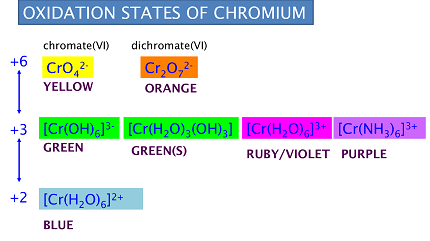
Chromium can form several oxoanions, including chromate (CrO4^2-) and dichromate (Cr2O7^2-). The reactions of these oxoanions depend on the conditions under which they are present. In acidic solutions, chromate ions can be converted to dichromate ions by the addition of hydrogen ions: CrO4^2- + 2H+ ⇌ Cr2O7^2- + H2O Dichromate ions are also able to…

Structure

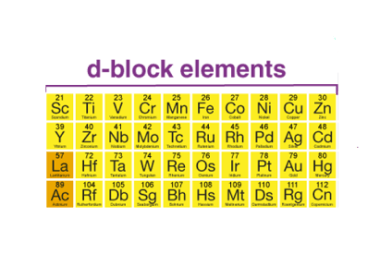
The d-block elements, also known as transition metals, are characterized by their partially filled d orbitals. The d-block elements are located in the middle of the periodic table and include the elements from groups 3 through 12. In terms of their atomic structure, the d-block elements have a typical metallic structure. They have a close-packed…

Preparation

The d-block elements, also known as transition metals, can be prepared through several methods depending on the specific element and its properties. Here are some general methods: It’s worth noting that these methods are not exhaustive and that there may be other methods specific to certain d-block elements. What is Required d-Block Elements Preparation The…

Applications

The d-block elements, also known as transition metals, have numerous applications in various fields. Some of the applications of d-block elements are: These are just a few examples of the many applications of d-block elements. Their versatility makes them valuable in many different fields. What is Required d-Block Elements Applications The applications of d-block elements…

Catalytic properties

Catalytic properties refer to the ability of a substance or material, called a catalyst, to increase the rate of a chemical reaction without being consumed or undergoing any permanent chemical changes itself. A catalyst works by lowering the activation energy required for a reaction to occur, thereby increasing the speed at which the reaction takes…