Vrindawan Coaching Center

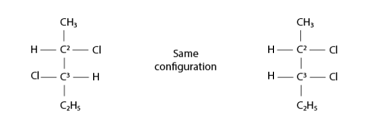
Compounds containing only up to two asymmetric centres 6 (R,S and E,Z configurations excluded)

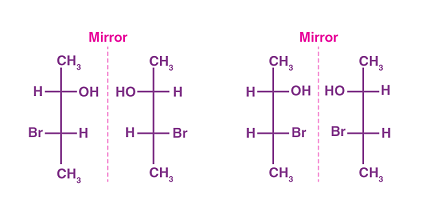
Compounds containing only up to two asymmetric centers can have the following configurations: What is Required Basic Principles of Organic Chemistry Compounds containing only up to two asymmetric centres 6 (R,S and E,Z configurations excluded) The basic principles of organic chemistry for compounds containing up to two asymmetric centers (excluding R/S and E/Z configurations) include:…
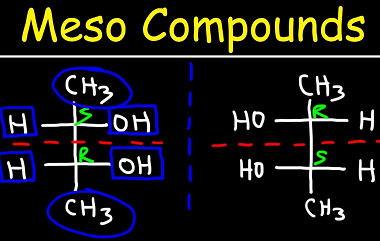
Meso

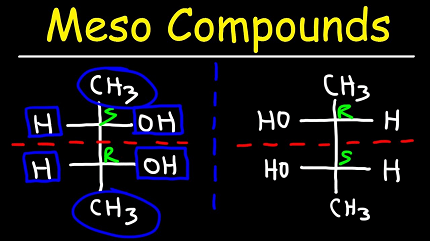
“Meso” can have several meanings depending on the context: Without more context, it is difficult to determine which meaning of “meso” you are referring to. What is Required Basic Principles of Organic Chemistry Meso There are several basic principles in organic chemistry that are relevant to meso compounds: Overall, a strong foundation in organic chemistry…

Diastereomers

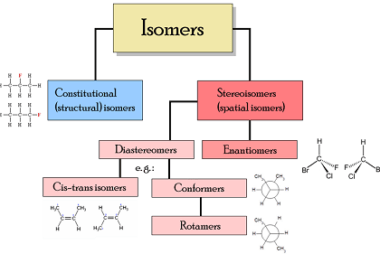
Diastereomers are a type of stereoisomers that have different spatial arrangements of atoms in their molecules, but are not mirror images of each other. They have at least two stereocenters, and unlike enantiomers, they differ in their configurations at some, but not all, of these stereocenters. Diastereomers have different physical and chemical properties, such as…

Enantiomers

Enantiomers are a type of stereoisomerism that occurs in organic chemistry when two molecules are non-superimposable mirror images of each other. They have the same chemical and physical properties, except for their effect on plane-polarized light and interactions with other chiral molecules. Enantiomers have a chiral center, which is an atom that is attached to…

Stereoisomers and Stereochemical relationship

Stereoisomers are molecules that have the same molecular formula and connectivity of atoms but differ in the spatial arrangement of their atoms in three-dimensional space. They arise due to the presence of chiral centers, double bonds, or other forms of isomerism. Stereoisomers can be divided into two categories: enantiomers and diastereomers. Enantiomers are stereoisomers that…

Structural and Geometrical isomerism

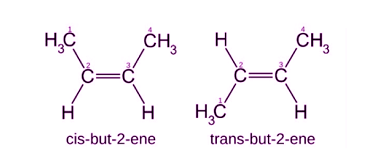
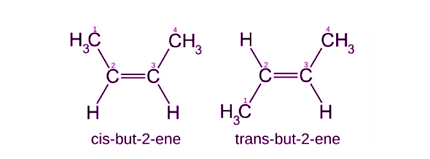
Structural isomerism and geometrical isomerism are two different types of isomerism in organic chemistry. Structural isomerism occurs when molecules have the same molecular formula but different arrangements of atoms. This can be due to differences in the bonding patterns of the atoms within the molecule. For example, pentane and 2-methylbutane have the same molecular formula…

Aromaticity

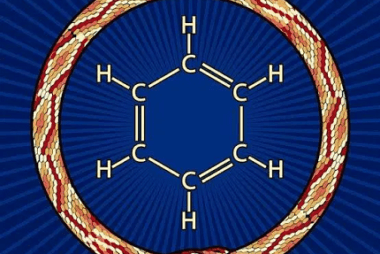
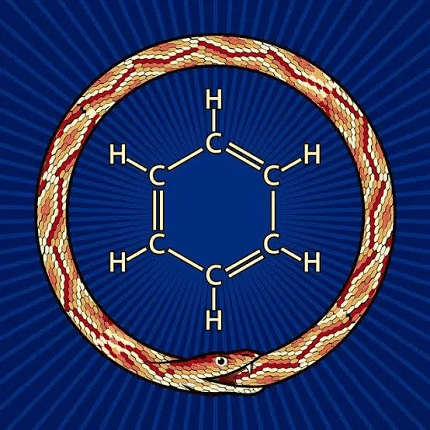
Aromaticity is a chemical property that describes the special stability of certain cyclic molecules, known as aromatic compounds, that contain a specific arrangement of alternating double bonds (pi bonds) and single bonds (sigma bonds). This arrangement of bonds results in a delocalized pi-electron system that is particularly stable and resistant to reactions that would normally…

Shapes of simple organic molecules

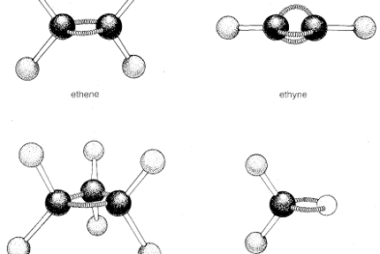
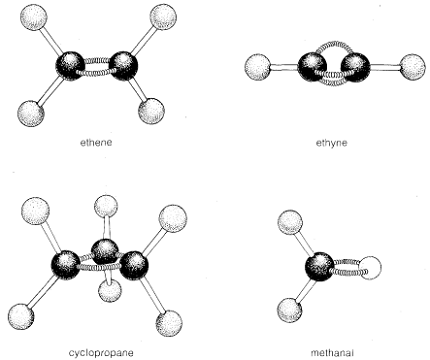
Simple organic molecules can have a variety of shapes depending on the arrangement of their atoms and the type of bonds between them. Here are some common shapes of simple organic molecules: These are just a few examples of the many shapes that simple organic molecules can take. The shape of a molecule plays an…

σ and π-bonds

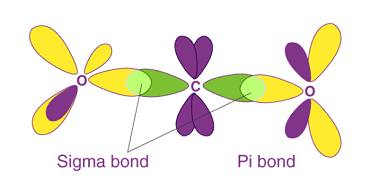
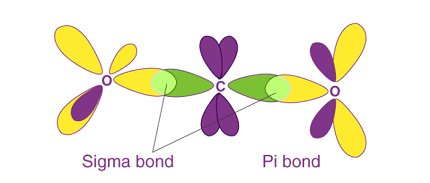
σ and π-bonds are two types of covalent bonds that form between atoms when they share electrons. A σ-bond is formed when two atoms directly overlap their atomic orbitals along the line connecting their nuclei. This type of bond is characterized by the electron density being concentrated in the region directly between the two nuclei.…

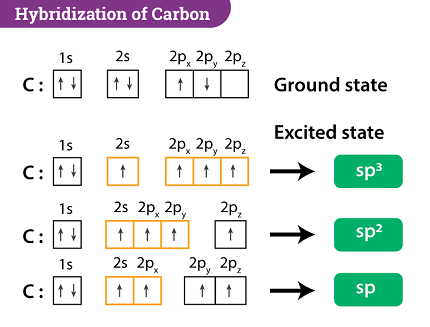
Hybridisation of carbon

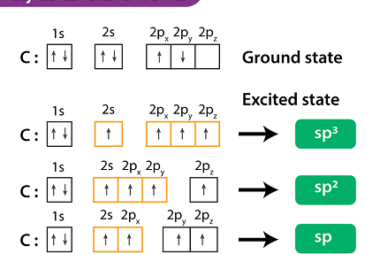
Carbon can undergo hybridization to form hybrid orbitals that can participate in chemical bonding. Hybridization of carbon involves the mixing of its valence orbitals, which are the 2s and three 2p orbitals, to form new hybrid orbitals. The most common hybridizations of carbon are sp, sp2, and sp3 hybridizations. The type of hybridization that carbon…