Vrindawan Coaching Center

Electrolytic conductance

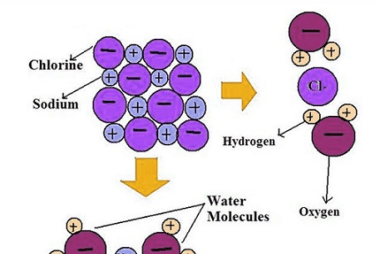
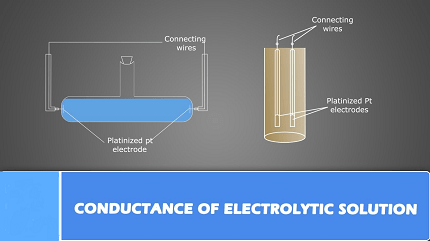
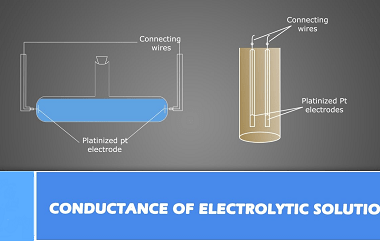
Electrolytic conductance refers to the ability of an electrolyte solution to conduct electric current. Electrolytes are substances that dissociate into ions when they dissolve in water, and these ions can move freely through the solution and carry electric charge. The conductance of an electrolyte solution depends on several factors, including the concentration of ions in…
Faraday’s laws of electrolysis

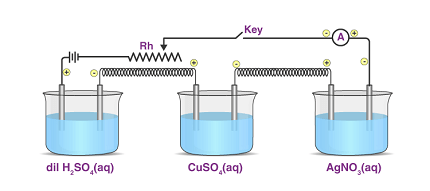
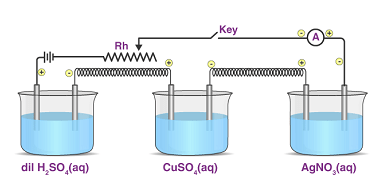
Faraday’s laws of electrolysis are two fundamental laws that describe the quantitative relationship between the amount of electric charge passed through an electrolytic cell and the amount of chemical change that occurs during electrolysis. These laws were developed by the British scientist Michael Faraday in the early 19th century. Faraday’s First Law of Electrolysis states…

Emf of galvanic cells

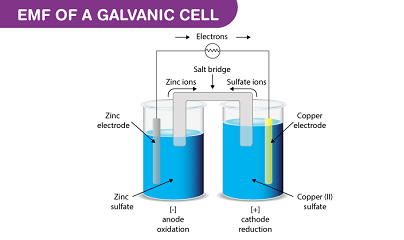
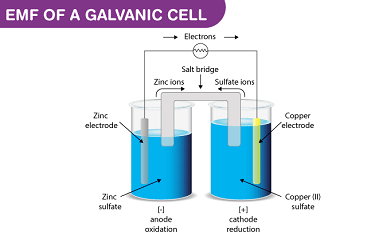
A galvanic cell, also known as a voltaic cell, is an electrochemical cell that converts chemical energy into electrical energy. The cell consists of two electrodes, each with a different reduction potential, that are connected by an electrolyte. The potential difference between the two electrodes is known as the cell potential or electromotive force (EMF)…

Electrochemical series

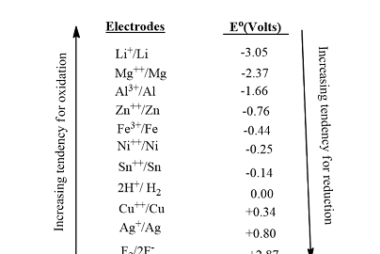
The electrochemical series is a list of metals and non-metals arranged in order of their standard electrode potentials (reduction potentials) or their tendency to undergo reduction. It is also known as the activity series. The electrochemical series is a useful tool in predicting the outcome of redox reactions, especially in electrolytic cells and in electrochemical…

Nernst equation

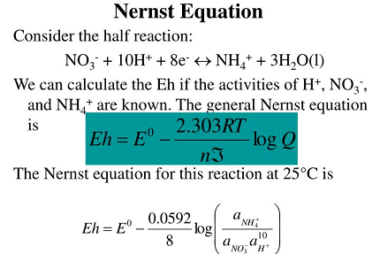
The Nernst equation is an important formula in electrochemistry that relates the concentration of ions in a solution to the potential difference across a membrane or electrode. The equation is named after German chemist Walther Nernst, who formulated it in 1889. The Nernst equation is given as: E = E° – (RT/nF) * ln(Q) where:…

Electrochemical work

Electrochemical work is the work done by an electrochemical system, which involves the conversion of chemical energy to electrical energy, or vice versa. In an electrochemical cell, the flow of electrons from one electrode to another generates electrical energy, which can be used to do work. The electrochemical work is typically measured in units of…

Standard electrode potentials

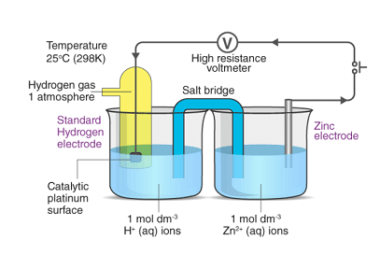
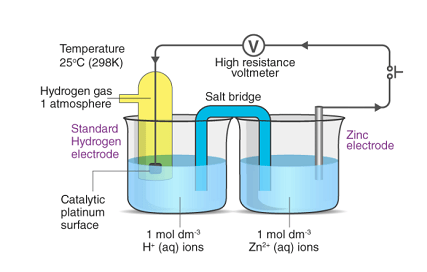
Standard electrode potentials (also known as standard reduction potentials) are a measure of the tendency of a chemical species to undergo reduction or oxidation under standard conditions. These potentials are reported relative to the standard hydrogen electrode (SHE), which is assigned a potential of 0.00 volts. Standard electrode potentials are typically represented using the notation…

Electrochemical cells and cell reactions

Electrochemical cells are devices that convert chemical energy into electrical energy or vice versa. They involve a redox (reduction-oxidation) reaction, which occurs at the interface between two electrodes immersed in an electrolyte solution. In an electrochemical cell, there are two half-cells, each consisting of an electrode and an electrolyte. The half-cell where oxidation occurs is…

Hydrolysis of salts

Hydrolysis of salts is a chemical reaction in which a salt reacts with water to produce an acidic or basic solution. The nature of the salt and the pH of the resulting solution depend on the cation and anion present in the salt. If the cation is derived from a strong base and the anion…

Acids and bases (Bronsted and Lewis concepts)

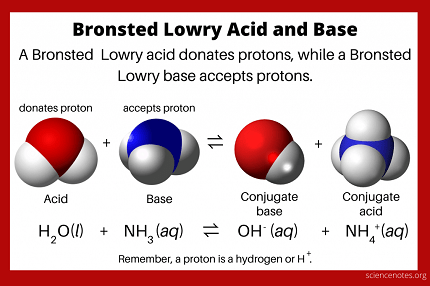
Acids and bases are fundamental concepts in chemistry that are used to describe the properties of various chemical substances. The Bronsted and Lewis concepts are two different approaches used to define acids and bases. The Bronsted-Lowry concept defines an acid as a substance that donates a proton (H+) and a base as a substance that…