Vrindawan Coaching Center

Close packed structure of solids (Cubic and Hexagonal)

Close-packed structures are arrangements of atoms or ions in a solid that result in the highest possible packing density. The two most common close-packed structures are the cubic close-packed (CCP) structure and the hexagonal close-packed (HCP) structure. In the CCP structure, also known as the face-centered cubic (FCC) structure, each atom or ion is surrounded…
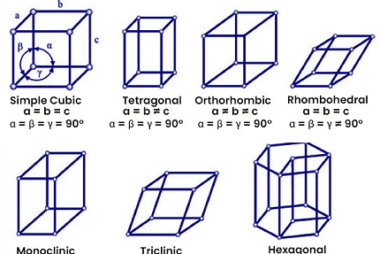
Seven crystal systems (cell parameters a, b, c, α, β, γ)

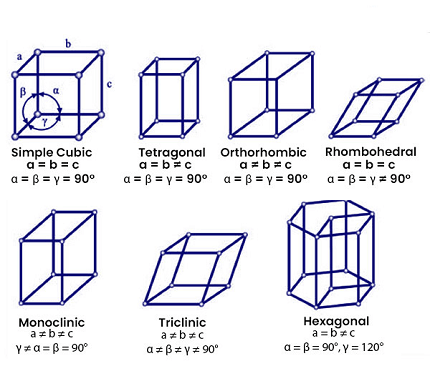
The seven crystal systems and their corresponding cell parameters are: In each crystal system, the cell parameters describe the dimensions and angles of the unit cell, which is the basic repeating unit of a crystal lattice. The dimensions are given by the three lengths a, b, and c, and the angles between them, α, β,…

Crystalline state

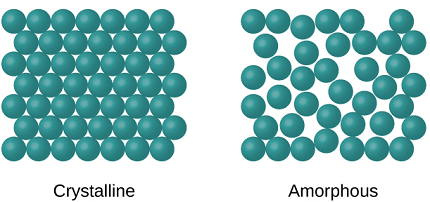
The crystalline state is a state of matter in which the constituent particles, such as atoms, molecules, or ions, are arranged in a highly ordered, repeating three-dimensional pattern called a crystal lattice. In this state, the particles are held together by strong intermolecular forces and exhibit a characteristic set of physical and chemical properties, such…

Classification of solids

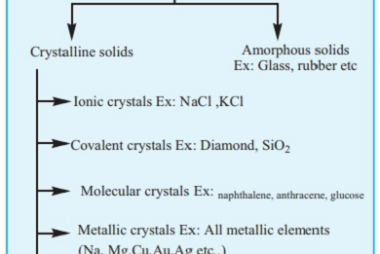
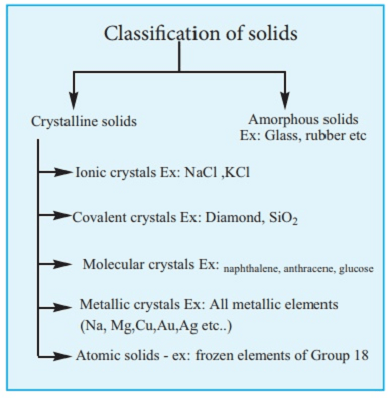
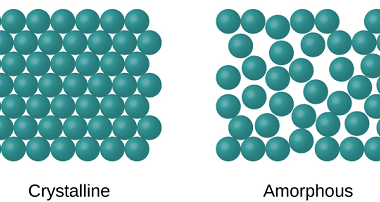
Solids can be classified into various types based on different criteria. Here are some common ways of classifying solids: a. Crystalline solids: These are solids in which the atoms/molecules are arranged in a regular and repeating pattern. Examples include diamonds, salt, and metals. b. Amorphous solids: These are solids in which the atoms/molecules are arranged…

Enzyme catalysis and Its mechanism

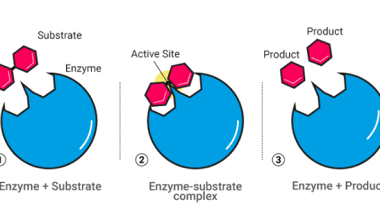
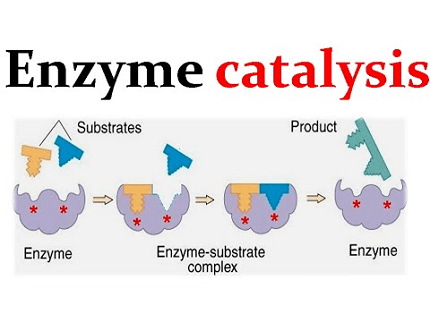
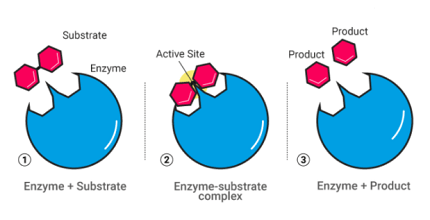
Enzymes are biological catalysts that speed up the rate of chemical reactions in living organisms. Enzymes are highly specific, meaning that they catalyze only one or a few types of chemical reactions. The mechanism by which enzymes catalyze chemical reactions is through a process called enzyme catalysis. Enzyme catalysis involves several steps: The mechanism by…

Activity and selectivity of solid catalysts

Solid catalysts are materials that accelerate chemical reactions by providing a surface for reactant molecules to adsorb onto and react. The activity of a solid catalyst is a measure of how effectively it can promote a particular chemical reaction, while selectivity refers to its ability to selectively form a desired product and minimize the formation…

Catalysis : Homogeneous and heterogeneous

Catalysis refers to the process in which a catalyst increases the rate of a chemical reaction by providing an alternative pathway with lower activation energy. There are two types of catalysis: homogeneous catalysis and heterogeneous catalysis. Homogeneous catalysis involves a catalyst that is in the same phase (i.e., gas, liquid, or solid) as the reactants.…

Temperature dependence of rate constant (Arrhenius equation and activation energy)

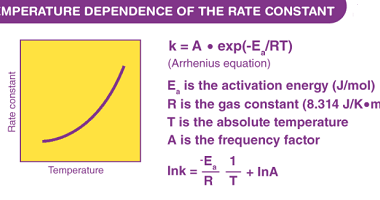
The temperature dependence of a chemical reaction’s rate constant can be described by the Arrhenius equation, which relates the rate constant to the temperature and the activation energy of the reaction: k = A * exp(-Ea/RT) where k is the rate constant, A is the pre-exponential factor or frequency factor, Ea is the activation energy,…

Differential and integrated rate expressions for zero and first order reactions

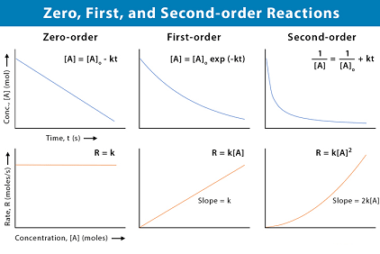
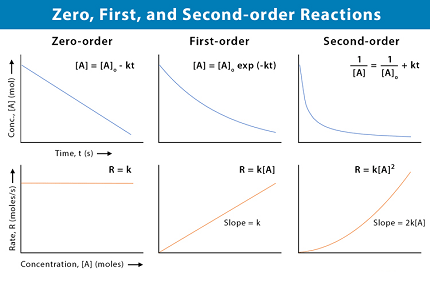
The rate of a chemical reaction is the change in the concentration of reactants or products per unit time. The rate law for a chemical reaction describes how the rate of the reaction depends on the concentrations of the reactants. There are different rate laws for different types of reactions, but two common types are…

Half-life

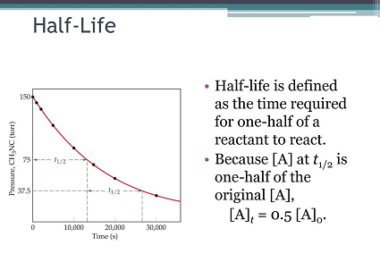
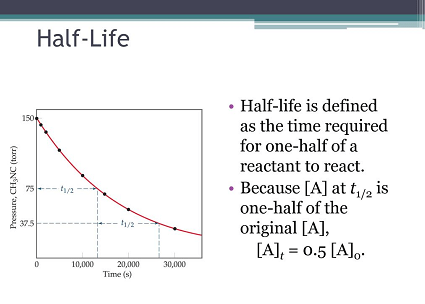
In physics, half-life refers to the time it takes for half of the atoms in a particular sample of a radioactive substance to decay. This decay process is random and unpredictable, so the half-life of a substance cannot be predicted with certainty. However, for any given substance, the half-life is a constant value, meaning that…