Vrindawan Coaching Center

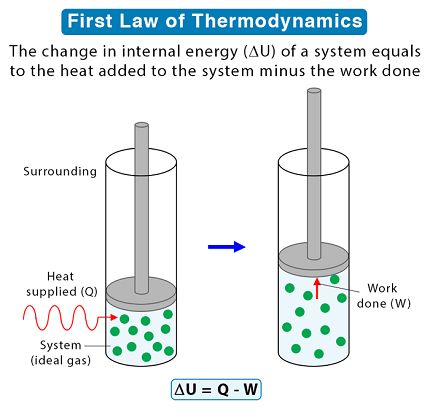
First law of thermodynamics

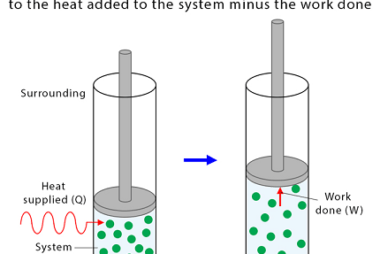
The first law of thermodynamics, also known as the law of conservation of energy, states that energy cannot be created or destroyed, only transformed from one form to another or transferred from one system to another. In other words, the total amount of energy in a closed system remains constant. This law is fundamental to…

State Functions

In thermodynamics, a state function is a property of a system that depends only on the current state or condition of the system and not on how the system arrived at that state. State functions are also known as state variables or state quantities. Some common examples of state functions include: State functions are extremely…

Intensive and Extensive properties

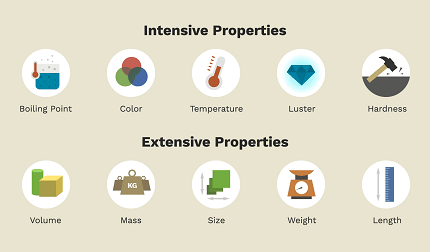
In thermodynamics, properties of matter can be classified as either intensive or extensive. Intensive properties are properties that do not depend on the amount of matter present. Examples of intensive properties include temperature, pressure, density, and specific heat capacity. These properties are useful in describing the state of a system and can be used to…

Tetrahedral and Octahedral

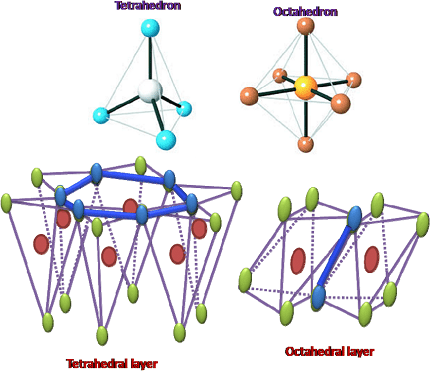
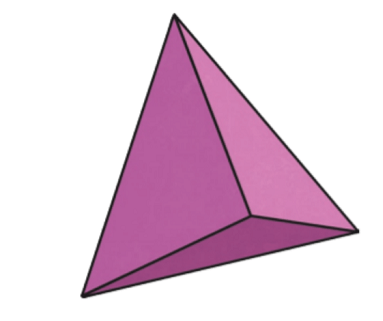
Tetrahedral and octahedral are two geometric shapes commonly found in chemistry and crystallography. Tetrahedral refers to a shape with four sides, each of which is a triangle. The tetrahedron is a regular solid with four identical equilateral triangles as its faces, and it is often used to describe the molecular geometry of compounds with four…

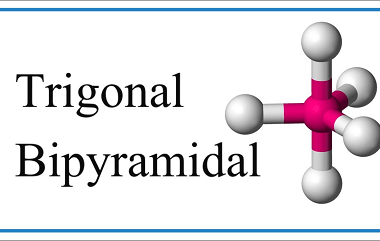
Trigonal bipyramidal

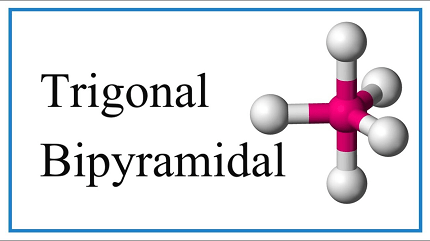
Trigonal bipyramidal is a term used in chemistry to describe the shape of molecules that have five atoms or groups of atoms bonded to a central atom. The shape is named trigonal bipyramidal because it has three equatorial atoms in a plane that form an equilateral triangle, and two axial atoms above and below this…

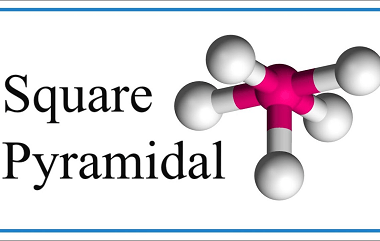
Square pyramidal

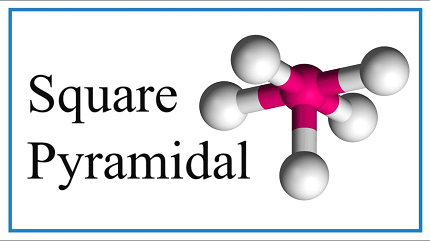
A square pyramid is a type of three-dimensional geometric shape that consists of a square base and four triangular faces that meet at a common point called the apex or vertex. The base of the pyramid is a square, and the four triangular faces are equilateral triangles. The formula for the volume of a square…

Pyramidal

“Pyramidal” can refer to several different things depending on the context. Here are some possible interpretations: What is Required Pyramidal Chemical Bonding and Molecular Structure “Required Pyramidal Chemical Bonding” is not a standard term in chemistry. However, based on the context, it appears that you may be referring to a type of chemical bonding or…

Square planar

Square planar refers to the geometry or arrangement of atoms or ligands around a central atom in a molecule or ion, where the central atom is located at the center of a square plane. In a square planar arrangement, the central atom is surrounded by four ligands or atoms that are arranged in a flat,…

Triangular

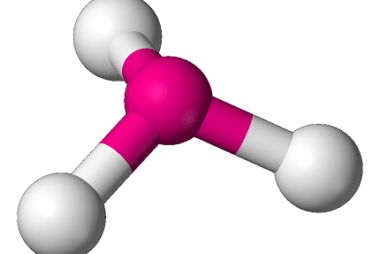
Triangular can refer to different things depending on the context. Here are a few possible interpretations: What is Required Triangular Chemical Bonding and Molecular Structure In chemistry, triangular chemical bonding typically refers to a specific arrangement of atoms in a molecule where three atoms are bonded together in a triangular shape. This can occur in…

Angular

Angular is a popular open-source web application framework developed and maintained by Google. It is a TypeScript-based framework for building dynamic, single-page web applications (SPAs). Angular follows the Model-View-Controller (MVC) architectural pattern and provides a set of tools and features for building complex and scalable web applications. Some key features of Angular include: Angular is…