Vrindawan Coaching Center

Indefinite integrals of standard functions

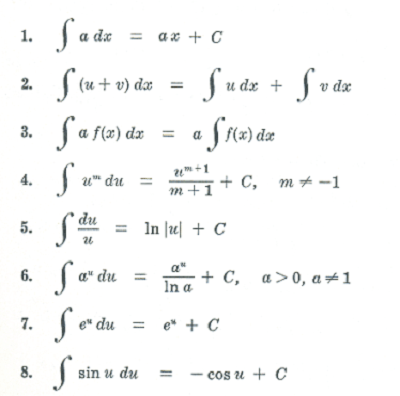
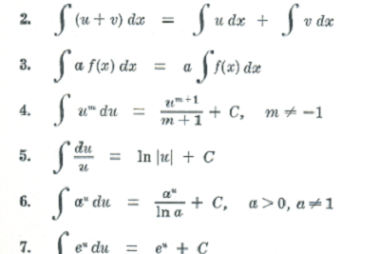
Sure, here are some common indefinite integrals of standard functions: Note that there are many more integrals of standard functions, but these are some of the most common ones. Also, the notation $\int f(x) dx$ represents the indefinite integral of the function $f(x)$ with respect to $x$, and $C$ is the constant of integration. What…

Integration as the inverse process of differentiation

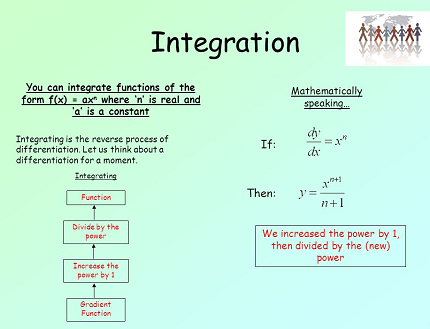
Integration is the inverse process of differentiation. Differentiation is a process by which we find the rate of change of a function with respect to one of its variables. The inverse process of differentiation is integration, which is used to find the function that gives rise to a given rate of change. If we have…

Geometric interpretation of derivatives

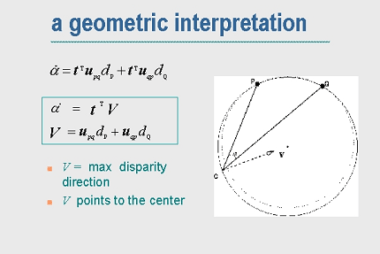
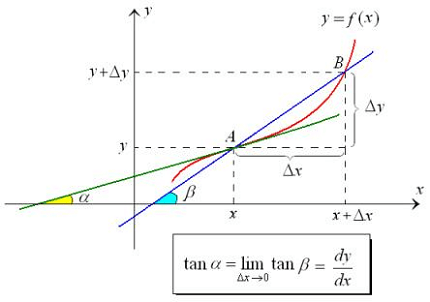
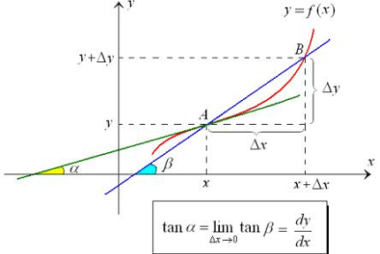
The derivative of a function can be interpreted geometrically in several ways. One common interpretation is that the derivative represents the slope of the tangent line to the graph of the function at a given point. More specifically, if we consider a function f(x) and a point (a, f(a)) on its graph, the slope of…

Derivatives up to order two of implicit functions

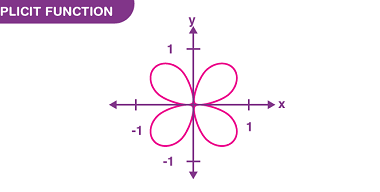
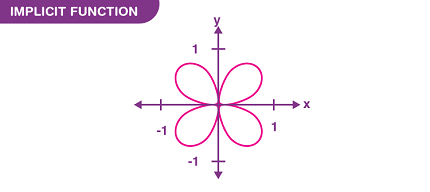
When dealing with implicit functions, we often have equations of the form: F(x, y) = 0 where y is an implicit function of x. That is, we can’t solve for y explicitly in terms of x. However, we can still differentiate the equation with respect to x to find the derivative of y with respect…

Geometric interpretation of the two theorems

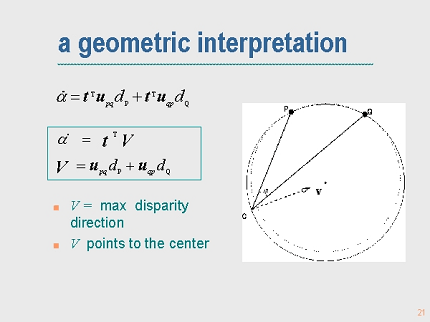
Without knowing which specific theorems you are referring to, it is impossible for me to give you a detailed explanation of their geometric interpretations. However, I can give you some general information about how theorems can be interpreted geometrically. In geometry, theorems are statements that are proven to be true based on a set of…

Rolle’s theorem and Lagrange’s mean value theorem

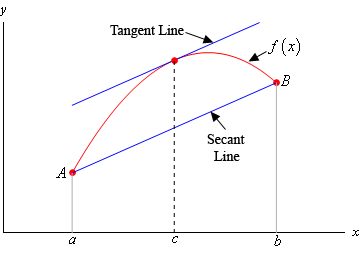
Rolle’s Theorem and Lagrange’s Mean Value Theorem are two important results in calculus that relate to the behavior of functions on a given interval. Rolle’s Theorem states that if a function f(x) is continuous on the closed interval [a, b], differentiable on the open interval (a, b), and f(a) = f(b), then there exists at…

Maximum and Minimum values of a function

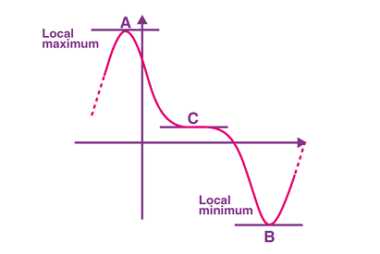
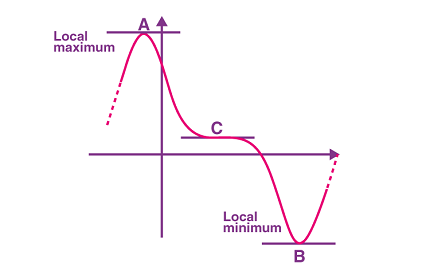
The maximum and minimum values of a function refer to the largest and smallest values that the function takes on, respectively. To find the maximum and minimum values of a function, we can use the following steps: It’s important to note that a function may not have a maximum or minimum value if it is…

Derivatives of order two

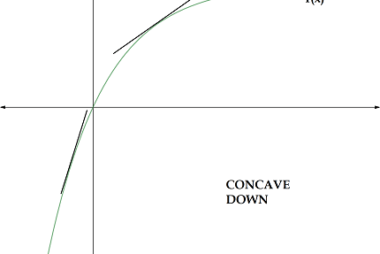
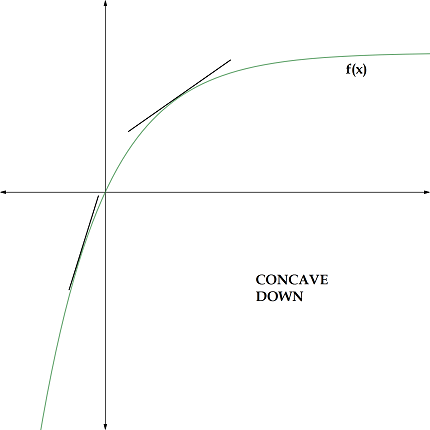
The derivative of a function f(x) gives the rate of change of f(x) with respect to x. The derivative of order two, or the second derivative of f(x), represents the rate of change of the first derivative of f(x) with respect to x. Mathematically, the second derivative of f(x) is denoted as f”(x) or d^2/dx^2…

Increasing and Decreasing functions

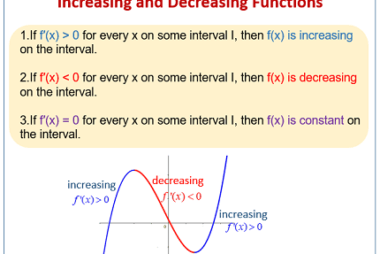
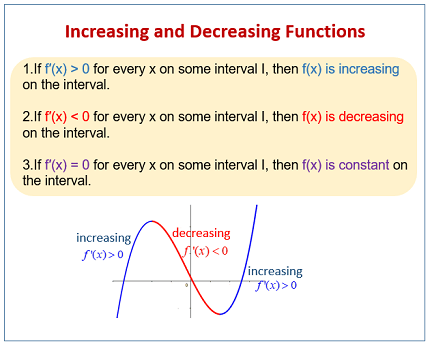
In mathematics, a function is said to be increasing if for any two values of the independent variable, the corresponding values of the dependent variable increase or remain the same as the independent variable increases. More formally, a function f(x) is increasing if for any two values x1 and x2 such that x1 < x2,…

Tangents and Normal

In differential calculus, the concept of tangents and normals is closely related to the idea of derivatives. The derivative of a function at a point gives the slope of the tangent line to the curve at that point. The derivative is also used to find the equation of the tangent line to the curve at…