Vrindawan Coaching Center

Integrated Course AIIMS-SYLLABUS Chemistry syllabus The solubility of the gas in liquids

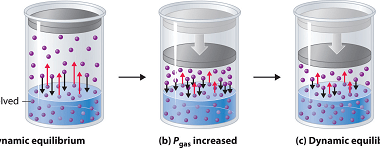
The solubility of the gas in liquids The solubility of a gas in a liquid refers to the ability of the gas to dissolve in the liquid. It is a measure of the maximum amount of gas that can be dissolved in a given quantity of the liquid at a specific temperature and pressure. The…


Integrated Course AIIMS-SYLLABUS Chemistry syllabus Types of solutions

Types of solutions In chemistry, solutions can be classified into various types based on different criteria. Here are some common types of solutions: Based on the state of the solute and solvent:a. Solid Solutions: These solutions involve a solid solute dissolved in a liquid or solid solvent. An example is an alloy like brass, which…

Integrated Course AIIMS-SYLLABUS Chemistry syllabus Crystalline Solids

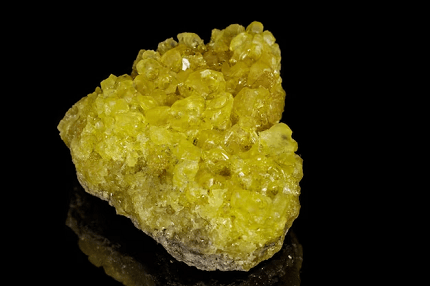
Crystalline Solids Crystalline solids are a type of solid material characterized by their highly ordered and repeating three-dimensional arrangement of atoms, ions, or molecules. This regular arrangement gives crystalline solids their distinct crystalline structure and various properties. Here are some key features and properties of crystalline solids: The study of crystalline solids is essential in…

Integrated Course AIIMS-SYLLABUS Chemistry syllabus Amorphous

Amorphous Amorphous is a term used in materials science to describe a solid substance that lacks a definite long-range order in its atomic or molecular structure. Unlike crystalline materials, which have a regular and repeating arrangement of atoms or molecules, amorphous materials have a disordered arrangement. In amorphous substances, the atoms or molecules are randomly…

Integrated Course AIIMS-SYLLABUS Chemistry syllabus Ionic covalent

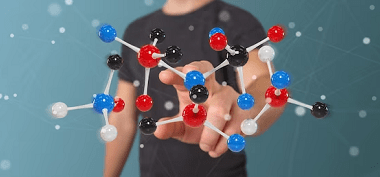
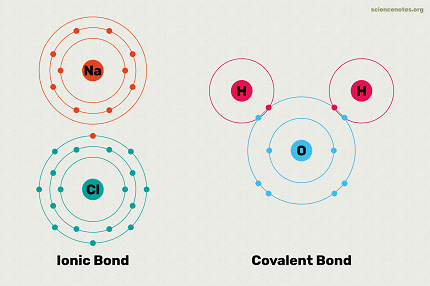
Ionic covalent “Ionic” and “covalent” are terms used to describe the types of chemical bonds that can form between atoms. Ionic Bond: An ionic bond is formed when one or more electrons are transferred from one atom to another. This results in the formation of positively charged ions (cations) and negatively charged ions (anions). The…

Integrated Course AIIMS-SYLLABUS Chemistry syllabus Classification of solids based on different binding forces such as molecular

Classification of solids based on different binding forces such as molecular Based on different binding forces, solids can be classified into the following categories: It’s worth noting that some solids may exhibit a combination of these types of bonding or forces to varying degrees. The classification is based on the predominant type of binding forces…

Integrated Course AIIMS-SYLLABUS Chemistry syllabus Solid state

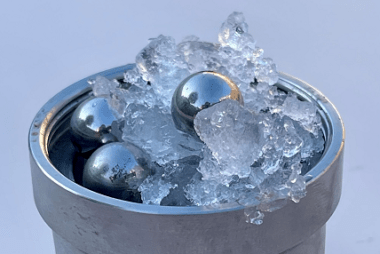
Solid state The solid state is a state of matter characterized by a definite shape and volume. In the solid state, particles (atoms, ions, or molecules) are closely packed and held together by strong intermolecular forces. This results in a rigid structure with a fixed arrangement of particles. Here are some key aspects and properties…

Integrated Course AIIMS-SYLLABUS Physics syllabus Matter waves

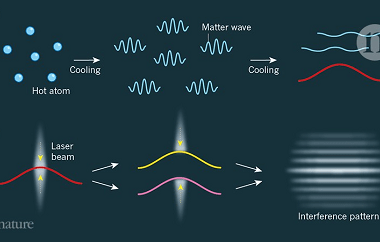
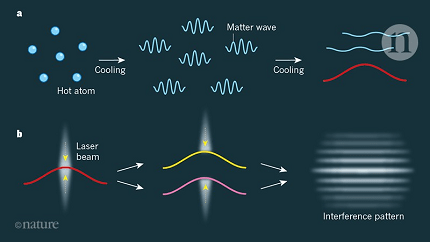
Matter waves Matter waves, also known as de Broglie waves, are a fundamental concept in quantum mechanics that describes the wave-like behavior of particles. According to the wave-particle duality principle, particles, such as electrons, protons, and even larger objects like atoms and molecules, can exhibit wave-like properties. The concept of matter waves originated from Louis…

Integrated Course AIIMS-SYLLABUS Physics syllabus Einstein’s photoelectric equation

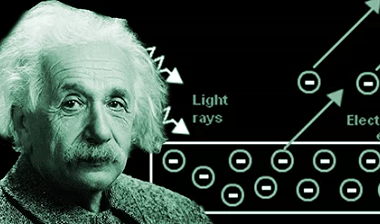
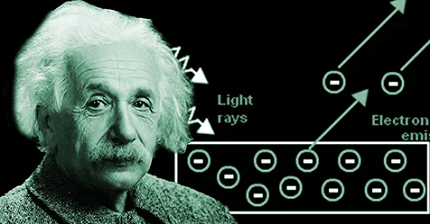
Einstein’s photoelectric equation Einstein’s photoelectric equation, also known as the photoelectric effect equation, describes the relationship between the energy of a photon and the maximum kinetic energy of an emitted electron during the photoelectric effect. The equation is as follows: E = hf – φ Where: The photoelectric effect is the phenomenon where electrons are…

Integrated Course AIIMS-SYLLABUS Physics syllabus Photoelectric effect

Photoelectric effect The photoelectric effect refers to the phenomenon in which electrons are ejected from a material’s surface when it is illuminated by light or electromagnetic radiation. It was first observed and explained by Albert Einstein in 1905, for which he was awarded the Nobel Prize in Physics in 1921. Here are the key points…