Vrindawan Coaching Center

PVC

PVC stands for polyvinyl chloride, which is a synthetic plastic polymer made from the monomer vinyl chloride. It is a commonly used material in various applications such as construction, piping, electrical insulation, clothing, and medical devices. PVC is known for its durability, flexibility, and resistance to moisture and chemicals. However, PVC also has some drawbacks.…

Cellulose

Cellulose is a complex carbohydrate, also known as a polysaccharide, that is found in the cell walls of plants. It is the most abundant organic compound on Earth, and it serves as the structural material for plants. Cellulose molecules consist of long chains of glucose molecules that are linked together by β(1→4) glycosidic bonds, which…

Natural Rubber

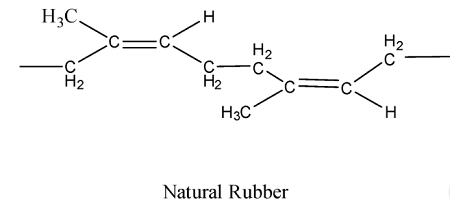
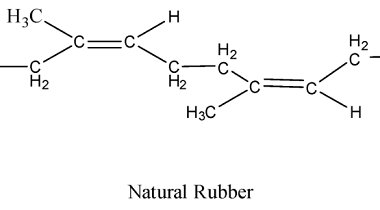
Natural rubber is a type of elastomer that is derived from the latex of various tropical plants, primarily the Hevea brasiliensis tree. The latex is harvested by making incisions in the bark of the tree and collecting the milky fluid that flows out. This fluid contains small, elastic globules of rubber, which can be processed…

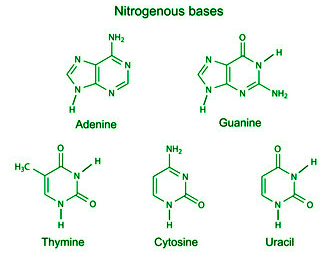
Nucleic acids: Chemical composition

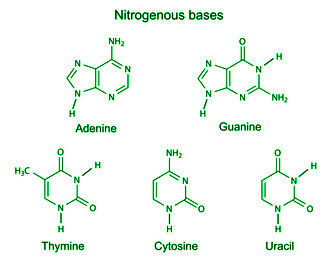
Nucleic acids are macromolecules that are essential to all living organisms. They are made up of building blocks called nucleotides, which consist of a nitrogenous base, a sugar molecule, and a phosphate group. There are two types of nucleic acids: deoxyribonucleic acid (DNA) and ribonucleic acid (RNA). The chemical composition of DNA nucleotides includes: The…

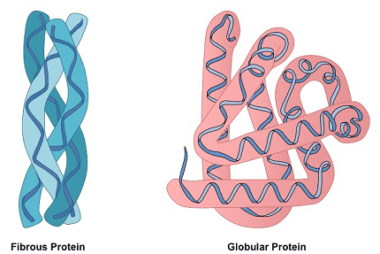
Types of proteins (Fibrous and Globular)

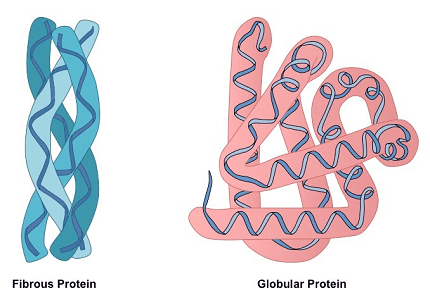
Proteins are complex biomolecules that perform a variety of functions in living organisms. They can be classified into two main types: fibrous and globular proteins. Fibrous proteins are long and thin, with a repeating pattern of amino acids. They are often used for structural support and protection in cells and tissues. Examples of fibrous proteins…

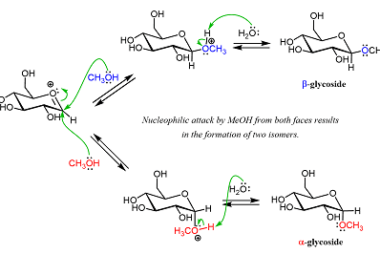
Glycoside formation

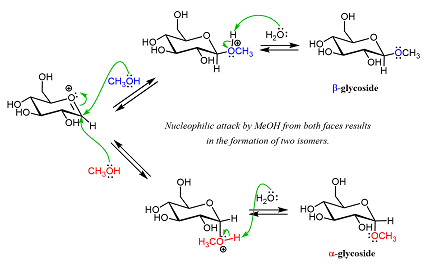
Glycoside formation is a chemical reaction in which a sugar molecule (i.e., a saccharide) reacts with another molecule (usually an alcohol or phenol) to form a glycoside. Glycosides are a type of organic molecule that are widely found in nature, particularly in plants, where they can serve as storage compounds or structural components of cell…

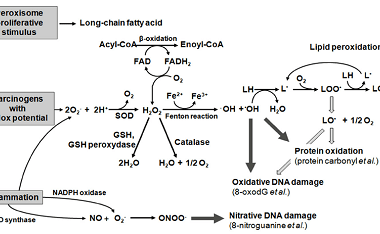
Oxidation

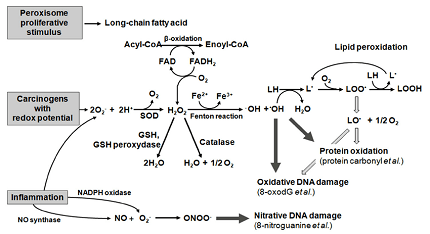
Oxidation of biomolecules refers to a process in which electrons are lost from a molecule, leading to a decrease in its energy content. Biomolecules such as carbohydrates, lipids, and proteins can undergo oxidation in the presence of oxygen, which is a strong oxidizing agent. Carbohydrates, for example, can undergo oxidation to produce energy in the…

Glucose and Sucrose

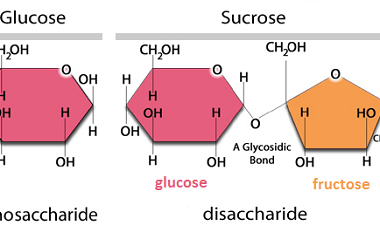
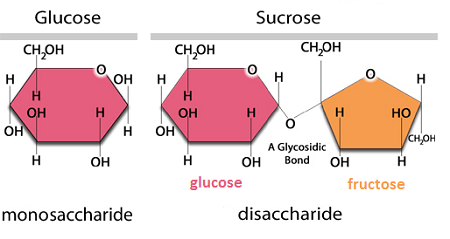
Glucose and sucrose are both carbohydrates commonly found in food. Glucose is a simple sugar, also known as a monosaccharide, with the chemical formula C6H12O6. It is the primary source of energy for most living organisms and is commonly found in fruits, vegetables, and honey. Glucose is also a component of more complex carbohydrates such…

Carbohydrates: Classification

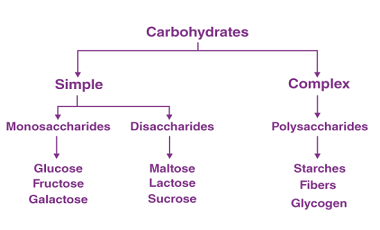
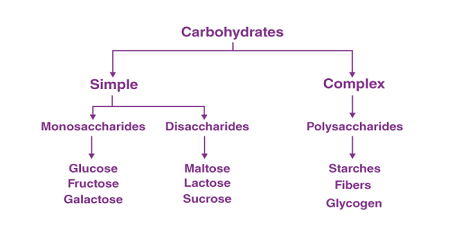
Carbohydrates are one of the three macronutrients that provide energy to the body. They are organic compounds made up of carbon, hydrogen, and oxygen, with a general formula of (CH2O)n, where “n” can be any number. Carbohydrates are classified based on the number of sugar units they contain: Carbohydrates can also be classified as either…

Wurtz-Fittig

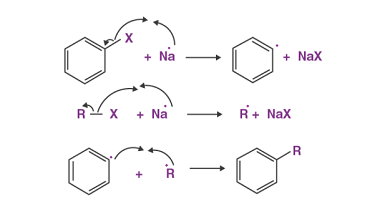
The Wurtz-Fittig reaction is a chemical reaction that involves the coupling of two alkyl halides in the presence of metallic sodium to form a carbon-carbon bond. This reaction was discovered independently by two chemists, Charles Adolphe Wurtz and Paul Fittig, in the mid-19th century. The general reaction can be written as: R-X + R’-X +…