Vrindawan Coaching Center

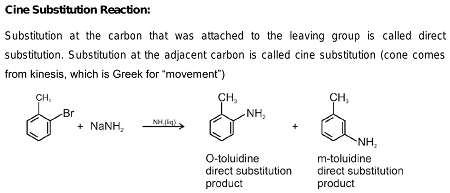
Cine substitution

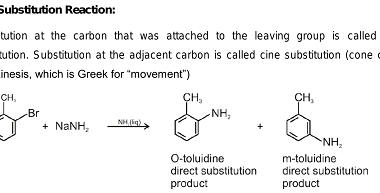
Haloarenes, which are organic compounds containing at least one halogen atom (fluorine, chlorine, bromine, or iodine) attached to an aromatic ring, can undergo cine substitution reactions. Cine substitution reactions involve the substitution of a halogen atom on a benzene ring by a nucleophile, such as an amine, hydroxide ion, or cyanide ion, at the ortho…

Excluding benzyne mechanism

The benzyne mechanism is a reaction mechanism that involves the formation of a highly reactive intermediate called benzyne. This mechanism is often used in organic chemistry to explain reactions involving substituted aromatic compounds. However, there are many other reaction mechanisms in organic chemistry that do not involve the formation of benzyne. Some examples include: These…

Substituted haloarenes

Substituted haloarenes are a class of organic compounds that contain one or more halogen atoms (such as chlorine, bromine, or iodine) attached to an aromatic ring. These compounds are commonly used as starting materials for the synthesis of a variety of organic compounds, including pharmaceuticals, agrochemicals, and materials. The properties of substituted haloarenes can vary…

Wurtz-Fittig

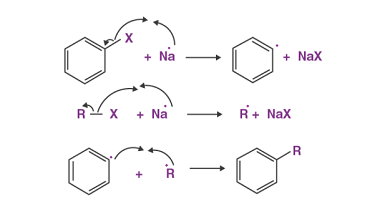
The Wurtz-Fittig reaction is a chemical reaction that involves the coupling of two alkyl halides in the presence of metallic sodium to form a carbon-carbon bond. This reaction was discovered independently by two chemists, Charles Adolphe Wurtz and Paul Fittig, in the mid-19th century. The general reaction can be written as: R-X + R’-X +…

Reactions: Fittig

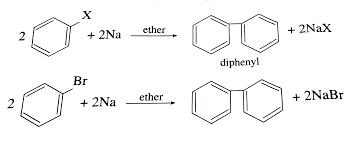
Fittig is a reaction in organic chemistry named after the German chemist Friedrich Fittig. The Fittig reaction involves the coupling of two aryl or vinyl halides to form a biaryl or bivinyl compound, respectively, in the presence of a metallic sodium or potassium. The reaction is carried out in an inert solvent such as ether…

Acylation reactions

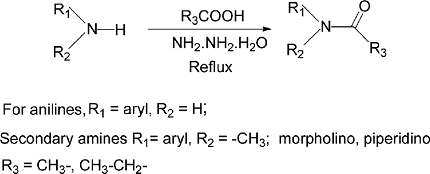
Acylation reactions are chemical reactions in which an acyl group (-COCH3) is added to a molecule. The acyl group can be derived from an acid chloride (RCOCl), an anhydride (RCOOR), or a carboxylic acid (RCOOH) with an activating agent such as DCC (dicyclohexylcarbodiimide) or SOCl2 (thionyl chloride). One common type of acylation reaction is the…

Alkylation

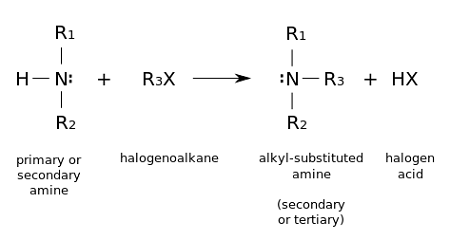
Alkylation is a chemical reaction in which an alkyl group (a group of carbon and hydrogen atoms) is added to a molecule. This process is commonly used in organic chemistry to introduce new alkyl groups to a molecule in order to modify its properties or reactivity. Alkylation reactions can be carried out using a variety…

Carbylamine reaction

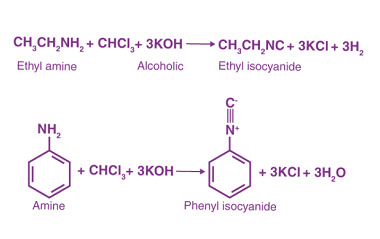
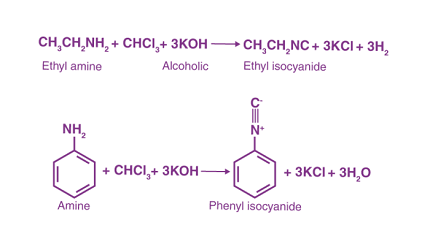
The Carbylamine reaction, also known as the isocyanide test or Hofmann’s isocyanide test, is a chemical test used to detect the presence of primary amines in a given compound. The test was discovered by August Wilhelm von Hofmann in 1861 and is based on the reaction of primary amines with chloroform and a strong base,…

Related reactions of diazonium salts

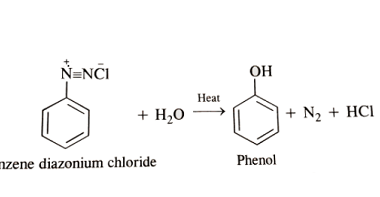
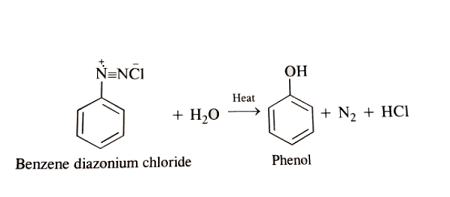
Diazonium salts are versatile compounds that can undergo a variety of reactions. Some common reactions of diazonium salts include: Overall, diazonium salts are versatile compounds that can undergo a variety of reactions, making them useful intermediates in organic synthesis. What is Required Related reactions of diazonium salts The required related reactions of diazonium salts depend…

Sandmeyer

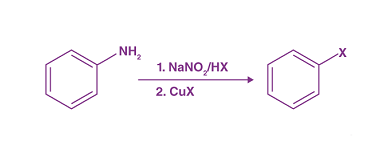
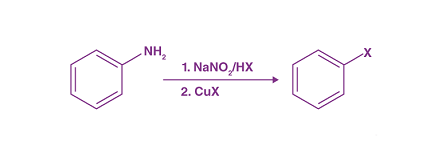
The Sandmeyer reaction is a classic organic chemical reaction that is used to synthesize aryl halides from aryl diazonium salts. The reaction is named after Traugott Sandmeyer, who first reported it in 1884. Amines can be used as starting materials in the Sandmeyer reaction to synthesize aryl halides bearing amino groups. The reaction proceeds via…