Vrindawan Coaching Center

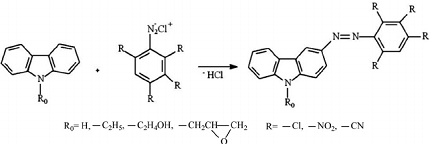
Azo coupling reaction of diazonium salts of aromatic amines

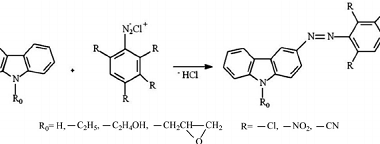
Azo coupling reaction is a type of organic reaction that involves the reaction of a diazonium salt of an aromatic amine with another aromatic compound that contains an electron-rich group, such as an -OH or -NH2 group. The reaction results in the formation of an azo compound, which contains a -N=N- group. The general reaction…
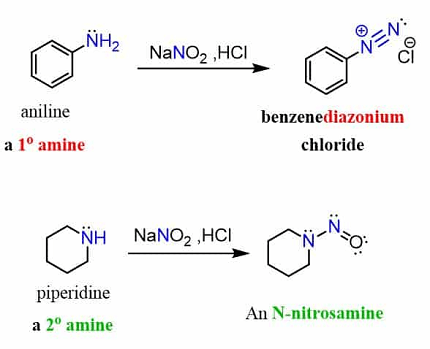
Reaction with nitrous acid

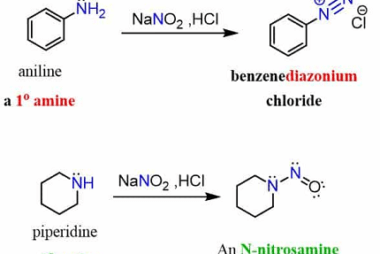
The reaction with nitrous acid (HNO2) depends on the conditions and the nature of the compound with which it reacts. In general, nitrous acid is a weak acid and a good oxidizing agent. Here are a few examples of reactions with nitrous acid: CH3CH2OH + HNO2 → CH3CH2ONO C6H5NH2 + HNO2 → C6H5N2Cl + 2H2O…

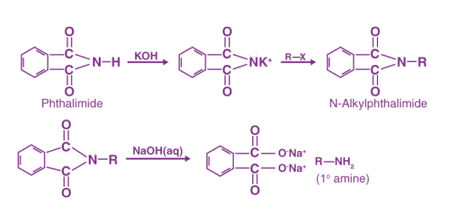
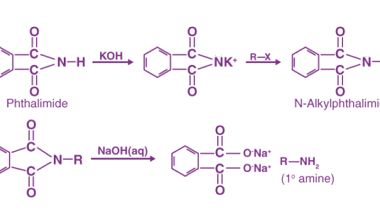
Gabriel phthalimide synthesis

The Gabriel phthalimide synthesis is a method for the preparation of primary amines from alkyl halides. The reaction involves the formation of an N-alkyl phthalimide intermediate, followed by its hydrolysis under basic conditions to give the corresponding primary amine. The general reaction scheme is as follows: R-X + phthalimide → R-NH-phthalimide R-NH-phthalimide + base →…

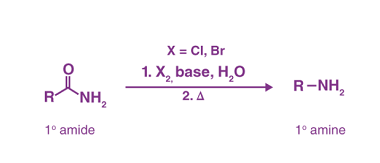
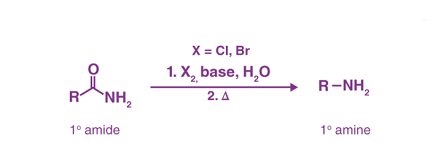
Reactions: Hoffmann bromamide degradation

The Hoffmann bromamide degradation is a chemical reaction that involves the conversion of a primary amide to a primary amine by treating it with bromine and sodium or potassium hydroxide. The reaction proceeds via a rearrangement of the intermediate isocyanate to an amine. The reaction is named after August Wilhelm von Hofmann, who discovered it…

Preparation from nitro compounds

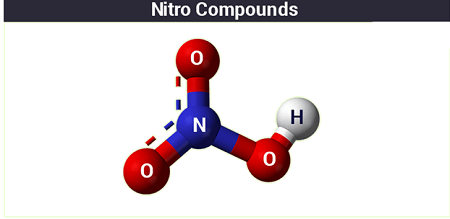
Nitro compounds can be prepared through a variety of methods, including: It is important to note that the preparation of nitro compounds can be hazardous and should only be carried out by trained professionals in a properly equipped laboratory. Appropriate safety precautions must be taken to prevent accidents and exposure to toxic chemicals. What is…

Acid chlorides

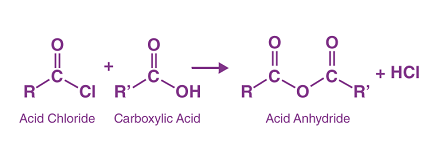
Acid chlorides are a class of organic compounds that contain a functional group consisting of a carbonyl group (C=O) bonded to a chlorine atom (Cl) and another functional group. They are also known as acyl chlorides or chloroformates. The general formula for an acid chloride is RCOCl, where R is an alkyl or aryl group.…

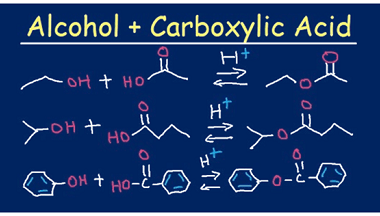
Formation of Esters

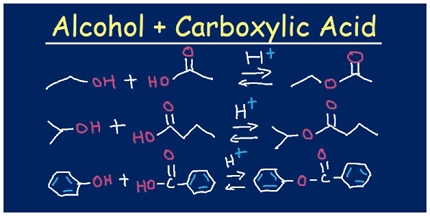
Carboxylic acids can form esters through a reaction called esterification. Esterification involves the reaction of a carboxylic acid with an alcohol in the presence of an acid catalyst. The acid catalyst typically used is concentrated sulfuric acid or hydrochloric acid. The reaction is typically carried out by combining the carboxylic acid and alcohol in a…

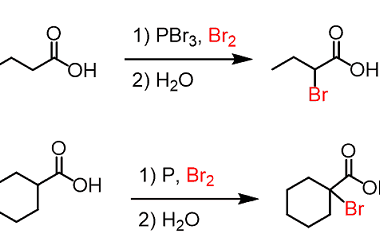
Halogenation

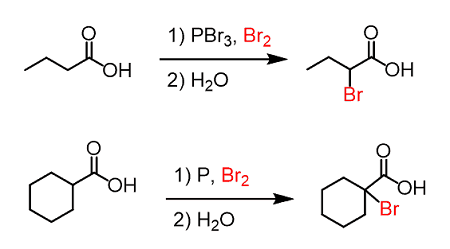
Carboxylic acids are not usually halogenated directly as they are not very reactive towards halogens. However, there are a few methods for the halogenation of carboxylic acids. One method involves the use of phosphorus halides, such as phosphorus tribromide (PBr3) or phosphorus pentachloride (PCl5), to convert the carboxylic acid into an acyl halide. The reaction…

Reactions: Reduction

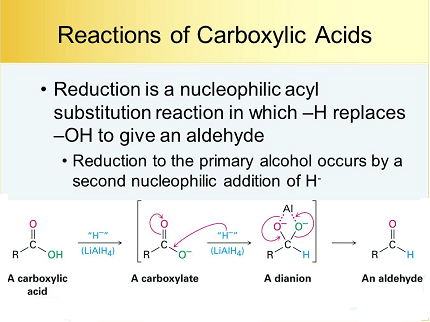
In chemistry, a reduction reaction is a type of chemical reaction in which electrons are gained by an atom, molecule, or ion. This results in a decrease in the oxidation state or an increase in the number of bonds to hydrogen in the substance being reduced. Reduction reactions can be identified by the addition of…

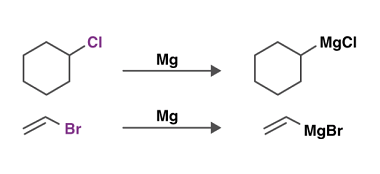
Grignard reagents

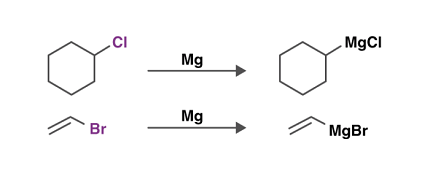
Grignard reagents are organometallic compounds that contain a carbon atom bonded to a magnesium atom, often represented as RMgX (where R is an alkyl or aryl group and X is a halogen such as Cl, Br, or I). They are named after their discoverer, French chemist Victor Grignard, who was awarded the Nobel Prize in…