Vrindawan Coaching Center

Effect of directing groups (monosubstituted benzene) in these reactions

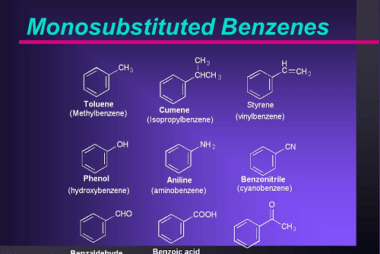
The effect of directing groups in reactions of monosubstituted benzene depends on the type of reaction being considered. In summary, directing groups play an important role in the reactivity and selectivity of reactions involving monosubstituted benzene. What is Required Effect of directing groups (monosubstituted benzene) in these reactions The effect of directing groups in reactions…
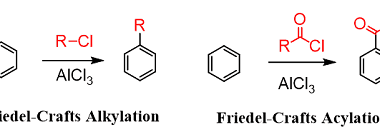
Friedel Crafts alkylation and acylation

Friedel-Crafts alkylation and acylation are two important organic reactions used to attach an alkyl or acyl group to an aromatic ring. Friedel-Crafts alkylation involves the reaction of an alkyl halide with an aromatic ring in the presence of a Lewis acid catalyst such as aluminum trichloride (AlCl3) or ferric chloride (FeCl3). The mechanism involves the…

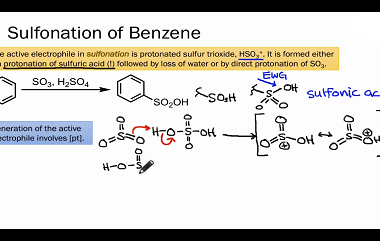
Sulphonation

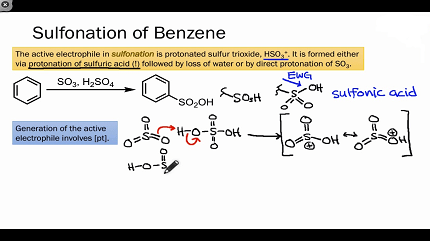
Benzene sulphonation is a chemical reaction that involves the substitution of a hydrogen atom on the benzene ring with a sulfonic acid (-SO3H) group. This reaction is an important industrial process used to produce a variety of organic compounds, including detergents, dyes, and pharmaceuticals. The reaction typically involves treating benzene with concentrated sulfuric acid (H2SO4)…

Nitration

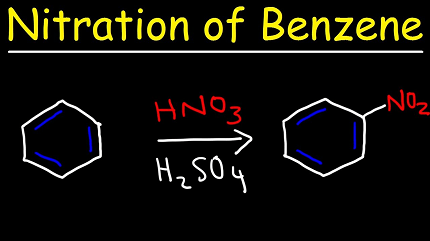
Benzene nitration is a chemical reaction in which a nitro group (-NO2) is introduced into the benzene molecule. This reaction is an important industrial process and is used to produce a variety of chemical compounds, such as explosives, dyes, and pharmaceuticals. The nitration of benzene is typically carried out by treating benzene with a mixture…

Structure

Benzene is an organic chemical compound with the molecular formula C6H6. It is a colorless, highly flammable liquid with a characteristic odor. The structure of benzene consists of six carbon atoms arranged in a hexagonal ring with alternating double bonds (pi bonds) and single bonds (sigma bonds) between the carbon atoms. The benzene ring is…

Cyclic polymerization reaction of alkynes

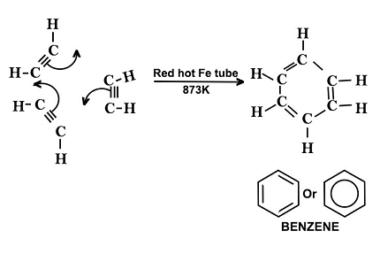
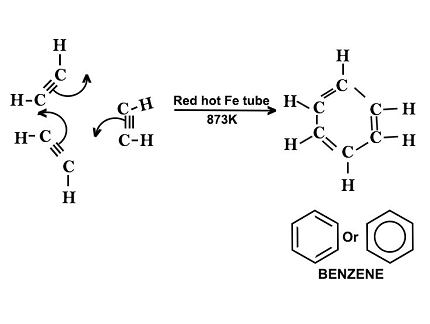
Cyclic polymerization of alkynes is a type of polymerization reaction in which a cyclic polymer is formed from the reaction of two or more monomers. The reaction is initiated by a suitable catalyst, typically a transition metal complex, which activates the alkyne bond to undergo polymerization. The mechanism of cyclic polymerization of alkynes involves the…

Effect of peroxide on addition reactions

Peroxide can have a significant effect on addition reactions. When a small amount of peroxide is added to an alkene, it can act as a radical initiator, which can lead to free radical addition reactions. In these reactions, the peroxide helps to break the double bond of the alkene, creating two alkyl radicals. These radicals…

Electrophilic addition reactions of alkenes with X2, HX, HOX, (X=halogen)

Electrophilic addition reactions are the most common reactions of alkenes. When an alkene reacts with an electrophile, the double bond of the alkene is broken and two new sigma bonds are formed. The most common electrophilic addition reactions of alkenes are with halogens, hydrogen halides, and halohydrins. Example reaction: C2H4 + Br2 → C2H4Br2 Example…

Reactions of alkenes with KMnO4 and Ozone

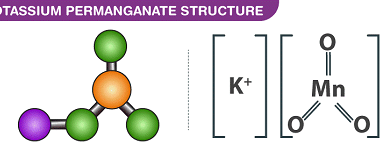
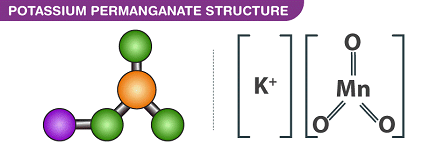
Alkenes can undergo different reactions with KMnO4 (potassium permanganate) and ozone (O3) depending on the conditions and the type of alkene. When alkenes are treated with KMnO4 in the presence of acidic conditions, they can undergo oxidative cleavage, resulting in the formation of two carbonyl compounds (ketones or aldehydes) and a pair of manganese dioxide…

Metal acetylides

Metal acetylides are a class of inorganic compounds that consist of a metal atom or ion bound to one or more acetylide ligands. Acetylides are compounds containing the -C≡C^- anion, also known as the ethynide anion. Metal acetylides can be prepared by reacting a metal salt with an acetylene source, such as acetylene gas or…