Vrindawan Coaching Center

Conformations of Ethane and Butane

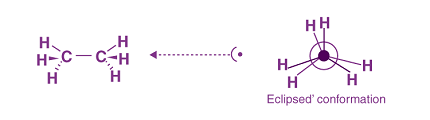
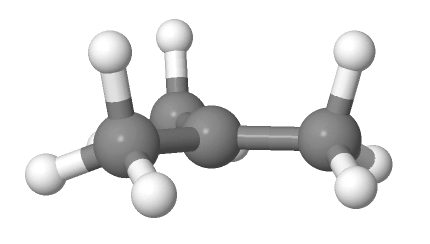
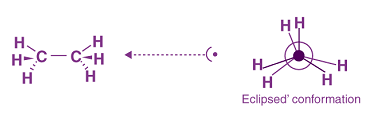
Ethane and butane are both hydrocarbons, which means they consist of only carbon and hydrogen atoms. These molecules can adopt different conformations, which are different arrangements of the atoms in space. The most common conformations of ethane and butane are: The most stable conformation of ethane is the staggered conformation, where the two carbon atoms…
Boiling points

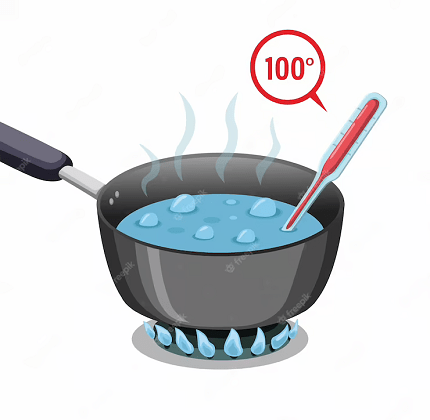
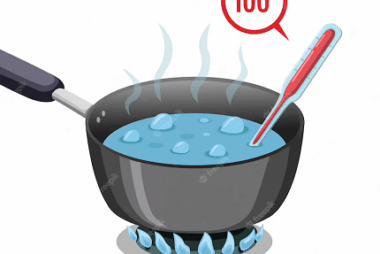
Boiling point is the temperature at which a substance changes from a liquid state to a gaseous state. The boiling point of a substance depends on the pressure and the intermolecular forces between its molecules. Here are some examples of boiling points at standard atmospheric pressure (1 atmosphere): What is Required Alkanes Boiling points The…

Physical properties (melting points)

Physical properties such as melting point are characteristic properties of a substance that can be used to identify and distinguish it from other substances. Melting point is the temperature at which a substance changes from a solid to a liquid state at a constant pressure. It is usually measured in degrees Celsius (°C) or Fahrenheit…

Homologous series

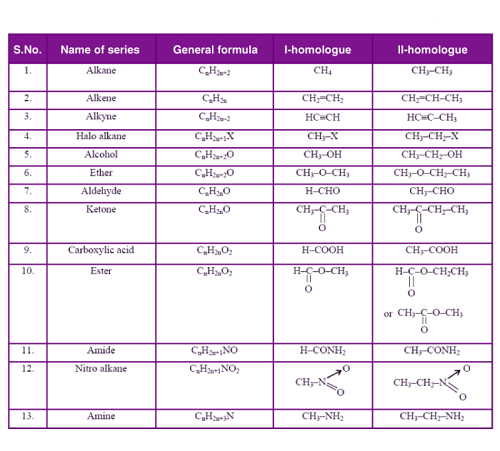
A homologous series is a group of organic compounds that have similar structures and chemical properties, with each successive member of the series differing from the previous one by a common structural unit, such as a -CH2- group. These compounds have the same functional group and similar chemical reactions, which result in similar physical and…

Carbanions and Free radicals

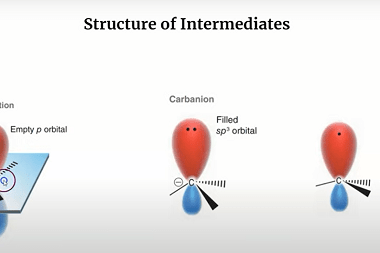
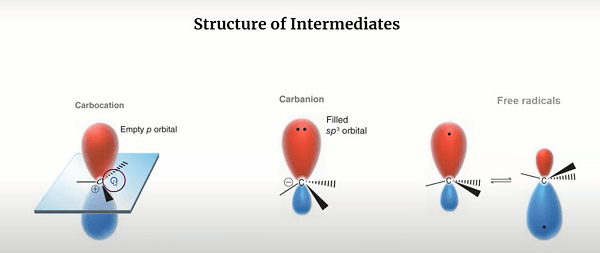
Carbanions and free radicals are two types of reactive intermediates that are commonly encountered in organic chemistry. A carbanion is an anionic species with a negatively charged carbon atom. It is formed when a carbon atom gains an electron pair and becomes negatively charged. Carbanions are typically very reactive and are often involved in nucleophilic…

Structure and Stability of carbocations

Carbocations are organic ions that have a positively charged carbon atom with three substituents. They are highly reactive species that play important roles in various organic reactions. The structure and stability of carbocations are determined by several factors, including the number and nature of substituents attached to the carbon atom and the availability of electron…

Formation

Formation can refer to different things depending on the context, but in general, it means the process of coming together or being organized into a particular shape, structure, or system. Here are a few examples: Overall, formation implies a process of coming together or organizing into a specific structure or system. What is Required Basic…

Reactive intermediates produced during homolytic and heterolytic bond cleavage

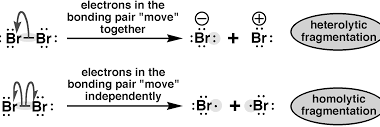
During bond cleavage, reactive intermediates can be produced as a result of either homolytic or heterolytic cleavage. In homolytic cleavage, the bond is split evenly between the two atoms, resulting in the formation of two highly reactive species called free radicals. Free radicals are atoms or molecules with an unpaired electron in their outer shell,…

Acidity and Basicity of organic compounds

Acidity and basicity are important chemical properties of organic compounds. Acidity refers to the ability of a compound to donate a proton (H+) and form a stable conjugate base. Basicity, on the other hand, refers to the ability of a compound to accept a proton and form a stable conjugate acid. The acidity or basicity…

Hyperconjugative Effects

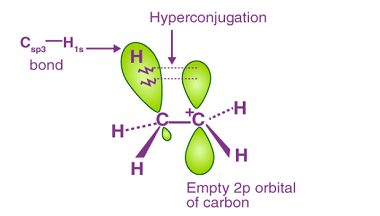
Hyperconjugation is a type of resonance that occurs in organic molecules. It involves the delocalization of electrons from a σ-bond to an adjacent empty or partially filled p-orbital. This electron delocalization provides stability to the molecule. Hyperconjugation is possible due to the overlapping of the σ-orbital of a C-H bond with the empty or partially…