Vrindawan Coaching Center

Elimination

Elimination is the process of removing or getting rid of something or someone. It can refer to various contexts, such as: What is Required Alkenes and Alkynes Elimination Required alkenes and alkynes elimination refers to a type of organic reaction known as an elimination reaction, in which a molecule loses a small molecule, such as…
Excluding the stereochemistry of addition

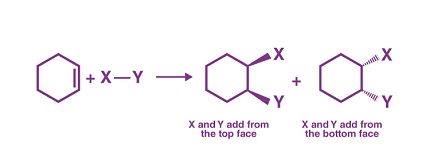
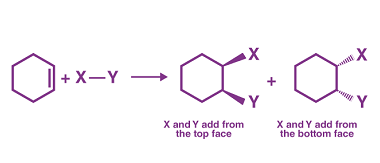
Excluding the stereochemistry of addition means that we are not considering the specific spatial arrangement of atoms or groups around the carbon-carbon double bond when an addition reaction takes place. In organic chemistry, addition reactions involve the addition of atoms or groups to the carbon-carbon double bond of an unsaturated compound, resulting in the formation…

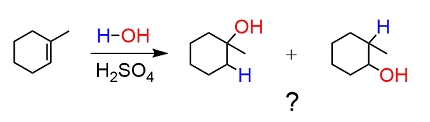
Acid catalysed hydration

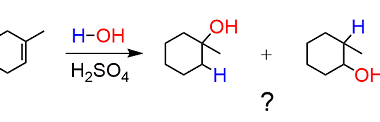
Acid-catalyzed hydration is a chemical reaction in which an acid catalyst (such as sulfuric acid or phosphoric acid) is used to add water (H2O) to an unsaturated compound, typically an alkene or alkyne. The reaction produces an alcohol as the final product. The general equation for acid-catalyzed hydration of an alkene is: RCH=CH2 + H2O…

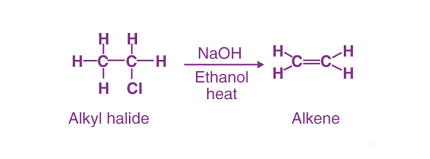
Preparation by elimination reactions

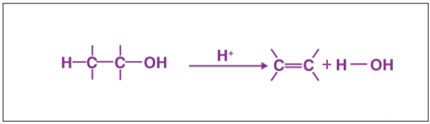
Elimination reactions are a type of organic reaction where a molecule loses one or more atoms or groups of atoms to form a double bond or a triple bond. The most common type of elimination reaction is called a beta-elimination, where the atom or group of atoms that is eliminated is adjacent to a leaving…

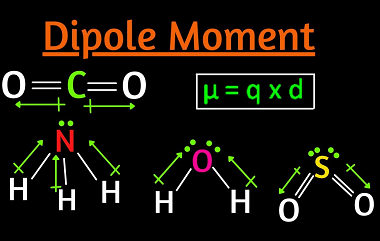
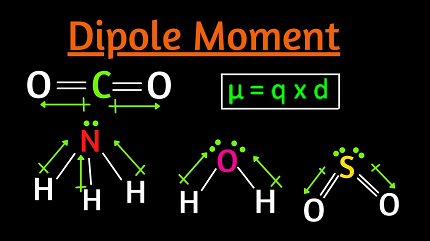
Dipole moments

A dipole moment is a measure of the separation of electrical charge within a molecule or a polar covalent bond. It occurs when there is a separation of positive and negative charges within a molecule. The magnitude of the dipole moment is represented by the product of the charge and the distance between the charges.…

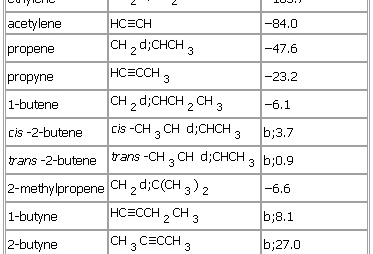
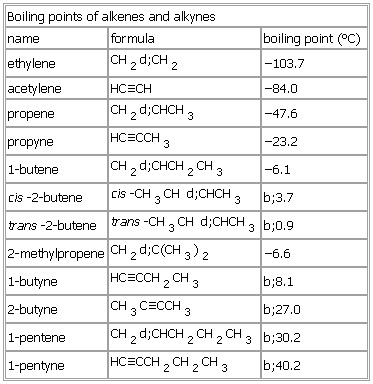
Physical properties (boiling points)

Boiling point is a physical property of a substance that refers to the temperature at which the substance changes from a liquid state to a gaseous state. It is determined by the strength of intermolecular forces within the substance and the atmospheric pressure. Some examples of boiling points of common substances are: It’s worth noting…

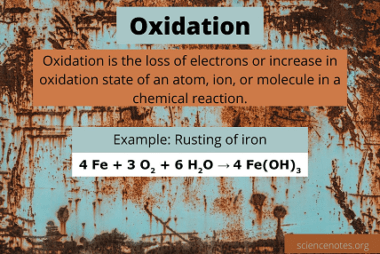
Oxidation

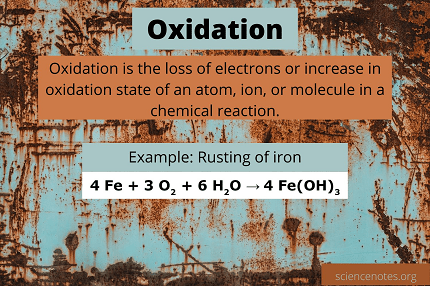
Oxidation is a chemical process in which a substance loses electrons. It is often defined as the process in which a substance reacts with oxygen to form an oxide. Oxidation reactions can also involve other elements, such as hydrogen or chlorine, and can occur without the presence of oxygen. In an oxidation reaction, the substance…

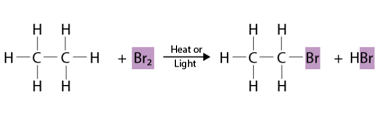
Halogenation

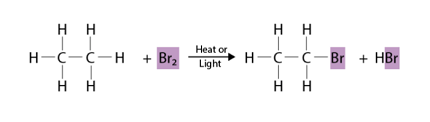
Halogenation refers to a chemical reaction in which a halogen atom (such as chlorine, bromine, or iodine) is introduced into a molecule. This can occur through several different types of reactions, including substitution, addition, and radical reactions. In a substitution reaction, a halogen atom replaces another atom or group of atoms in a molecule. For…

Combustion

Combustion is a chemical reaction in which a fuel combines with an oxidizer to release energy in the form of heat and light. The fuel is typically a hydrocarbon, such as gasoline, propane, or natural gas, while the oxidizer is usually oxygen from the air. During the combustion process, the fuel and oxidizer react with…

Newman projections

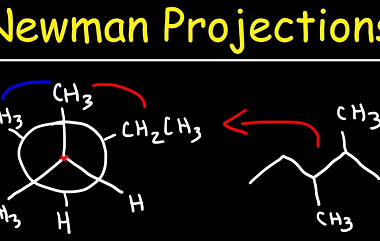
Newman projections are a way of representing the three-dimensional structure of a molecule in a two-dimensional form. They are commonly used in organic chemistry to show the relative orientation of atoms and functional groups in a molecule. A Newman projection is essentially a representation of the molecule as seen down the axis of a single…