Vrindawan Coaching Center

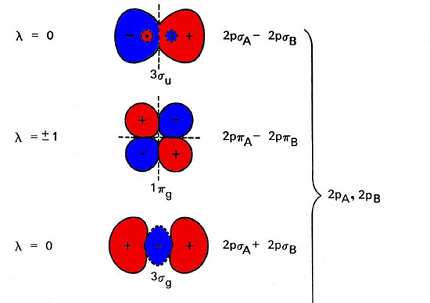
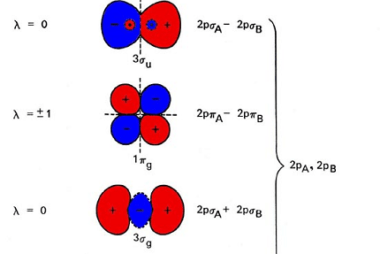
Molecular orbital energy diagrams for homonuclear diatomic species (up to Ne2)

Sure, here are the molecular orbital energy diagrams for homonuclear diatomic species from H2 to Ne2: 1.H2 sigma(2s) *sigma*(2s) *sigma(2p)pi(2p) *pi*(2p) * 2.He2 sigma(1s) *sigma*(1s) * 3.Li2 sigma(1s) *sigma*(1s) *sigma(2s)pi(2p) *pi*(2p) * 4.Be2 sigma(1s) *sigma*(1s) *sigma(2s)sigma(2p) *pi(2p) *pi*(2p) * 5.B2 sigma(1s) *sigma*(1s) *sigma(2s)sigma(2p) *pi(2p) *pi*(2p) * 6.C2 sigma(1s) *sigma*(1s) *sigma(2s)pi(2p) *pi*(2p) *sigma(2p) * 7.N2 sigma(1s)…
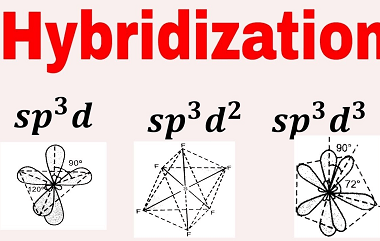
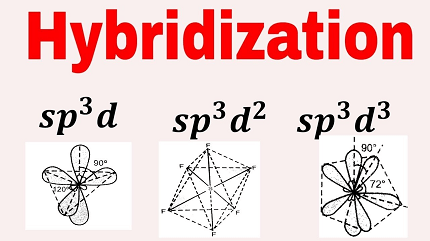
Hybridisation involving s, p and d orbitals only

Hybridization is a concept in chemistry where atomic orbitals combine to form hybrid orbitals that have different shapes and energies from the original atomic orbitals. The most common types of hybridization involve s and p orbitals, but d orbitals can also be involved in certain cases. Hybridization involving only s, p, and d orbitals is…

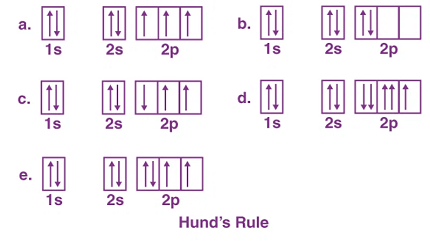
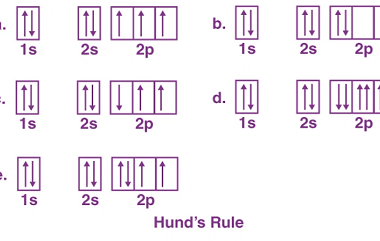
Pauli’s exclusion principle and Hund’s rule

Pauli’s exclusion principle and Hund’s rule are both fundamental principles of quantum mechanics that describe the behavior of electrons in atoms. Pauli’s exclusion principle states that no two electrons in an atom can have the same set of quantum numbers. In other words, each electron in an atom must have a unique combination of values…

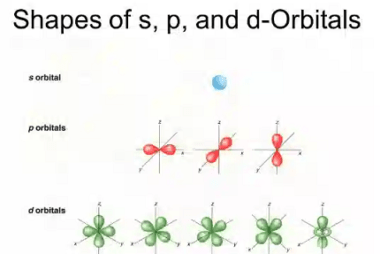
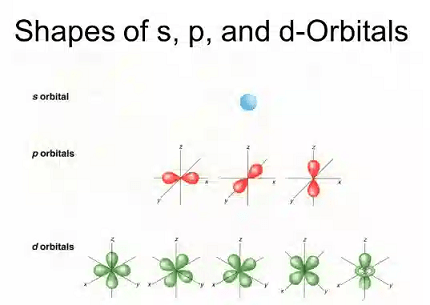
Shapes of s, p and d orbitals

The shapes of s, p, and d orbitals are as follows: It’s important to note that the shapes of these orbitals are theoretical representations based on mathematical models, and the actual distribution of electrons in an atom is more complex and dynamic. What is Required Shapes of s, p and d orbitals The shapes of…

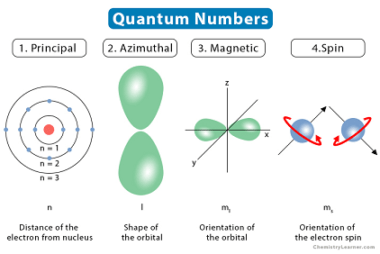
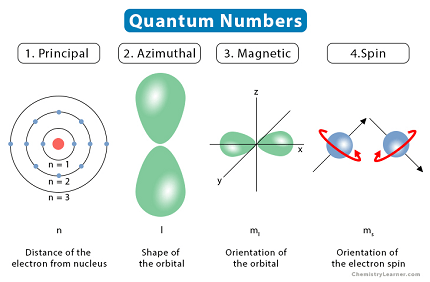
Quantum numbers

Quantum numbers are a set of numbers that describe the state of an electron in an atom or molecule. There are four quantum numbers: Together, these four quantum numbers provide a unique set of parameters that describe the state of an electron in an atom or molecule. What is Required Quantum numbers In quantum mechanics,…

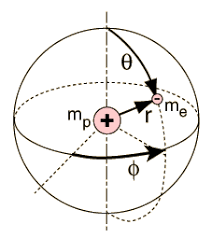
Qualitative quantum mechanical picture of hydrogen atom

The hydrogen atom is one of the simplest quantum mechanical systems and can be described qualitatively using several key concepts. First, the electron in the hydrogen atom is not confined to a specific location in space but rather exists in a “cloud” of probability called the electron density. The electron density gives the probability of…

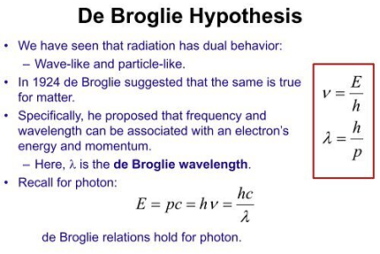
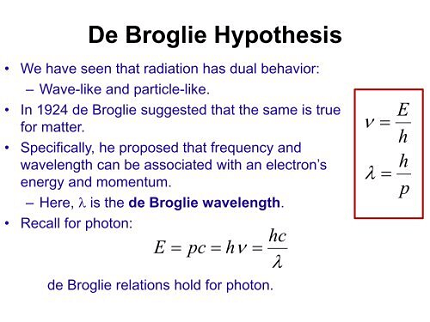
De Broglie hypothesis

The De Broglie hypothesis, proposed by French physicist Louis de Broglie in 1924, suggests that all matter, including particles such as electrons and protons, exhibits wave-like properties. According to the hypothesis, particles have both particle-like and wave-like characteristics, and the wavelength of these particles is inversely proportional to their momentum. This means that the more…

Bohr model

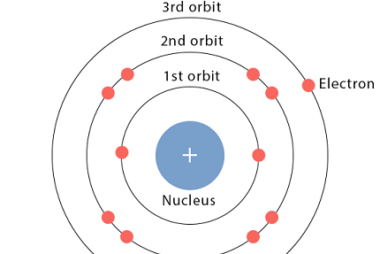
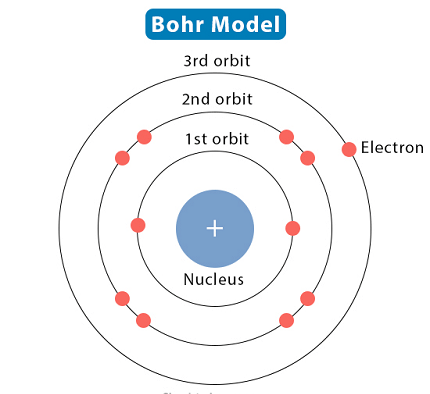
The Bohr model is a simple model of the atom proposed by Danish physicist Niels Bohr in 1913. It was an early attempt to explain the behavior of electrons in an atom and the spectrum of light emitted by atoms. The Bohr model posits that electrons move in circular orbits around the nucleus of an…

Viscosity

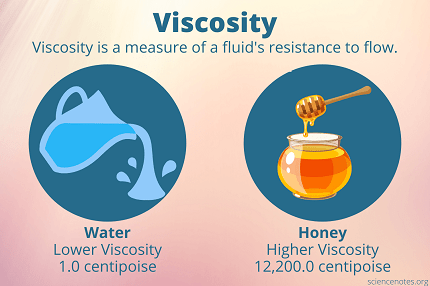
Viscosity is a measure of a fluid’s resistance to flow. In simpler terms, it is the internal friction between different layers of fluid as they move past each other. Viscosity is commonly measured in units of poise or centipoise, and is dependent on factors such as temperature, pressure, and composition of the fluid. Fluids with…

Intermolecular interactions

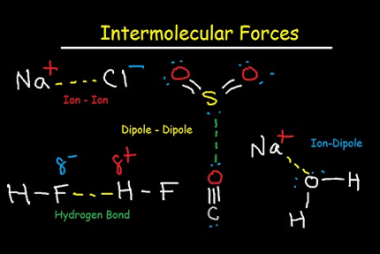
Intermolecular interactions are the forces of attraction or repulsion between molecules. These interactions are responsible for many of the physical and chemical properties of materials, such as boiling and melting points, solubility, and viscosity. The types of intermolecular interactions that occur between molecules depend on the molecular structure and the properties of the molecules involved.…