Vrindawan Coaching Center

JEE (Main+Advance) e-Intermediate Course Practical Organic Chemistry

Practical organic chemistry is a laboratory-based course that focuses on developing your experimental skills in organic chemistry. In this course, you will likely learn about various organic compounds and reactions, their properties, and their mechanisms. You will also learn how to conduct experiments, analyze data, and interpret results. Here are some of the topics that…
JEE (Main+Advance) e-Intermediate Course Biomolecules

Sure! Biomolecules are a very important topic in JEE (Main+Advance) e-Intermediate Course. Here is an overview of what you can expect to learn: In addition to these topics, you will also learn about the applications of biomolecules in various fields such as medicine, biotechnology, and food science. What is Required JEE (Main+Advance) e-Intermediate Course Biomolecules…

JEE (Main+Advance) e-Intermediate Course Amines

Amines are organic compounds that contain a nitrogen atom bonded to one or more carbon atoms. They are an important topic in organic chemistry and are often tested on the JEE (Main+Advance) exam. Some of the important concepts related to Amines that are tested in the exam include the classification of amines, their physical and…

JEE (Main+Advance) e-Intermediate Course Alkyl Halides

Alkyl halides, also known as haloalkanes, are organic compounds that contain a halogen atom (fluorine, chlorine, bromine, or iodine) bonded to a carbon atom in an alkyl group. They are important intermediates in organic synthesis and are used in a wide variety of applications, including as solvents, refrigerants, and pharmaceuticals. In the JEE (Main+Advance) e-Intermediate…

JEE (Main+Advance) e-Intermediate Course s-Block Elements

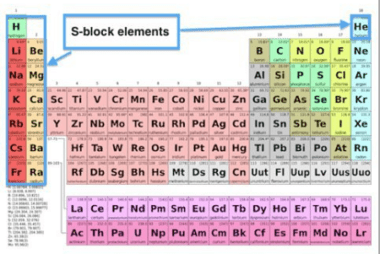
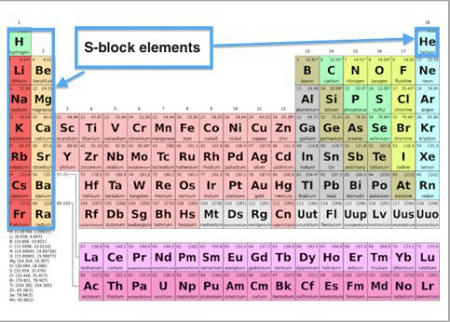
S-block elements are the elements in group 1 and group 2 of the periodic table. They are also known as the alkali metals (group 1) and alkaline earth metals (group 2). These elements have unique chemical and physical properties, such as low ionization energies, high reactivity, and low electronegativities. In the context of JEE (Main+Advanced),…

JEE (Main+Advance) e-Intermediate Course Hydrogen

Hydrogen is the first element in the periodic table with the symbol H and an atomic number of 1. It is the lightest element and the most abundant element in the universe, constituting about 75% of its elemental mass. Hydrogen has three isotopes: protium (1H), deuterium (2H), and tritium (3H). In the JEE (Main+Advance) e-Intermediate…

JEE (Main+Advance) e-Intermediate Course Surface Chemistry

Surface chemistry is an important topic in chemistry and is a part of the JEE (Main+Advance) syllabus. It deals with the study of the chemical and physical processes that occur at the interface of two phases, such as solid-liquid, liquid-gas, or solid-gas interfaces. Here are some important topics related to surface chemistry that you should…

JEE (Main+Advance) e-Intermediate Course Chemical Kinetics

Chemical kinetics is a branch of chemistry that deals with the study of the rates of chemical reactions and the factors that affect those rates. In the context of JEE (Main+Advance), understanding the principles of chemical kinetics is essential for solving problems related to reaction rates, reaction mechanisms, and reaction orders. Here are some important…

JEE (Main+Advance) e-Intermediate Course Chemical and Ionic Equilibrium

Chemical equilibrium refers to the state in which the forward and reverse reactions in a chemical reaction occur at equal rates. This means that the concentrations of reactants and products remain constant over time, and the system is in a state of dynamic equilibrium. Ionic equilibrium, on the other hand, refers to the equilibrium that…

JEE (Main+Advance) e-Intermediate Course Chemical Thermodynamics

Chemical Thermodynamics is an important topic in JEE (Main+Advanced) for the students who are pursuing engineering or science streams. It deals with the study of energy changes that occur during chemical reactions and the factors that affect these changes. To prepare for Chemical Thermodynamics, you should start with understanding the basic concepts such as enthalpy,…