
Vrindawan Coaching Center

JEE (Main+Advance) e-advance Course Analytical Geometry

Analytical geometry is an important topic in the JEE (Main+Advance) syllabus. It involves the study of geometric figures using algebraic equations and coordinates. Here are some key concepts and formulas that you should be familiar with for the e-advance course in analytical geometry: These are some of the key concepts and formulas that you should…


JEE (Main+Advance) e-advance Course Probability and Statistics

The JEE (Main+Advanced) e-advance course typically includes a section on probability and statistics. In this section, you can expect to learn about the following topics: To prepare for the probability and statistics section of the JEE (Main+Advanced) exam, you should start by familiarizing yourself with the basic concepts and principles of probability and statistics. You…

JEE (Main+Advance) e-advance Course Algebra

Sure, I can help you with algebra concepts for JEE (Main+Advance) e-advance course. Algebra is an essential topic for JEE and requires a good understanding of basic concepts, formulas, and techniques. Here are some of the key topics that you should focus on for JEE algebra: These are some of the key topics that you…

JEE (Main+Advance) e-Advance Course Sets, Relations and Functions

Sets, relations, and functions are fundamental concepts in mathematics that form the building blocks of various branches of the subject. They are also an important topic in the Joint Entrance Examination (JEE) (Main+Advance) syllabus. Sets refer to a collection of distinct objects, which can be numbers, letters, or any other type of element. Relations describe…

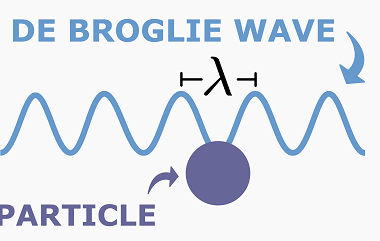
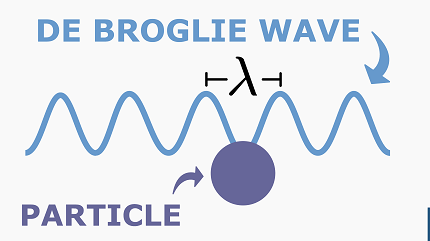
De Broglie wavelength of matter waves

The de Broglie wavelength is a fundamental concept in quantum mechanics that describes the wave-like nature of matter particles, such as electrons, protons, and atoms. It is named after Louis de Broglie, who proposed that all matter particles have a wave-like nature in addition to their particle-like nature. The de Broglie wavelength (λ) is given…

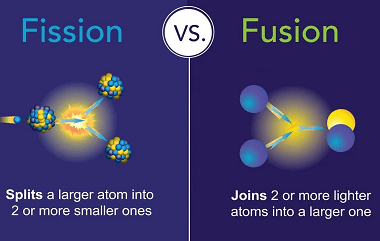
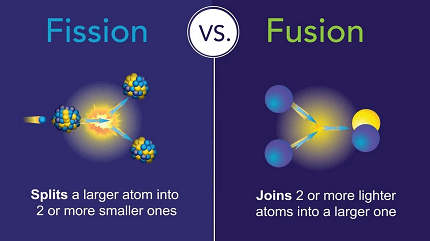
Fission and Fusion processes

Fission and fusion are two types of nuclear processes that involve the splitting and merging of atomic nuclei. Fission is a process in which the nucleus of a heavy atom, such as uranium or plutonium, is split into two smaller nuclei. This process releases a large amount of energy in the form of heat and…

Interference limited to Young’s double slit experiment

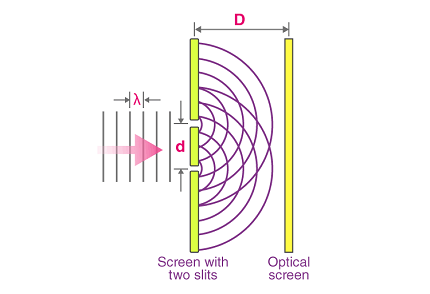
In Young’s double-slit experiment, interference occurs due to the wave nature of light. When a beam of light is shone onto two closely spaced slits, the light passing through each slit diffracts and spreads out as if each slit was a new source of light. These two sets of waves then overlap and interfere with…

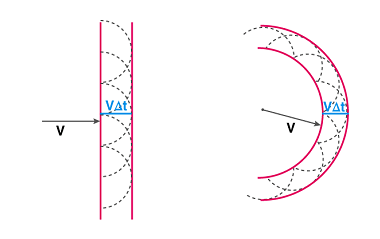
Huygen’s principle

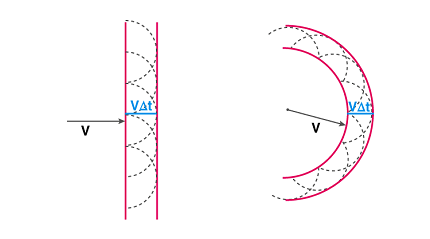
Huygen’s principle, named after the Dutch physicist Christiaan Huygens, is a fundamental principle in wave optics that explains how waves propagate through a medium. According to Huygen’s principle, each point on a wavefront can be considered as a source of secondary spherical waves. These secondary waves travel outwards from each point in all directions at…

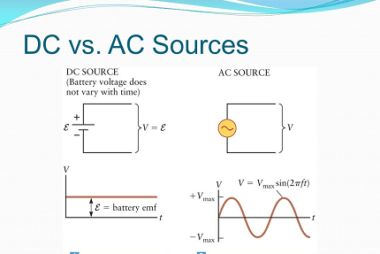
With d.c. and a.c. sources

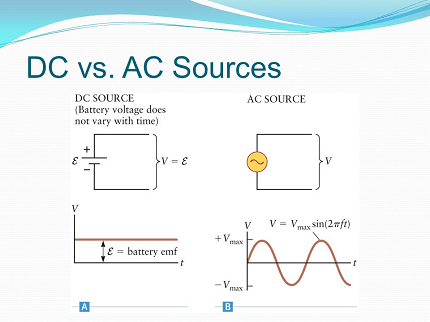
DC (direct current) and AC (alternating current) are two types of electrical power sources. DC sources provide a steady and constant flow of electrical energy in one direction. Batteries, fuel cells, and photovoltaic cells are common examples of DC sources. AC sources, on the other hand, provide electrical energy that alternates in direction and magnitude…

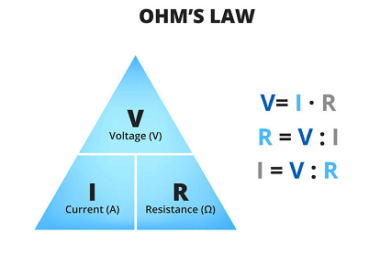
Ohm’s law

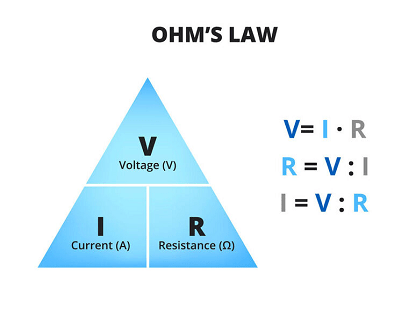
Ohm’s law is a fundamental law of electrical engineering and physics that describes the relationship between electric current, voltage, and resistance in a conductor. It states that the current flowing through a conductor between two points is directly proportional to the voltage across the two points and inversely proportional to the resistance between them. Mathematically,…