Vrindawan Coaching Center

Electric current

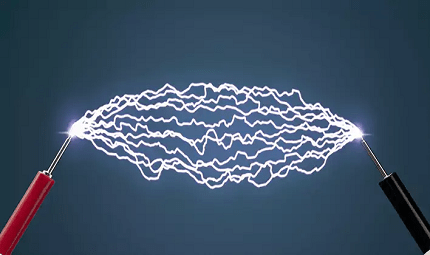
Electric current refers to the flow of electric charge in a conductor or circuit. It is the rate at which electric charges, typically electrons, move through a material. The unit of electric current is the ampere (A), which is defined as the flow of one coulomb of charge per second. Electric current can be either…
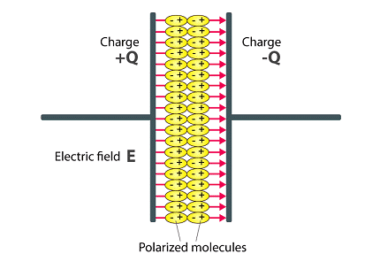
Without dielectrics

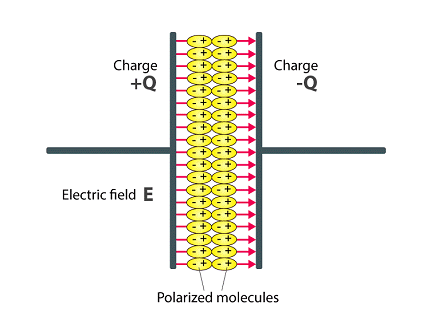
Dielectrics are materials that do not conduct electricity, but can store electric charges. They are used in various applications, such as capacitors, insulation, and in electronic devices to prevent short-circuits. Dielectrics are also known as insulators and have high resistivity to the flow of electric current. Without dielectrics, electrical systems would not be able to…

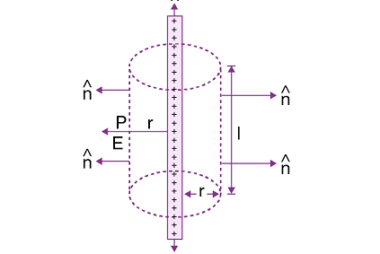
To find field due to infinitely long straight wire

The magnetic field due to an infinitely long straight wire can be calculated using Ampere’s law, which states that the magnetic field around a closed loop is proportional to the current passing through the loop. The formula for the magnetic field due to an infinitely long straight wire is: B = (μ0I)/(2π*r) where B is…

Electric field

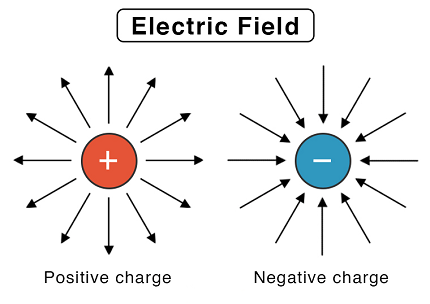
An electric field is a vector field that describes the influence exerted by electric charges on other charges in their vicinity. It is defined as the force per unit charge that a test charge would experience if placed in the field. Electric fields are produced by stationary charges, as well as by changing magnetic fields…

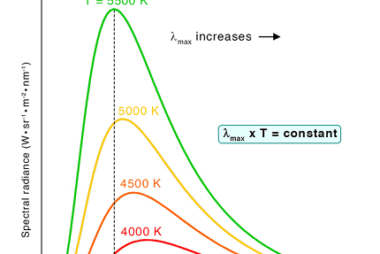
Wien’s displacement law

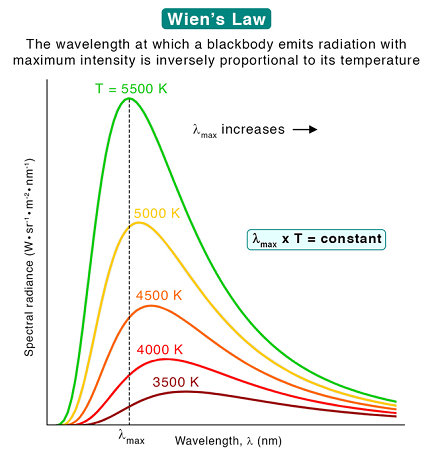
Wien’s displacement law, named after Wilhelm Wien, states that the peak wavelength of radiation emitted by a black body is inversely proportional to its temperature. Mathematically, Wien’s displacement law can be expressed as λ_max = b/T, where λ_max is the peak wavelength of the radiation emitted by the black body, T is its temperature in…

Its Efficiency

Efficiency refers to the ability to accomplish a task or achieve a goal with minimum wasted effort or resources. It is a crucial factor in many areas, including business, manufacturing, and technology. In business, efficiency is often measured by the ratio of output to input. This can include factors such as the number of units…

Irreversible processes

Irreversible processes are processes that cannot be reversed, either naturally or artificially. In thermodynamics, an irreversible process is one in which the total entropy of the system and its surroundings increases. This increase in entropy results in a loss of useful energy, and the process cannot be reversed to return the system to its original…

Its applications (only for Ideal gases)

Ideal gases have several applications in various fields such as chemistry, physics, engineering, and even meteorology. Here are some of the applications of ideal gases: These are some of the applications of ideal gases, which have a wide range of uses in various fields. What is Required Its applications (only for Ideal gases) Here are…

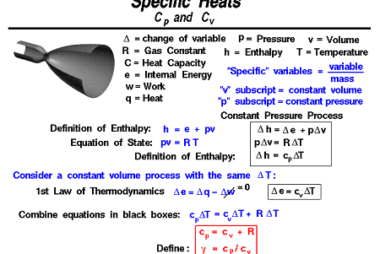
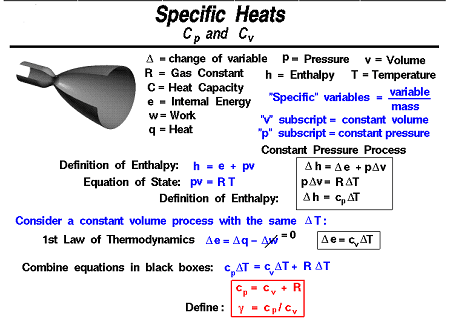
Specific heats

Specific heat is the amount of heat required to raise the temperature of a unit mass of a substance by one degree Celsius (or one Kelvin) without any change in phase. There are two types of specific heat: The specific heat depends on the nature of the substance and its physical state (solid, liquid, or…

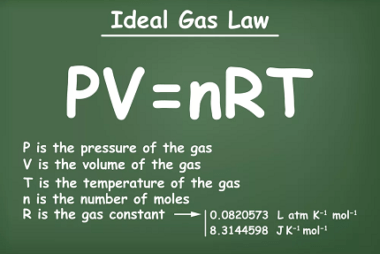
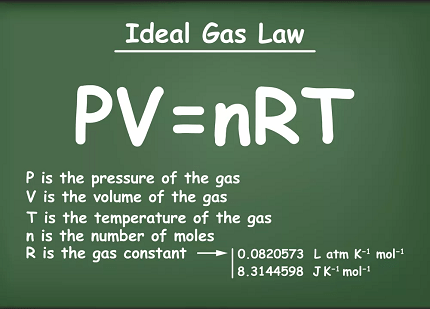
Ideal gas laws

The ideal gas law is a fundamental concept in thermodynamics that describes the behavior of gases under certain conditions. It is a combination of several gas laws, including Boyle’s law, Charles’s law, and Avogadro’s law, and can be expressed mathematically as: PV = nRT Where: P = pressure of the gas V = volume of…