Vrindawan Coaching Center

Newton’s law of cooling

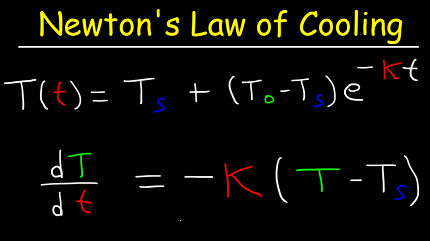
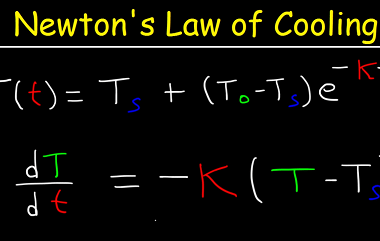
Newton’s law of cooling states that the rate of heat loss of a body is proportional to the difference in temperatures between the body and its surroundings. Mathematically, it can be expressed as: dQ/dt = -kA(T – Ts) where: This law is applicable when the temperature difference between the body and its surroundings is not…
Thermal expansion of solids, liquids and gases

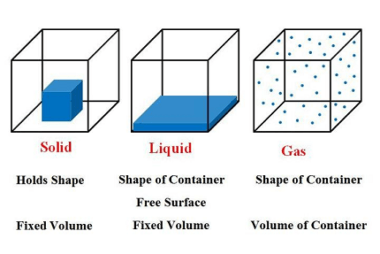
Thermal expansion is a property exhibited by all three states of matter – solids, liquids, and gases – and is caused by the increased kinetic energy of particles as they absorb heat. However, the extent of thermal expansion varies significantly between the different states of matter. Solids: In solids, the particles are tightly packed and…

Vibration of strings

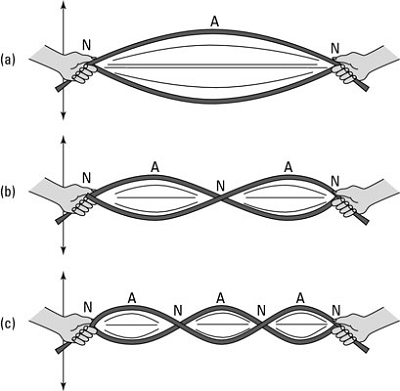
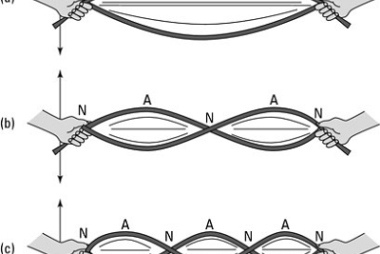
Vibration of strings is a physical phenomenon that occurs when a string, such as that of a musical instrument, is plucked or struck. When a string is plucked, it vibrates back and forth, causing sound waves to be produced. The frequency and amplitude of the vibration determine the pitch and volume of the sound produced.…

Wave motion (plane waves only)

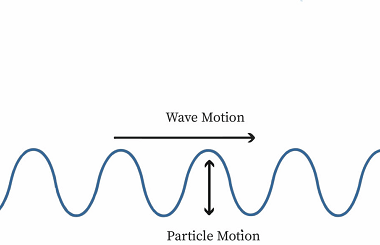
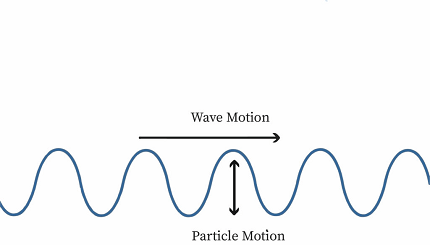
Wave motion refers to the propagation of disturbances or oscillations through a medium. A plane wave is a type of wave that propagates uniformly in one direction and has a constant frequency, wavelength, and amplitude. In a plane wave, the wavefronts are planes perpendicular to the direction of propagation, and the oscillations of the medium…

Equation of Continuity

The equation of continuity is a fundamental principle in fluid dynamics, which states that the mass flow rate of an incompressible fluid through a pipe or channel must remain constant. Mathematically, this can be expressed as: ρAv = constant where: According to the equation, if the cross-sectional area of the pipe decreases, the fluid velocity…

Terminal velocity

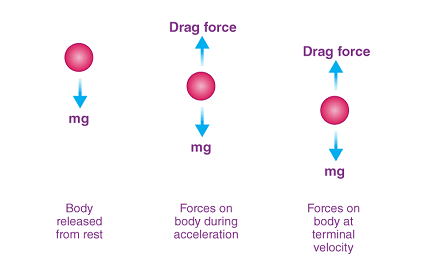
Terminal velocity is the maximum velocity that a falling object can reach when the resistance of the medium through which it is falling (such as air or water) balances the force of gravity. At terminal velocity, the object stops accelerating and falls at a constant speed. The terminal velocity of an object depends on its…

Bulk modulus in Mechanics

In mechanics, the bulk modulus is a measure of the resistance of a material to compression. It is defined as the ratio of the change in pressure to the fractional change in volume, under conditions of constant temperature. Mathematically, the bulk modulus (K) can be expressed as: K = – V ΔP / ΔV where…

Modulus of rigidity

The modulus of rigidity, also known as shear modulus, is a material property that describes its resistance to shearing deformations. It is defined as the ratio of the shearing stress to the shearing strain within the proportional limit of the material. The modulus of rigidity is denoted by the symbol G and is measured in…

Bubbles and Capillary rise

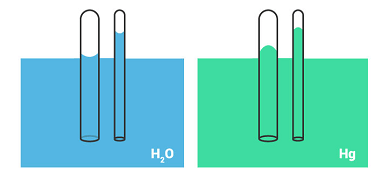
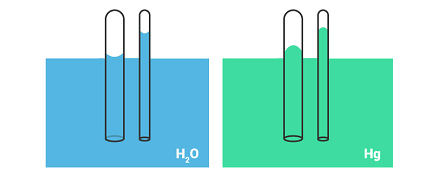
Bubbles: Bubbles are pockets of gas enclosed by a thin layer of liquid. They can form in a liquid due to a variety of reasons, such as agitation, heating, or the release of dissolved gases. Bubbles are important in many industrial processes and are also a fascinating subject of study in fields such as chemistry,…

Escape velocity

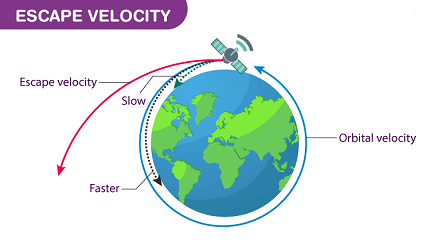
Escape velocity is the minimum velocity that an object needs to achieve in order to escape the gravitational pull of a celestial body, such as a planet, moon, or star, and move away from it into space. The escape velocity is calculated using the following formula: Ve = sqrt(2GM/r) Where: Ve = escape velocity G…