Vrindawan Coaching Center

Hydrolysis of disaccharides

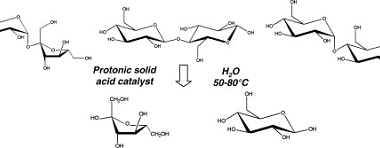
Hydrolysis of disaccharides is a chemical reaction that breaks down disaccharides into their constituent monosaccharides through the addition of water. Disaccharides are composed of two monosaccharides linked together by a glycosidic bond, which can be broken by the addition of water in the presence of an acid or enzyme. For example, the disaccharide sucrose (table…
Reduction

Reduction is a chemical reaction that involves the gain of electrons, which results in a decrease in the oxidation state of an atom or molecule. Biomolecules such as carbohydrates, lipids, and proteins can undergo reduction reactions. Carbohydrates can undergo reduction to form sugar alcohols, which have important industrial applications. For example, glucose can be reduced…

Oxidation

Oxidation of biomolecules refers to a process in which electrons are lost from a molecule, leading to a decrease in its energy content. Biomolecules such as carbohydrates, lipids, and proteins can undergo oxidation in the presence of oxygen, which is a strong oxidizing agent. Carbohydrates, for example, can undergo oxidation to produce energy in the…

Glucose and Sucrose

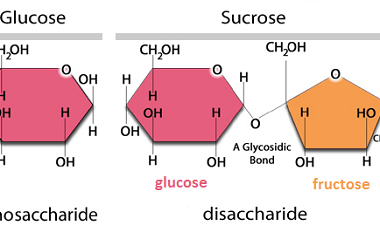
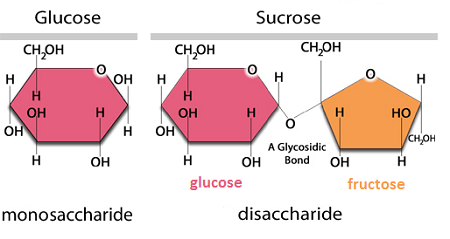
Glucose and sucrose are both carbohydrates commonly found in food. Glucose is a simple sugar, also known as a monosaccharide, with the chemical formula C6H12O6. It is the primary source of energy for most living organisms and is commonly found in fruits, vegetables, and honey. Glucose is also a component of more complex carbohydrates such…

Mono- and di-saccharides

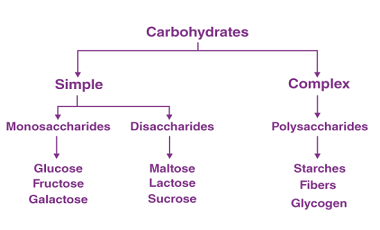
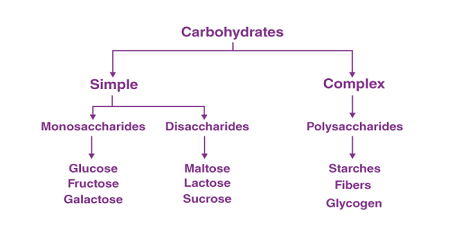
Mono- and disaccharides are two types of carbohydrates that are important for providing energy to the body. Monosaccharides are single sugar molecules that cannot be broken down into smaller units by hydrolysis. Some examples of monosaccharides include glucose, fructose, and galactose. Disaccharides are composed of two monosaccharide units joined together by a glycosidic bond. Some…

Carbohydrates: Classification

Carbohydrates are one of the three macronutrients that provide energy to the body. They are organic compounds made up of carbon, hydrogen, and oxygen, with a general formula of (CH2O)n, where “n” can be any number. Carbohydrates are classified based on the number of sugar units they contain: Carbohydrates can also be classified as either…

Cine substitution

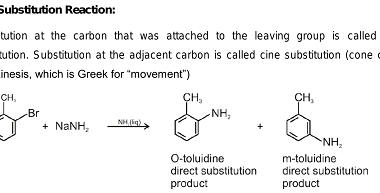
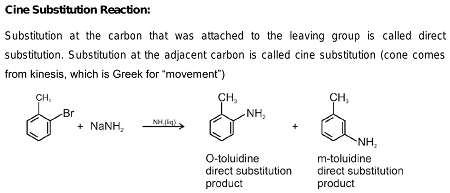
Haloarenes, which are organic compounds containing at least one halogen atom (fluorine, chlorine, bromine, or iodine) attached to an aromatic ring, can undergo cine substitution reactions. Cine substitution reactions involve the substitution of a halogen atom on a benzene ring by a nucleophile, such as an amine, hydroxide ion, or cyanide ion, at the ortho…

Excluding benzyne mechanism

The benzyne mechanism is a reaction mechanism that involves the formation of a highly reactive intermediate called benzyne. This mechanism is often used in organic chemistry to explain reactions involving substituted aromatic compounds. However, there are many other reaction mechanisms in organic chemistry that do not involve the formation of benzyne. Some examples include: These…

Nucleophilic aromatic substitution in haloarenes

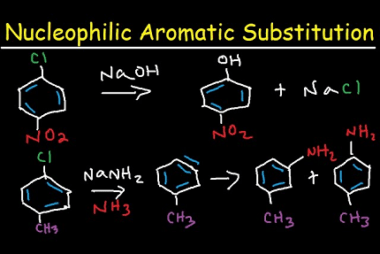
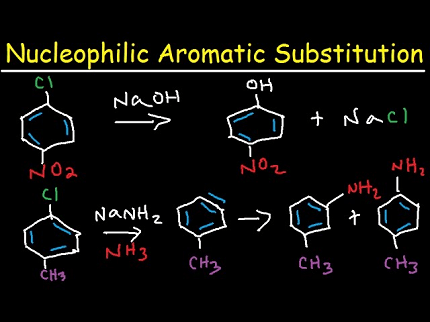
Nucleophilic aromatic substitution (SNAr) is a type of reaction in which a nucleophile substitutes a leaving group on an aromatic ring. In haloarenes, the leaving group is a halogen atom (Cl, Br, or I) attached to an aromatic ring. SNAr reactions in haloarenes typically proceed through a two-step mechanism. In the first step, the nucleophile…

Wurtz-Fittig

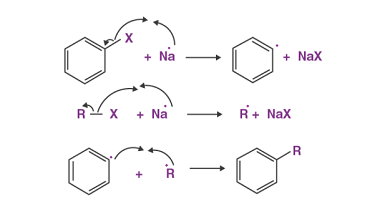
The Wurtz-Fittig reaction is a chemical reaction that involves the coupling of two alkyl halides in the presence of metallic sodium to form a carbon-carbon bond. This reaction was discovered independently by two chemists, Charles Adolphe Wurtz and Paul Fittig, in the mid-19th century. The general reaction can be written as: R-X + R’-X +…