Vrindawan Coaching Center

NaHSO3

NaHSO3 is the chemical formula for sodium bisulfite. It is a white crystalline powder that is soluble in water and has a slightly sulfurous odor. Sodium bisulfite is commonly used in various industries such as food processing, photography, and water treatment. In the food industry, it is used as a preservative and to prevent discoloration…
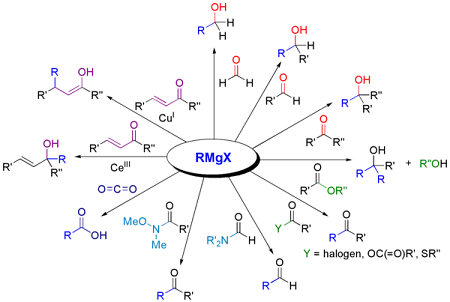
Nucleophilic addition reaction with RMgX

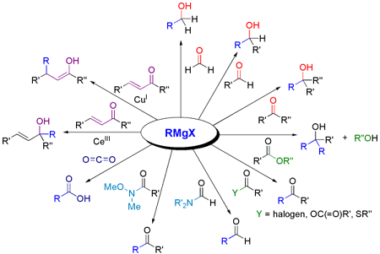
Nucleophilic addition reactions with RMgX (alkyl magnesium halides) are commonly used in organic chemistry to introduce alkyl groups into a wide variety of functional groups. In these reactions, the RMgX reagent acts as a nucleophile, meaning that it donates a pair of electrons to an electrophilic carbon atom in a substrate. The reaction proceeds through…

Cannizzaro reaction

The Cannizzaro reaction is a redox reaction that involves the disproportionation of an aldehyde into a carboxylic acid and an alcohol in the presence of a strong base. The reaction is named after its discoverer, Stanislao Cannizzaro, an Italian chemist who first described the reaction in 1853. The general equation for the Cannizzaro reaction is:…

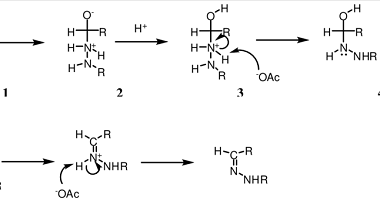
Hydrazone 7 formation

Hydrazone 7 is a compound that can be synthesized through the formation of a hydrazone bond between two functional groups. Specifically, hydrazone 7 refers to a hydrazone compound containing a 2,4-dinitrophenyl group at one end and a pyridyl group at the other end. The general method for synthesizing hydrazones involves the reaction of a hydrazine…

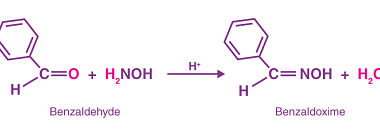
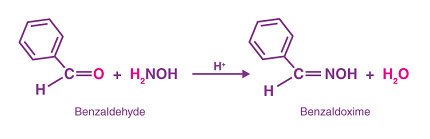
Oxime

An oxime is a chemical compound that contains a nitrogen atom connected to a carbon atom via a double bond (C=N-OH). Oximes are typically formed by the reaction of aldehydes or ketones with hydroxylamine. They are important intermediates in organic synthesis and are used in a variety of applications, including as reagents in analytical chemistry,…

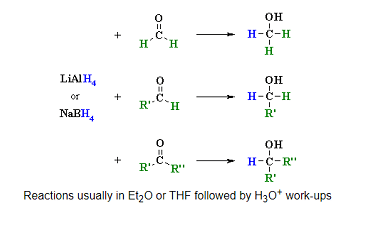
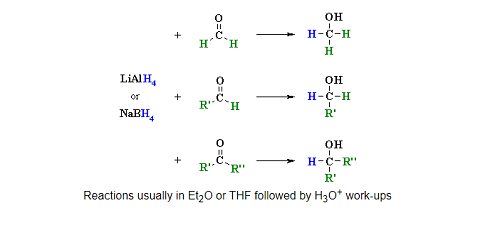
Reduction

Reduction of aldehydes and ketones is a common reaction in organic chemistry. The most commonly used reducing agents for this purpose are sodium borohydride (NaBH4) and lithium aluminum hydride (LiAlH4). Reduction of aldehydes: Aldehydes can be reduced to primary alcohols using either NaBH4 or LiAlH4 in the presence of an acid catalyst such as HCl.…

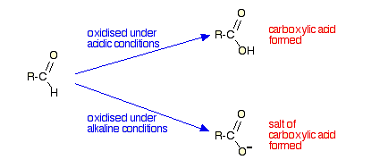
Reactions: Oxidation

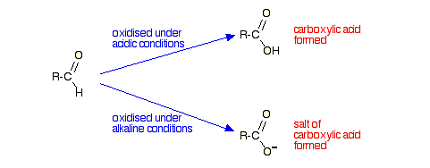
Oxidation is a type of chemical reaction that involves the loss of electrons or an increase in oxidation state of an atom, ion or molecule. It can occur in a variety of contexts, including combustion reactions, metabolic processes, and corrosion. In general, oxidation reactions are characterized by the transfer of electrons from a reducing agent…

Aldehydes from esters

Aldehydes cannot be directly obtained from esters through simple chemical reactions. However, it is possible to convert esters to aldehydes through a two-step process called hydrolysis and reduction. Hydrolysis of the ester in the presence of an acid or a base will produce a carboxylic acid and an alcohol. This reaction can be catalyzed by…

Nitriles

Aldehydes and ketones are organic compounds that contain a carbonyl group, which is a carbon atom double-bonded to an oxygen atom. In aldehydes, the carbonyl group is at the end of a carbon chain, whereas in ketones, it is in the middle. Nitriles, also known as cyano compounds, are organic compounds that contain a triple…

Ketones from acid chlorides

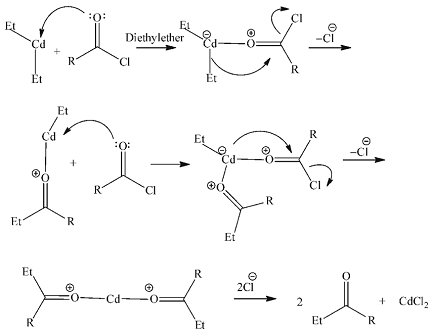
Ketones can be synthesized from acid chlorides through a reaction called Friedel-Crafts acylation. This reaction involves the reaction of an acid chloride with a Lewis acid catalyst, such as aluminum chloride (AlCl3), to form an acylium ion intermediate. The acylium ion then undergoes a nucleophilic attack by an arene, which leads to the formation of…