Vrindawan Coaching Center

Group 15 Nitric acid

Group 15 elements include nitrogen, phosphorus, arsenic, antimony, and bismuth. Nitric acid, HNO3, is a strong and highly corrosive acid that is commonly used in the production of fertilizers, explosives, and other industrial chemicals. When nitric acid is dissolved in water, it ionizes to form hydrogen ions (H+) and nitrate ions (NO3-). The reaction can…
Group 15 Ammonia

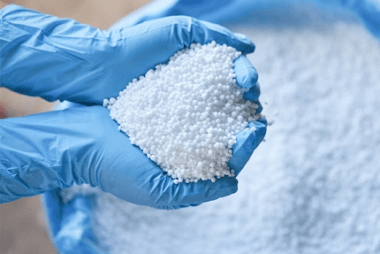
Group 15 in the periodic table includes nitrogen (N), phosphorus (P), arsenic (As), antimony (Sb), and bismuth (Bi). Ammonia (NH3) is a compound that contains nitrogen from this group. Ammonia is a colorless gas with a pungent odor. It is highly soluble in water and is commonly used as a household cleaner, refrigerant, and in…

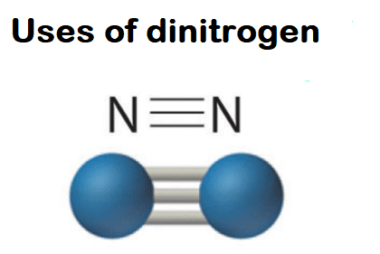
Group 15 Uses of dinitrogen

Dinitrogen (N2) is a diatomic, colorless, odorless, and mostly inert gas that makes up about 78% of the Earth’s atmosphere. Here are some of the important uses of dinitrogen: What is Required p-Block Elements Group 15 Uses of dinitrogen Group 15 elements of the periodic table include nitrogen (N), phosphorus (P), arsenic (As), antimony (Sb),…

Group 15 Properties

Group 15 is a group of elements in the periodic table that includes nitrogen (N), phosphorus (P), arsenic (As), antimony (Sb), and bismuth (Bi). These elements share some common properties due to the fact that they all have five valence electrons. Overall, the properties of group 15 elements make them important in a variety of…

Group 15 Preparation

Group 15 of the periodic table contains nitrogen (N), phosphorus (P), arsenic (As), antimony (Sb), and bismuth (Bi). These elements are also known as the pnictogens. The preparation of Group 15 elements can vary depending on the specific element, but here are some general methods for preparing them: It’s worth noting that these are just…

Group 15 Allotropes of phosphorous

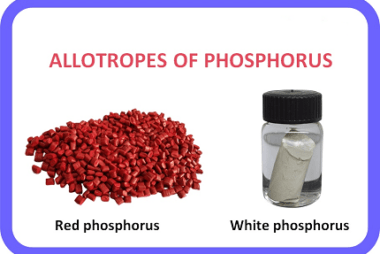
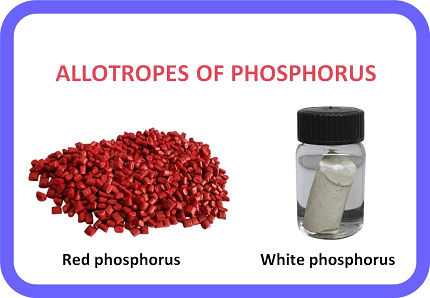
Phosphorus is a chemical element with the symbol P and atomic number 15. It has several allotropes, which are different forms of the same element that exist in the same physical state. The most common allotropes of phosphorus are: Each of these allotropes has different physical and chemical properties, making them useful for different applications…

Group 15 Halogen

Group 15 of the periodic table is also known as the nitrogen group or the pnictogens. It consists of five elements: nitrogen (N), phosphorus (P), arsenic (As), antimony (Sb), and bismuth (Bi). Halogens, on the other hand, are a group of elements that are found in Group 17 of the periodic table. They include fluorine…

Group 15 Oxygen

Group 15 of the periodic table is known as the Nitrogen Group or Pnictogens. It includes the elements nitrogen (N), phosphorus (P), arsenic (As), antimony (Sb), bismuth (Bi), and moscovium (Mc). Oxygen (O) is not a part of this group, it belongs to Group 16 or the Chalcogens. The elements in Group 16 are oxygen…

Group 15 Reactivity towards hydrogen

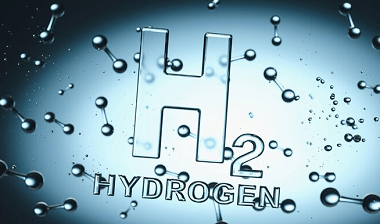
Group 15 elements, also known as pnictogens, include nitrogen (N), phosphorus (P), arsenic (As), antimony (Sb), and bismuth (Bi). These elements have five valence electrons in their outermost shell and tend to gain three electrons to achieve a stable octet configuration. In general, Group 15 elements do not react directly with hydrogen gas (H2) under…

Group 14 Zeolites

Group 14 zeolites are a family of zeolites that contain tetrahedral atoms of silicon and/or germanium in their framework. They are also known as silico-germanate zeolites or germanosilicate zeolites. Group 14 zeolites have a wide range of applications, including catalysis, ion exchange, adsorption, and separation. Their properties can be tailored by varying the ratio of…