Vrindawan Coaching Center

Elevation of boiling point

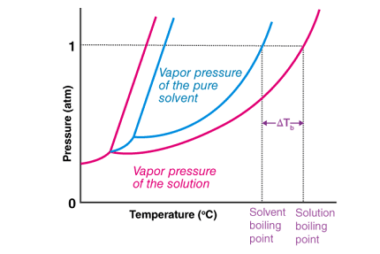
The elevation of boiling point refers to the increase in the boiling point of a liquid when a non-volatile solute, such as a salt or sugar, is added to it. This occurs because the presence of the solute lowers the vapor pressure of the liquid, meaning that a higher temperature is required to reach the…

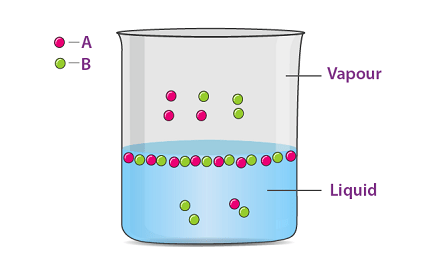
Lowering of vapour pressure

Lowering of vapor pressure refers to the phenomenon in which the vapor pressure of a solvent is reduced when a non-volatile solute is added to it. This occurs due to the formation of intermolecular bonds between the solute and solvent molecules, which reduces the number of solvent molecules available to evaporate and therefore lowers the…

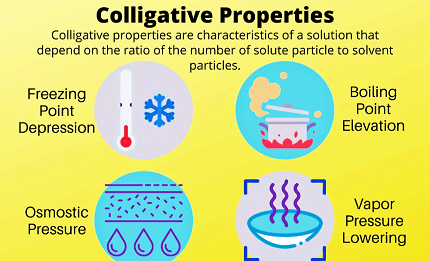
Colligative properties

Colligative properties are physical properties of a solution that depend only on the number of particles of solute dissolved in the solvent, and not on the nature of the solute particles themselves. The four colligative properties are: What is Required Colligative properties Required colligative properties refer to the use of colligative properties to determine the…

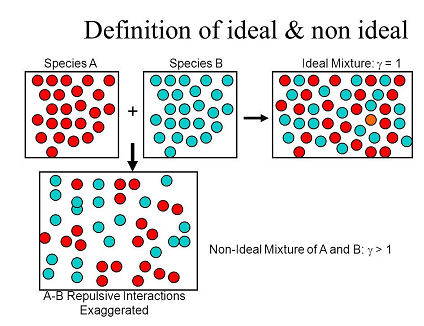
ldeal solutions

“Ideal solutions” typically refer to a concept in chemistry and thermodynamics where two or more substances mix together perfectly and form a homogeneous mixture where the intermolecular interactions between the components are the same as the intramolecular interactions within each component. In other words, the enthalpy of mixing is zero, and there are no attractive…

Raoult’s law

Raoult’s law is a law of thermodynamics that relates the vapor pressure of a component in a solution to its mole fraction. It states that the partial pressure of a component in a solution is equal to the product of the vapor pressure of the pure component and its mole fraction in the solution. Mathematically,…

Henry’s law

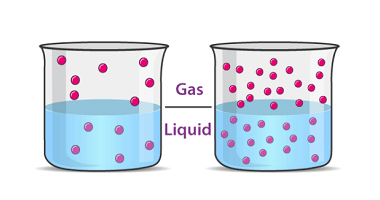
Henry’s law states that at a constant temperature, the amount of gas that dissolves in a liquid is directly proportional to the partial pressure of that gas in equilibrium with the liquid. In other words, the solubility of a gas in a liquid is directly proportional to the pressure of that gas above the liquid.…

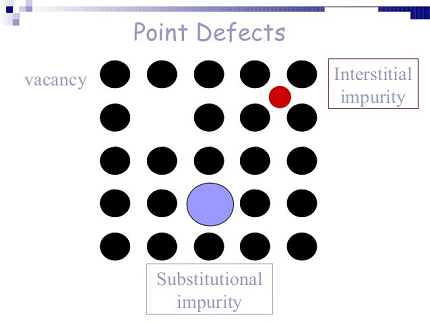
Point defects

In materials science, point defects refer to localized irregularities in the arrangement of atoms or ions within a crystal lattice structure. These defects can occur naturally during the growth of a crystal, or they can be intentionally introduced through various processes such as irradiation, doping, or mechanical deformation. There are several types of point defects,…

Ionic radii and radius ratio

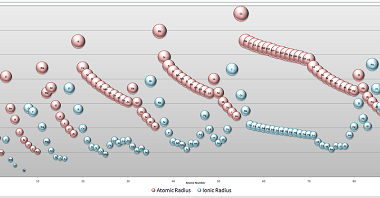
Ionic radii refers to the size of an ion, which is typically smaller than the size of the corresponding neutral atom due to the gain or loss of one or more electrons. The ionic radius of an ion can be determined by measuring the distance between the nuclei of two ions that are bonded together.…

Nearest neighbours

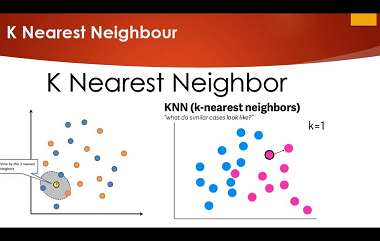
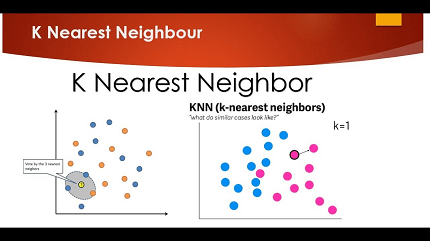
Nearest neighbors is a machine learning algorithm that is commonly used for classification and regression tasks. It works by finding the training examples in the training set that are closest to a given input example and using those examples to make a prediction. In the context of clustering, nearest neighbors refers to a method of…

Packing in fcc, bcc and hcp lattices

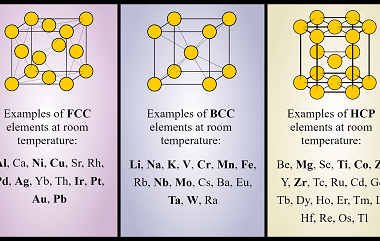
The three most common crystal structures are face-centered cubic (FCC), body-centered cubic (BCC), and hexagonal close-packed (HCP) lattices. The packing in each of these structures is as follows: In terms of packing efficiency, FCC and HCP lattices are more efficient than the BCC lattice. This is because in the FCC and HCP lattices, the atoms…