Vrindawan Coaching Center

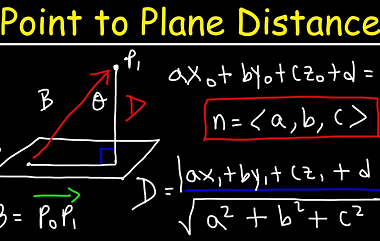
Distance of a point from a plane

The distance between a point and a plane is the perpendicular distance from the point to the plane. To find the distance between a point and a plane in three-dimensional space, you can use the following formula: distance = |ax + by + cz + d| / √(a^2 + b^2 + c^2) where: To use…
Equation of a plane

The equation of a plane in three-dimensional space can be expressed in the general form: Ax + By + Cz + D = 0 where A, B, and C are the coefficients of the variables x, y, and z, respectively, and D is a constant. Alternatively, the equation of a plane can also be expressed…

Shortest distance between two lines

The shortest distance between two lines in 3D space can be found using vector calculus. Let’s consider two non-parallel lines in 3D space: Line 1: r1 = a1 + t1 * b1 Line 2: r2 = a2 + t2 * b2 where a1 and a2 are position vectors for each line, b1 and b2 are…

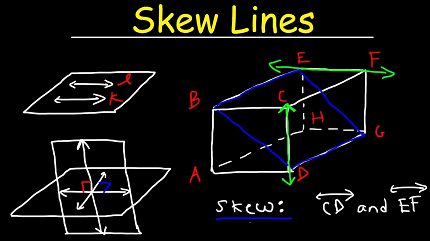
Skew lines

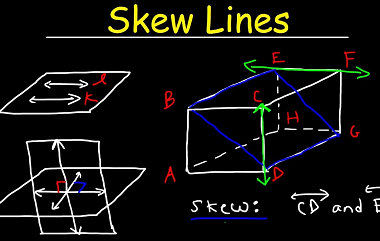
Skew lines are two non-intersecting lines that are not parallel to each other. In other words, skew lines are two lines in three-dimensional space that do not lie in the same plane and do not intersect each other. Skew lines are important in geometry and can be used to solve various problems, such as finding…

Equation of a straight line in space

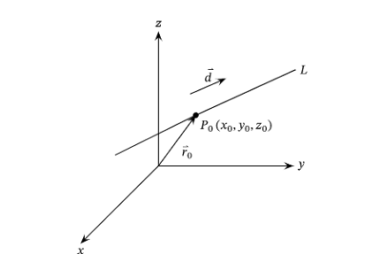
In three-dimensional space, the equation of a straight line can be written in vector form as: r = a + t(b-a) where “r” is a position vector that represents any point on the line, “a” is the position vector of a known point on the line, “b” is the position vector of another known point…

Direction cosines and Direction ratios

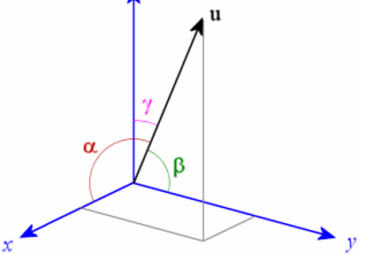
Direction cosines and direction ratios are used to describe the orientation of a line or a vector in three-dimensional space. Direction cosines are the cosines of the angles that a given line or vector makes with the positive x, y, and z axes of a Cartesian coordinate system. For example, if the angles that a…

Three dimensions: Distance between two points

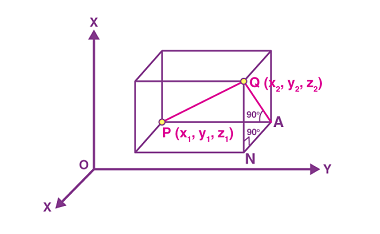
The distance between two points in three-dimensional space can be found using the following formula: d = √((x2 – x1)^2 + (y2 – y1)^2 + (z2 – z1)^2) where (x1, y1, z1) and (x2, y2, z2) are the coordinates of the two points, and d is the distance between them. To use the formula, you…

Locus problems

Locus problems are mathematical problems that involve finding the set of all points that satisfy a given condition or set of conditions. The solution to a locus problem is the set of all points that satisfy the given conditions, which is often referred to as the locus of the problem. Locus problems can be two-dimensional…

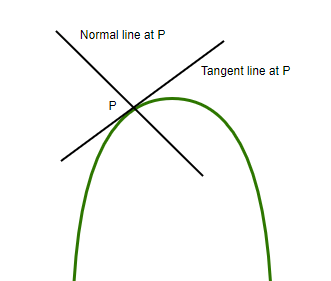
Equations of Tangent and Normal

The equation of the tangent and normal to a curve at a given point can be found using calculus. Given a curve with equation y = f(x), the derivative of the function with respect to x is dy/dx. The value of the derivative at a specific point (x0, y0) gives the slope of the tangent…

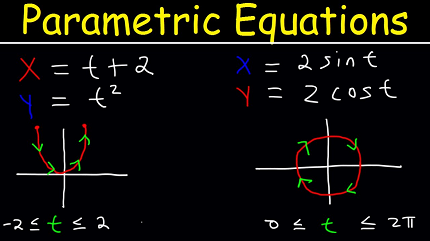
Parametric Equations

Parametric equations are a way to represent a set of equations with one or more parameters. In mathematics, they are often used to describe curves and surfaces in space. Parametric equations are usually written in the form: x = f(t) y = g(t) where t is the parameter, and f(t) and g(t) are functions that…