Vrindawan Coaching Center

Incentre and circumcentre of a triangle

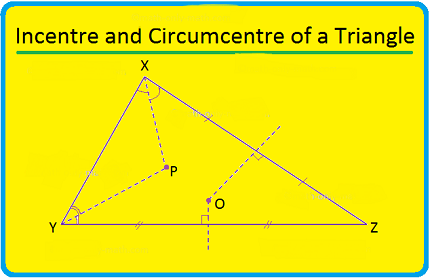
Circumscribed circle In calculation, the encompassed circle or circumcircle of a polygon is a circle that goes through all the vertices of the polygon. The focal point of this circle is known as the circumcenter and its range is known as the circumradius. Few out of every odd polygon has an encompassed circle. A polygon…
Orthocentre

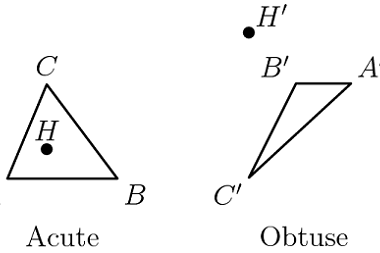
In calculation, an orthocentric framework is a bunch of four focuses on a plane, one of which is the orthocenter of the triangle shaped by the other three. Proportionately, the lines going through disjoint matches among the focuses are opposite, and the four circles going through any three of the four focuses have a similar…

Centroid

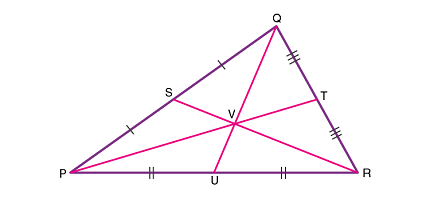
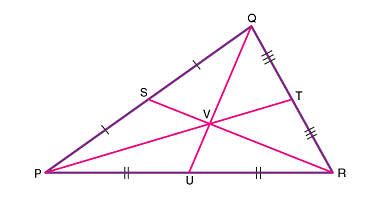
In analytical geometry, the centroid of a plane figure is the point where its medians intersect. A median is a line segment connecting a vertex of the figure to the midpoint of the opposite side. The centroid is often referred to as the “center of mass” or “center of gravity” of the figure, as it…

Concurrency of lines

In analytical geometry, the concurrency of lines refers to the situation where three or more lines intersect at a common point. To determine if three lines are concurrent, we can use the following method: Alternatively, we can use determinants to test for concurrency. The equations of three lines can be represented by a system of…

Equation of the bisector of the angle between two lines

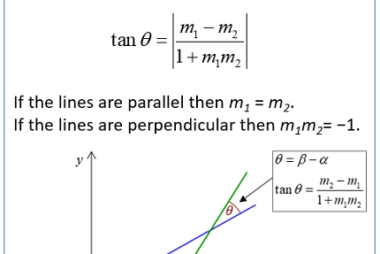
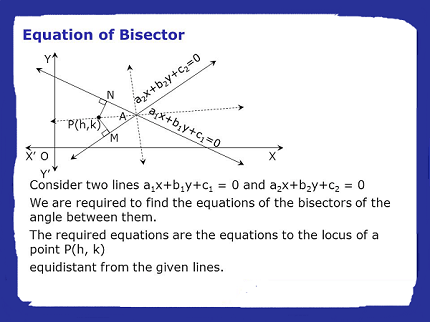
Suppose we have two lines in a Cartesian coordinate system, given by the equations: a1x + b1y + c1 = 0a2x + b2y + c2 = 0 The angle between these two lines can be found using the formula: tan(theta) = |(m2 – m1)/(1 + m1*m2)| where m1 and m2 are the slopes of the…

Lines through the point of intersection of two given lines

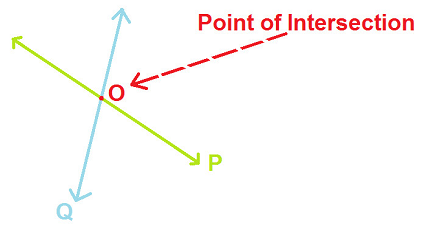
To find the equation of a line passing through the point of intersection of two given lines, you can follow these steps: Note: If the two given lines are parallel, they will never intersect, and there will be no point of intersection. In this case, it is not possible to find a line passing through…

Distance of a point from a line

To find the distance between a point and a line in analytical geometry, you can use the formula: distance = |ax + by + c| / √(a^2 + b^2) where a, b, and c are constants that represent the coefficients of the equation of the line in the form of ax + by + c…

Angle between two lines

In analytical geometry, the angle between two lines can be found using the slopes of the lines. The slope of a line is defined as the ratio of the change in the y-coordinate to the change in the x-coordinate between any two points on the line. Let the equations of two lines be: L1: y…

Equation of a straight line in various forms

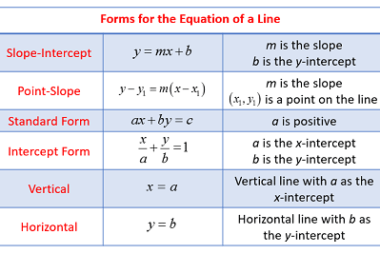
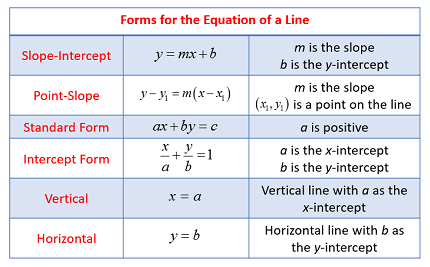
There are several forms of the equation of a straight line in analytical geometry. The most common ones are: What is Required Equation of a straight line in various forms The required analytical geometry equation of a straight line depends on the given information or problem. In general, the most commonly used forms are: To…

Shift of origin

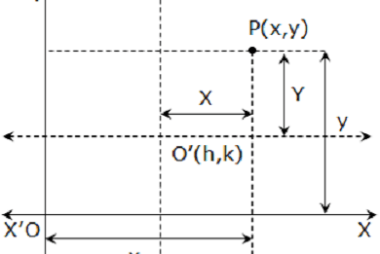
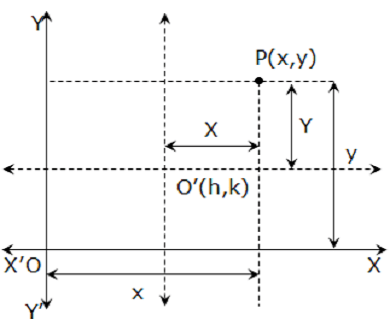
Shifting the origin in analytical geometry involves moving the coordinate system to a new location. This can be done by adding or subtracting a constant value from each coordinate. Suppose the original coordinate system has an origin at point O(0,0). To shift the origin to a new point P(a,b), we can use the following transformation:…