Vrindawan Coaching Center

Cv and Cp

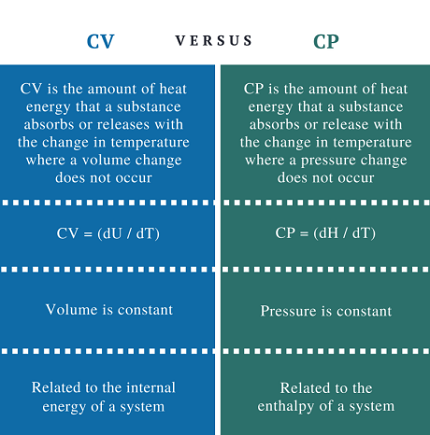
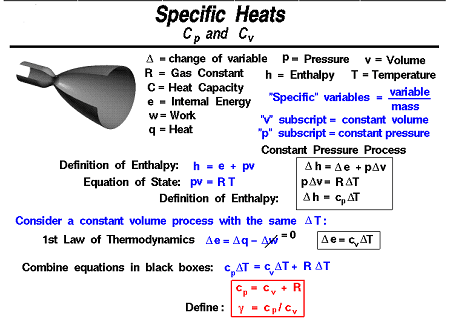
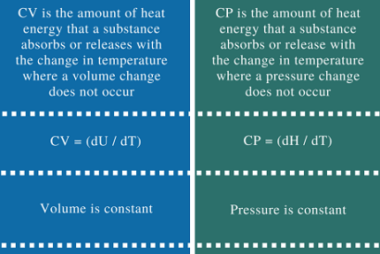
Cv and Cp are thermodynamic properties that describe the heat capacity of a substance at constant volume (Cv) and constant pressure (Cp), respectively. Cv is defined as the amount of heat required to raise the temperature of a substance by one degree Celsius at constant volume. It represents the ability of a substance to store…
Specific heats

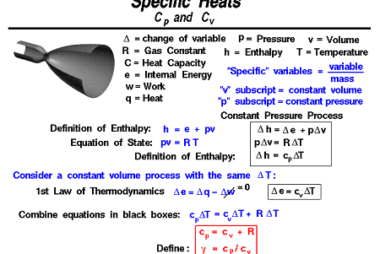
Specific heat is the amount of heat required to raise the temperature of a unit mass of a substance by one degree Celsius (or one Kelvin) without any change in phase. There are two types of specific heat: The specific heat depends on the nature of the substance and its physical state (solid, liquid, or…

Ideal gas laws

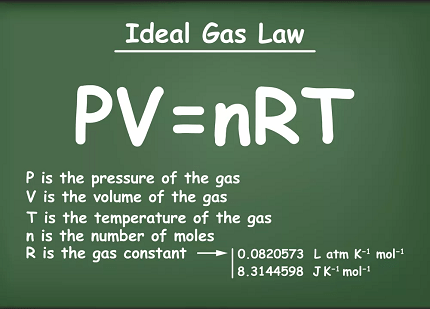
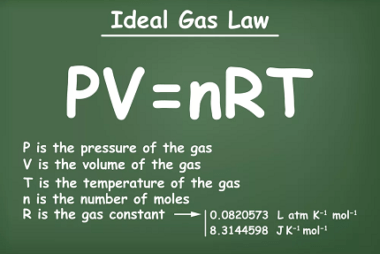
The ideal gas law is a fundamental concept in thermodynamics that describes the behavior of gases under certain conditions. It is a combination of several gas laws, including Boyle’s law, Charles’s law, and Avogadro’s law, and can be expressed mathematically as: PV = nRT Where: P = pressure of the gas V = volume of…

Newton’s law of cooling

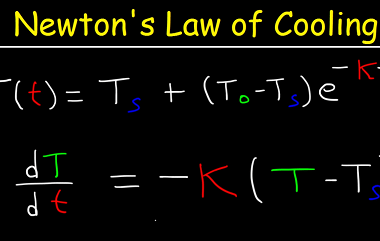
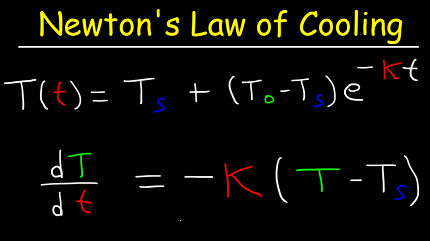
Newton’s law of cooling states that the rate of heat loss of a body is proportional to the difference in temperatures between the body and its surroundings. Mathematically, it can be expressed as: dQ/dt = -kA(T – Ts) where: This law is applicable when the temperature difference between the body and its surroundings is not…

Radiation

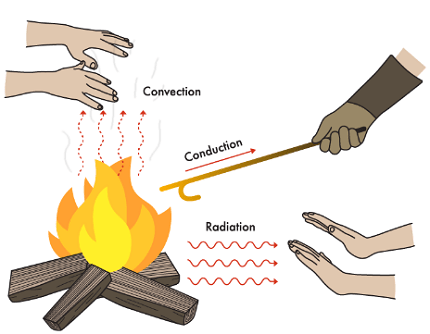
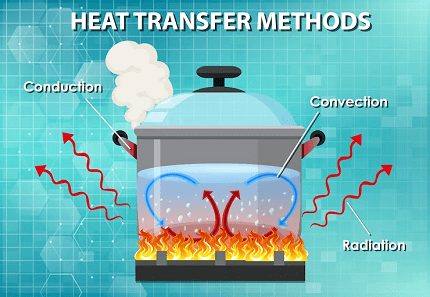
Radiation refers to the emission or transmission of energy through space or a material medium in the form of waves or particles. There are different types of radiation, including electromagnetic radiation (such as radio waves, microwaves, infrared radiation, visible light, ultraviolet radiation, X-rays, and gamma rays) and particle radiation (such as alpha particles, beta particles,…

Elementary concepts of convection

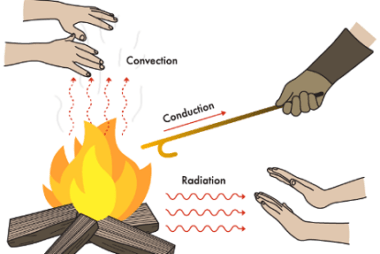
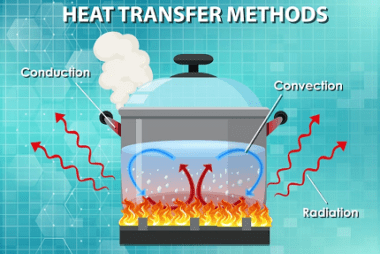
Convection is the transfer of heat by the motion of a fluid such as air or water. The basic concepts of convection include: Overall, convection is an important process for heat transfer in many applications, from cooling electronic devices to heating homes and buildings. What is Required Elementary concepts of convection To understand the elementary…

Heat conduction in one dimension

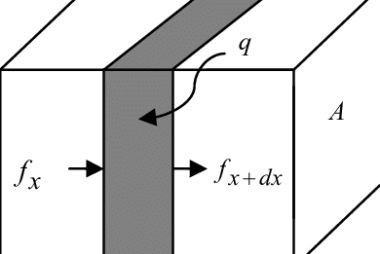
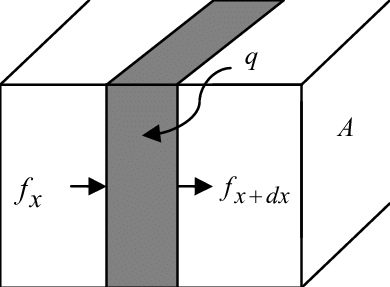
Heat conduction in one dimension is a process by which heat is transferred through a material in one direction only. The rate at which heat is conducted through the material is determined by the temperature gradient along the direction of heat flow, the thermal conductivity of the material, and the cross-sectional area perpendicular to the…

latent heat

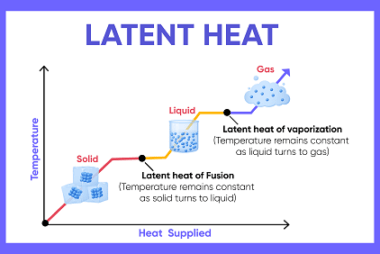
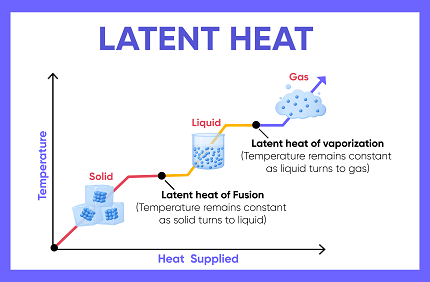
Latent heat refers to the amount of energy that is absorbed or released by a substance during a change in its state or phase, such as melting, boiling, or condensation. This energy is used to either break or form the intermolecular bonds between the molecules of the substance, without causing a temperature change. The amount…

Calorimetry

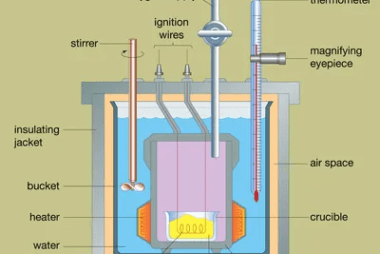
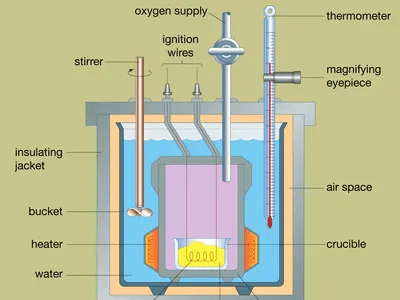
Calorimetry is the scientific measurement of heat transfer in a physical or chemical process. It involves the determination of the amount of heat absorbed or released by a substance or system during a physical or chemical change. Calorimetry is an important tool in various fields of science, including chemistry, physics, and engineering. The basic principle…

Thermal expansion of solids, liquids and gases

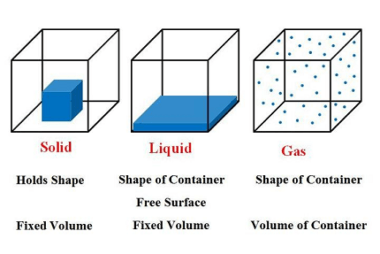
Thermal expansion is a property exhibited by all three states of matter – solids, liquids, and gases – and is caused by the increased kinetic energy of particles as they absorb heat. However, the extent of thermal expansion varies significantly between the different states of matter. Solids: In solids, the particles are tightly packed and…