Vrindawan Coaching Center

Carnot engine

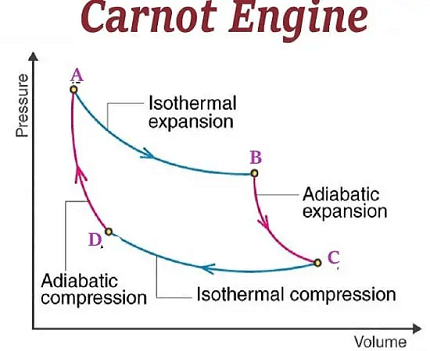
The Carnot engine is a theoretical heat engine that operates on a reversible thermodynamic cycle. It was developed by French physicist Sadi Carnot in 1824 and is considered to be the most efficient heat engine possible, according to the second law of thermodynamics. The Carnot engine operates between two heat reservoirs, one at a high…


Irreversible processes

Irreversible processes are processes that cannot be reversed, either naturally or artificially. In thermodynamics, an irreversible process is one in which the total entropy of the system and its surroundings increases. This increase in entropy results in a loss of useful energy, and the process cannot be reversed to return the system to its original…

Reversible

The term “reversible” refers to something that can be undone or reversed, meaning that it can be restored to its original state or condition. This concept is widely used in various fields, including science, mathematics, engineering, and computing. In science, a reversible process is one that can be reversed without any loss of energy or…

Second law of thermodynamics

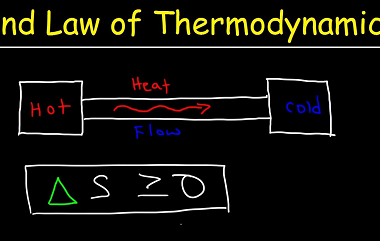
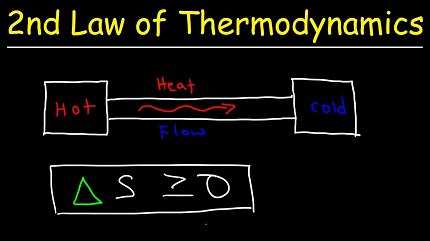
In physics, the second law of thermodynamics is a fundamental principle that governs the behavior of energy and entropy in a closed system. It states that the total entropy of a closed system always increases over time, or remains constant in an ideal reversible process. Entropy is a measure of the degree of disorder or…

Its applications (only for Ideal gases)

Ideal gases have several applications in various fields such as chemistry, physics, engineering, and even meteorology. Here are some of the applications of ideal gases: These are some of the applications of ideal gases, which have a wide range of uses in various fields. What is Required Its applications (only for Ideal gases) Here are…

First law of thermodynamics

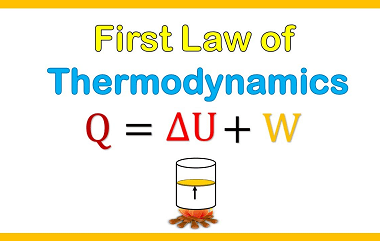
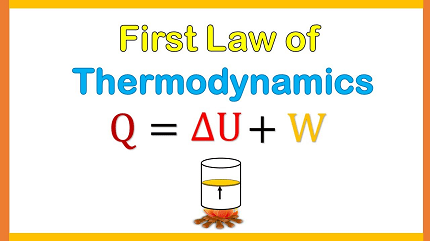
The First Law of Thermodynamics, also known as the law of conservation of energy, states that energy cannot be created or destroyed, but it can be transformed from one form to another or transferred from one system to another. In other words, the total energy of a closed system remains constant. This law is a…

Equivalence of Heat and Work

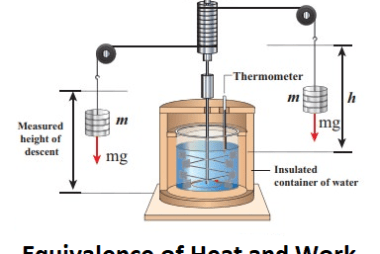
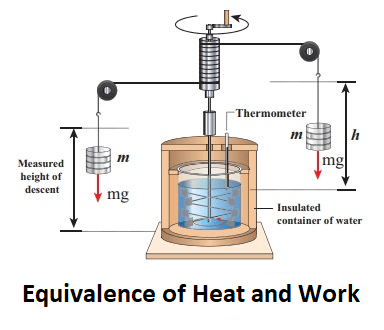
The equivalence of heat and work is known as the first law of thermodynamics, which states that energy cannot be created or destroyed, but it can be transformed from one form to another. Heat and work are two forms of energy that can be converted into each other. When a system undergoes a change, the…

Bulk modulus of gases

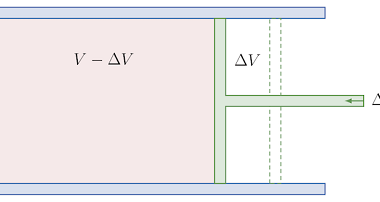
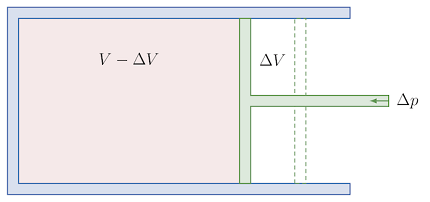
The bulk modulus of a gas is a measure of the gas’s resistance to compression. It is defined as the ratio of the change in pressure to the fractional change in volume, under conditions of constant temperature. For an ideal gas, the bulk modulus can be calculated using the ideal gas law, which relates the…

Isothermal

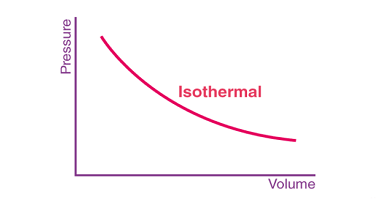
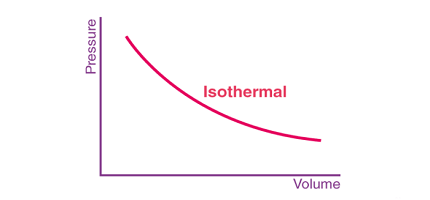
In thermal physics, an isothermal process is a thermodynamic process during which the temperature of a system remains constant. This means that the internal energy of the system remains constant as well. In an isothermal process, any energy transferred to or from the system is in the form of work or heat. The work done…

Monoatomic and Diatomic gases

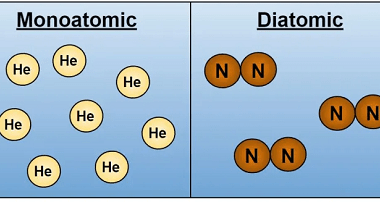
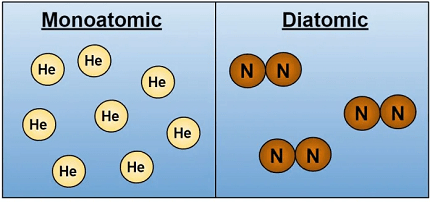
Monoatomic gases are gases that consist of single atoms as their particles. Examples of monoatomic gases include noble gases such as helium (He), neon (Ne), argon (Ar), krypton (Kr), and xenon (Xe). Diatomic gases, on the other hand, are gases that consist of two atoms as their particles. Examples of diatomic gases include hydrogen (H2),…