
Vrindawan Coaching Center

Advance Course AIIMS-SYLLABUS Chemistry syllabus Order

Order The syllabus for the Chemistry section of the AIIMS entrance exam can vary slightly from year to year. However, here is a general order and breakdown of topics that are typically covered: Keep in mind that this is a general outline and the actual syllabus may vary. It is always recommended to refer to…
Advance Course AIIMS-SYLLABUS Chemistry syllabus Catalyst

Catalyst A catalyst is a substance that increases the rate of a chemical reaction by providing an alternative reaction pathway with lower activation energy. It participates in the reaction but is not consumed or permanently altered in the process, allowing it to be used repeatedly. Catalysts can facilitate reactions by providing a surface for the…

Advance Course AIIMS-SYLLABUS Chemistry syllabus Temperature

Temperature Temperature is a measure of the average kinetic energy of the particles in a substance or system. It represents the degree of hotness or coldness of an object or environment. In scientific terms, temperature is often measured in degrees Celsius (°C), Fahrenheit (°F), or Kelvin (K). Here are some key points about temperature: Understanding…

Advance Course AIIMS-SYLLABUS Chemistry syllabus Factors affecting the rate of a reaction

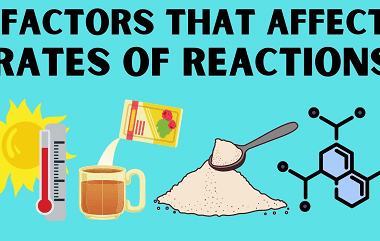
Factors affecting the rate of a reaction Several factors can affect the rate of a chemical reaction: It’s important to note that the influence of each factor may vary depending on the specific reaction and the conditions in which it occurs. The factors affecting the rate of a chemical reaction, as covered in the AIIMS…

Advance Course AIIMS-SYLLABUS Chemistry syllabus Rate of a reaction

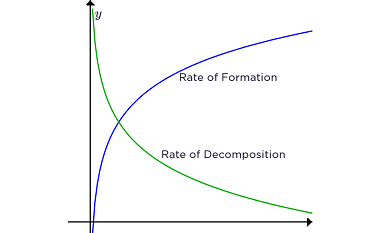
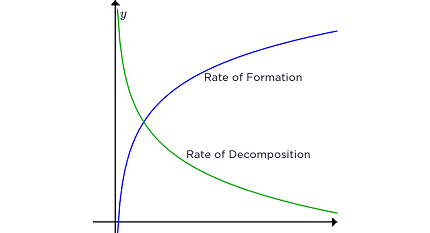
Rate of a reaction The rate of a reaction refers to how quickly a chemical reaction occurs, specifically the change in concentration of reactants or products over time. It is often expressed as the rate of disappearance of a reactant or the rate of formation of a product. The rate of a reaction can be…

Advance Course AIIMS-SYLLABUS Chemistry syllabus Standard electrode potential

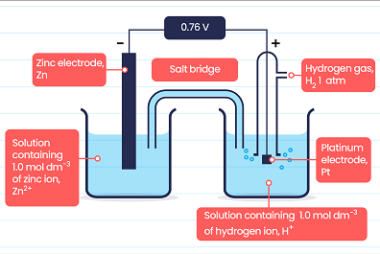
Standard electrode potential Standard electrode potential, also known as standard reduction potential, is a measure of the tendency of an electrode to gain or lose electrons compared to a standard reference electrode under standard conditions. It represents the voltage or potential difference between the electrode and the reference electrode. The standard reference electrode used is…

Advance Course AIIMS-SYLLABUS Chemistry syllabus Laws of Electrolysis

Laws of Electrolysis The Laws of Electrolysis are a set of principles formulated by Michael Faraday that describe the quantitative relationships between the amounts of substances involved in an electrolytic reaction. These laws are: These laws provide a basis for understanding and quantifying the electrolytic processes, such as the deposition of metals during electroplating or…

Advance Course AIIMS-SYLLABUS Chemistry syllabus Electrolysis

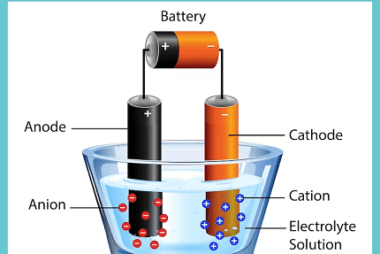
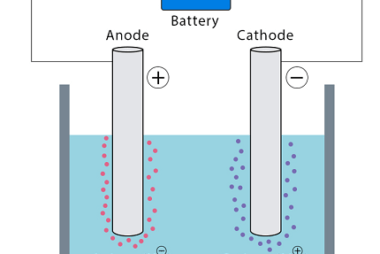
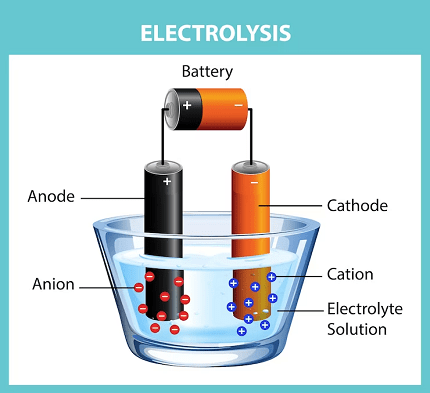
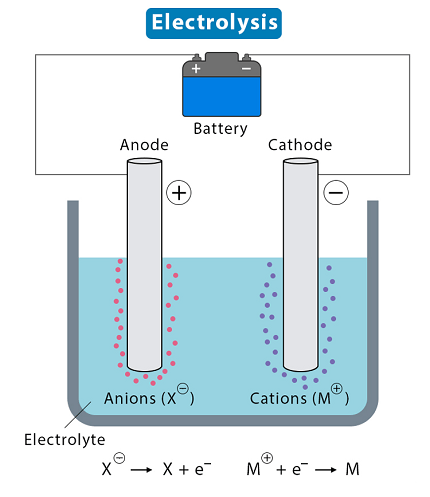
Electrolysis Electrolysis is a chemical process that uses an electric current to bring about a non-spontaneous chemical reaction. It involves the decomposition of an electrolyte, which is a substance that conducts electricity when dissolved or molten, into its constituent ions. During electrolysis, two electrodes are placed in the electrolyte solution or molten electrolyte. The electrode…

Advance Course AIIMS-SYLLABUS Chemistry syllabus Kohlrausch’s Law

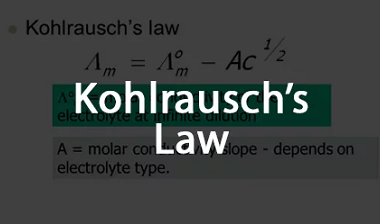
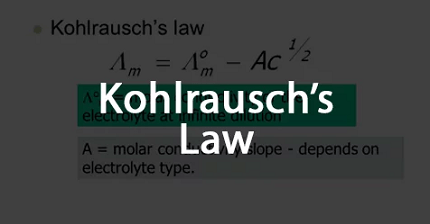
Kohlrausch’s Law Kohlrausch’s Law is a principle in electrochemistry that describes the relationship between the molar conductivity of an electrolyte and its concentration. The law is named after the German physicist Friedrich Kohlrausch, who formulated it in the late 19th century. According to Kohlrausch’s Law, the molar conductivity (Λ) of an electrolyte at a given…

Advance Course AIIMS-SYLLABUS Chemistry syllabus Electrolytic solutions

Electrolytic solutions Electrolytic solutions are solutions that conduct electricity due to the presence of ions. In these solutions, an ionic compound dissolves in a solvent, such as water, and dissociates into positively and negatively charged ions. The movement of these ions allows for the flow of electric current. Key characteristics of electrolytic solutions include: Electrolytic…