Vrindawan Coaching Center

Escape velocity

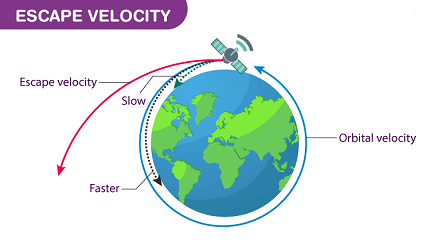
Escape velocity is the minimum velocity that an object needs to achieve in order to escape the gravitational pull of a celestial body, such as a planet, moon, or star, and move away from it into space. The escape velocity is calculated using the following formula: Ve = sqrt(2GM/r) Where: Ve = escape velocity G…
Satellites in circular orbits

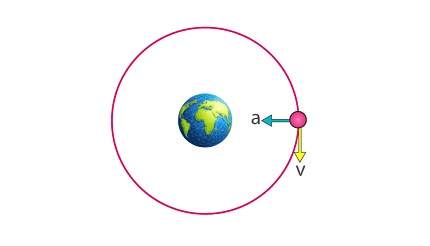
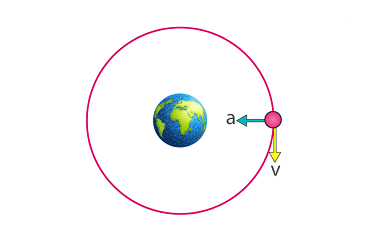
Satellites in circular orbits move around the Earth at a constant distance from the Earth’s center. This type of orbit is also known as a “geostationary orbit” or “geosynchronous orbit”. In this type of orbit, the satellite takes the same amount of time to complete one orbit as the Earth takes to complete one rotation…

Motion of planets

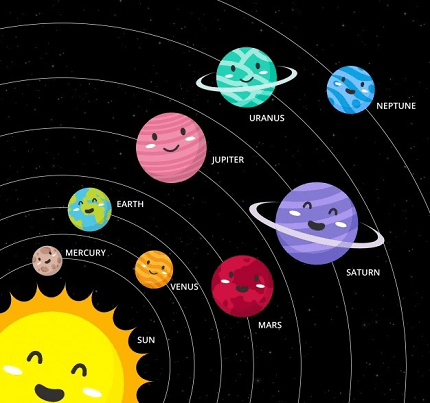
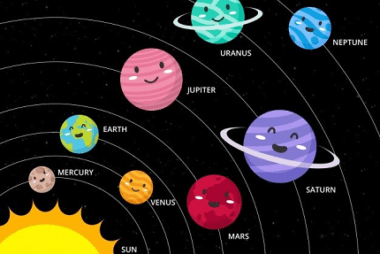
The motion of planets can be explained by Kepler’s laws of planetary motion, which were derived by the German astronomer Johannes Kepler in the early 17th century based on observations made by the Danish astronomer Tycho Brahe. Kepler’s first law states that the orbit of a planet is an ellipse with the sun at one…

Acceleration due to gravity

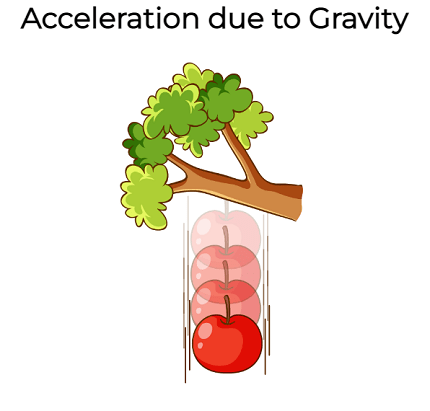
Acceleration due to gravity is the acceleration experienced by an object in the gravitational field of a massive body, such as a planet, moon, or star. The acceleration due to gravity is denoted by the symbol “g” and is usually measured in meters per second squared (m/s²). The value of acceleration due to gravity depends…

Gravitational potential

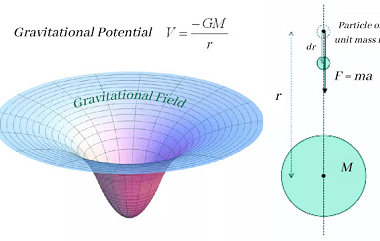
Gravitational potential is a concept in physics that describes the amount of work that must be done to move an object from one point in a gravitational field to another point. It is usually denoted by the symbol “V” and measured in units of joules per kilogram (J/kg) or meters squared per second squared (m^2/s^2).…

Law of gravitation

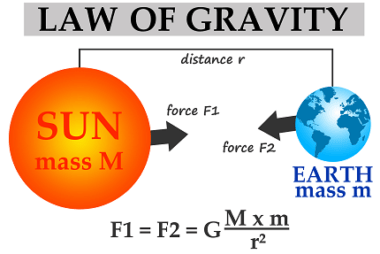
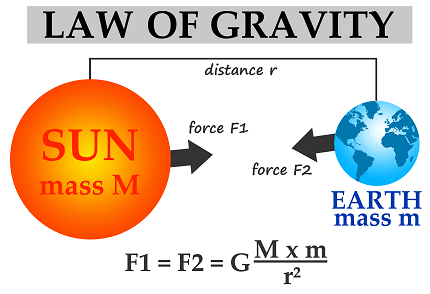
The law of gravitation, also known as Newton’s law of gravitation, is a fundamental principle in physics that describes the force of attraction between two objects with mass. The law states that every point mass in the universe attracts every other point mass with a force that is directly proportional to the product of their…

Linear

Linear refers to something that is straight or follows a straight line. In mathematics, a linear function is a function that has a constant rate of change, meaning that as the input variable increases by a fixed amount, the output variable also increases by a fixed amount. The graph of a linear function is a…

Resonance

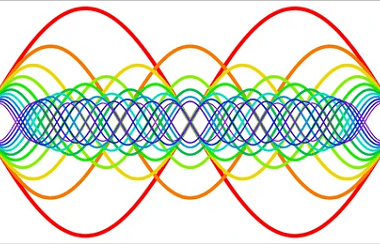
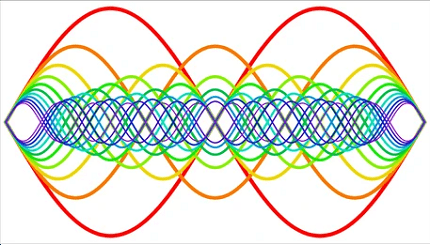
Resonance is a phenomenon that occurs when a system or object is subjected to a periodic disturbance, such as a sound wave or a vibration, that has the same frequency as the natural frequency of the system or object. When this happens, the system or object responds with an increased amplitude of oscillation. For example,…

Damped oscillation (in one dimension)

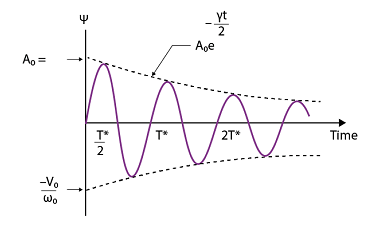
Damped oscillation refers to the behavior of a system that undergoes oscillation (i.e., periodic motion) but with the amplitude of the oscillation decreasing over time due to the presence of damping. In one dimension, a simple example of a damped oscillation is a mass-spring system with damping, where a mass is attached to a spring…

Equilibrium of rigid bodies

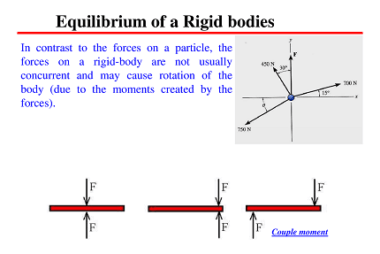
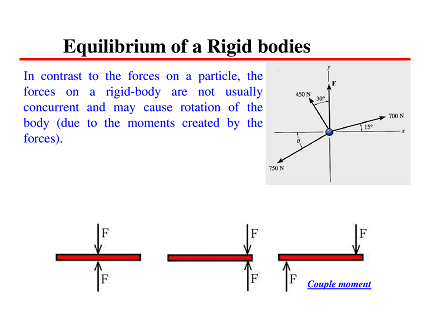
The equilibrium of rigid bodies refers to the state of a rigid body when it is at rest or moving with a constant velocity, and the net force and torque acting on it are both zero. In other words, the body is not accelerating and is in a state of balance. To determine the equilibrium…