Vrindawan Coaching Center

Electric field

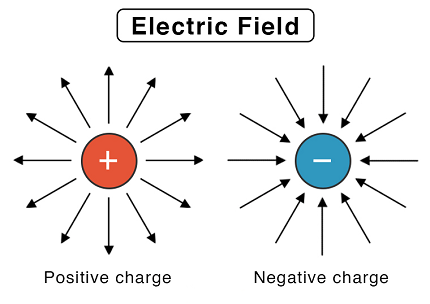
An electric field is a vector field that describes the influence exerted by electric charges on other charges in their vicinity. It is defined as the force per unit charge that a test charge would experience if placed in the field. Electric fields are produced by stationary charges, as well as by changing magnetic fields…

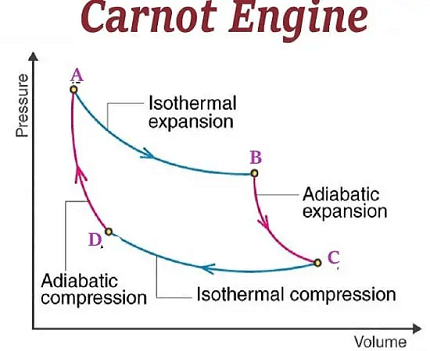
Carnot engine

The Carnot engine is a theoretical heat engine that operates on a reversible thermodynamic cycle. It was developed by French physicist Sadi Carnot in 1824 and is considered to be the most efficient heat engine possible, according to the second law of thermodynamics. The Carnot engine operates between two heat reservoirs, one at a high…

Its applications (only for Ideal gases)

Ideal gases have several applications in various fields such as chemistry, physics, engineering, and even meteorology. Here are some of the applications of ideal gases: These are some of the applications of ideal gases, which have a wide range of uses in various fields. What is Required Its applications (only for Ideal gases) Here are…

Bulk modulus of gases

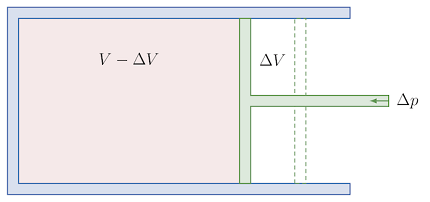
The bulk modulus of a gas is a measure of the gas’s resistance to compression. It is defined as the ratio of the change in pressure to the fractional change in volume, under conditions of constant temperature. For an ideal gas, the bulk modulus can be calculated using the ideal gas law, which relates the…

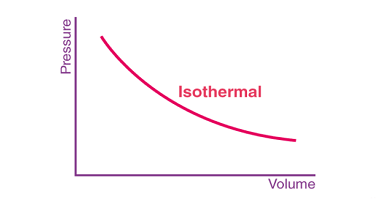
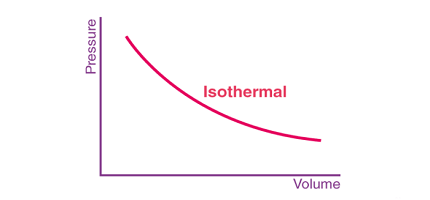
Isothermal

In thermal physics, an isothermal process is a thermodynamic process during which the temperature of a system remains constant. This means that the internal energy of the system remains constant as well. In an isothermal process, any energy transferred to or from the system is in the form of work or heat. The work done…

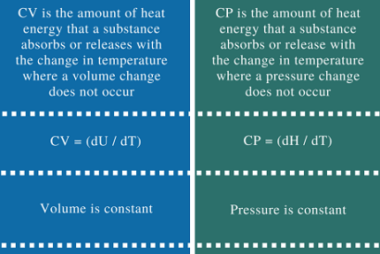
Cv and Cp

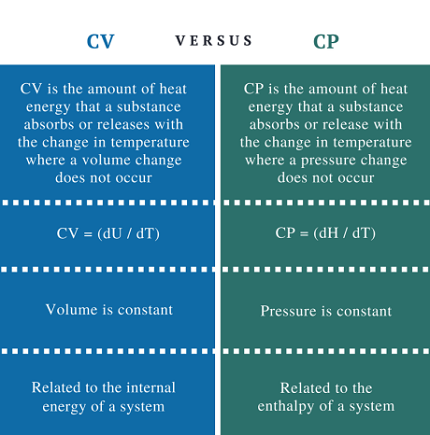
Cv and Cp are thermodynamic properties that describe the heat capacity of a substance at constant volume (Cv) and constant pressure (Cp), respectively. Cv is defined as the amount of heat required to raise the temperature of a substance by one degree Celsius at constant volume. It represents the ability of a substance to store…

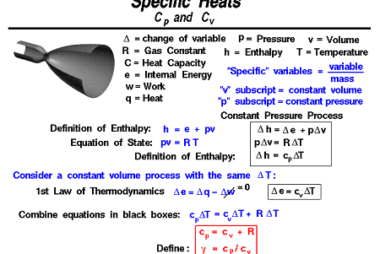
Specific heats

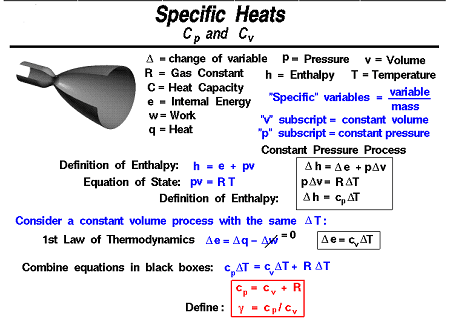
Specific heat is the amount of heat required to raise the temperature of a unit mass of a substance by one degree Celsius (or one Kelvin) without any change in phase. There are two types of specific heat: The specific heat depends on the nature of the substance and its physical state (solid, liquid, or…

Heat conduction in one dimension

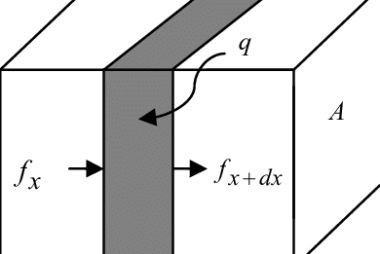
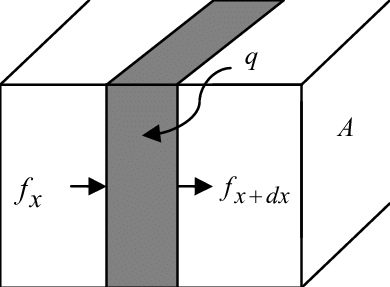
Heat conduction in one dimension is a process by which heat is transferred through a material in one direction only. The rate at which heat is conducted through the material is determined by the temperature gradient along the direction of heat flow, the thermal conductivity of the material, and the cross-sectional area perpendicular to the…

Calorimetry

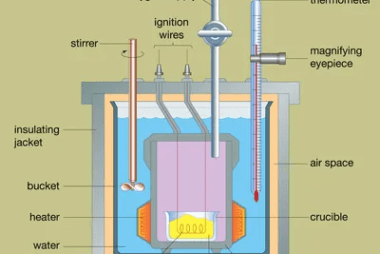
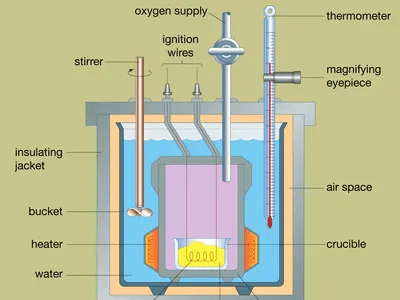
Calorimetry is the scientific measurement of heat transfer in a physical or chemical process. It involves the determination of the amount of heat absorbed or released by a substance or system during a physical or chemical change. Calorimetry is an important tool in various fields of science, including chemistry, physics, and engineering. The basic principle…

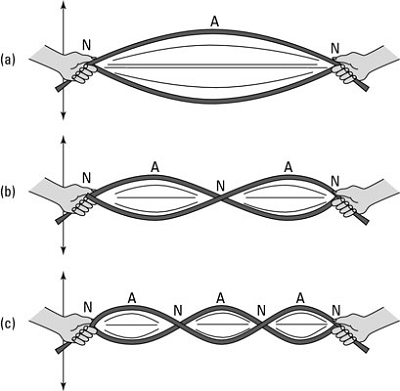
Vibration of strings

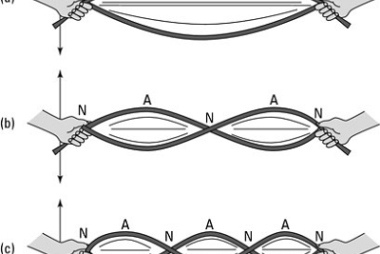
Vibration of strings is a physical phenomenon that occurs when a string, such as that of a musical instrument, is plucked or struck. When a string is plucked, it vibrates back and forth, causing sound waves to be produced. The frequency and amplitude of the vibration determine the pitch and volume of the sound produced.…