Vrindawan Coaching Center

Conservation of angular momentum

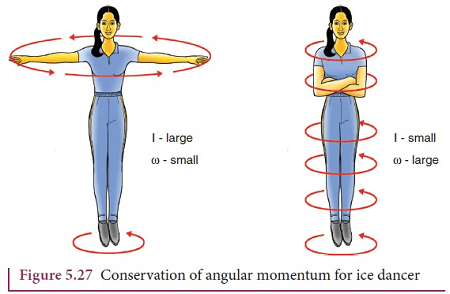
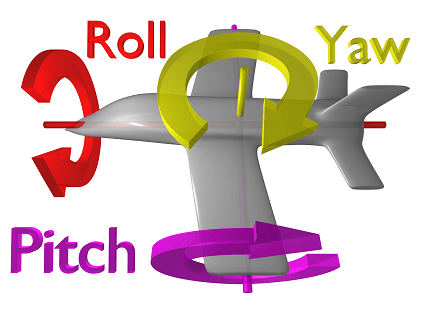
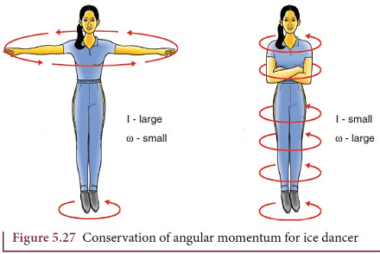
Conservation of angular momentum is a fundamental principle in physics that states that the total angular momentum of a system is conserved in the absence of external torques. Angular momentum is a property of rotating objects and is defined as the product of the moment of inertia and the angular velocity. In simpler terms, the…
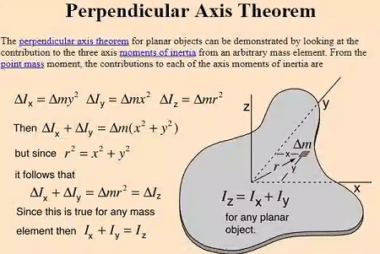
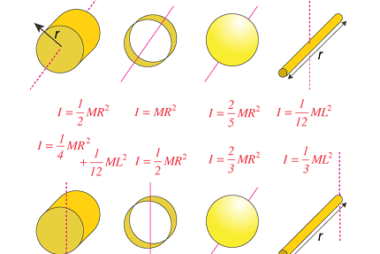
Perpendicular axes theorems

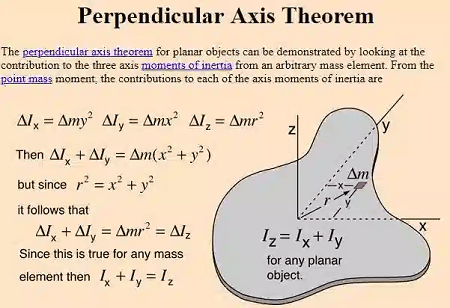
The perpendicular axes theorems are a set of rules used in the study of moments of inertia, which are physical properties of objects that describe how difficult they are to rotate around various axes. The perpendicular axes theorems state the following: These theorems are very useful in determining moments of inertia for objects with complicated…

Moment of Inertia

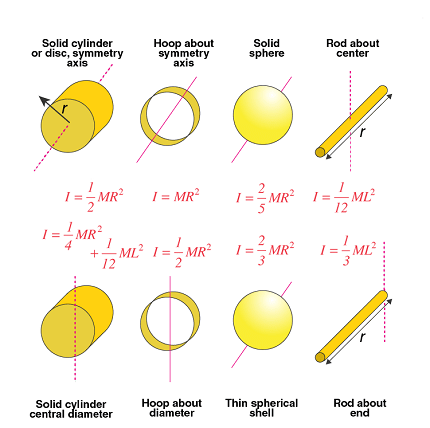
Moment of Inertia is a measure of an object’s resistance to changes in its rotational motion. It is defined as the sum of the products of the mass of each particle in the object, and the square of its distance from the axis of rotation. The moment of inertia of an object depends on its…

Rigid body

A rigid body is an idealized object in classical mechanics that does not deform under external forces. It is a theoretical concept that assumes that an object is perfectly solid and does not change its shape or size when subjected to external forces. In reality, no object is truly rigid, but many objects can be…

Elastic and Inelastic collisions

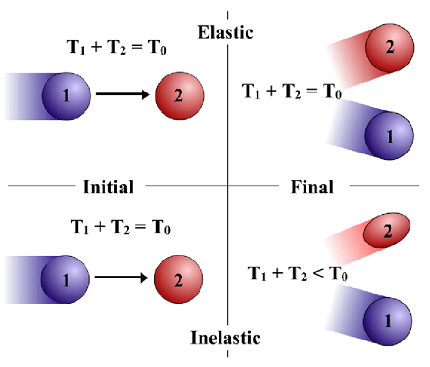
In physics, collisions between objects can be classified as either elastic or inelastic, based on how the kinetic energy of the system is conserved. An elastic collision is one in which the kinetic energy of the system is conserved, meaning that the total kinetic energy of the colliding objects before the collision is equal to…

Centre of mass

The center of mass (also known as the center of gravity) is a point in an object or a system of objects where the mass of the system is concentrated. It is the average position of all the parts of the system, weighted according to their respective masses. The center of mass is an important…

Systems of particles

In classical mechanics, a system of particles refers to a collection of particles that interact with each other through various physical forces, such as gravitational, electromagnetic, and nuclear forces. The behavior of a system of particles can be analyzed using Newton’s laws of motion, which describe the motion of individual particles and the resultant motion…

Mechanical energy

Mechanical energy is the sum of kinetic energy and potential energy of an object due to its position, motion, or both. Kinetic energy is the energy an object possesses due to its motion, while potential energy is the energy an object possesses due to its position or state of being. The total mechanical energy of…

Conservation of linear momentum

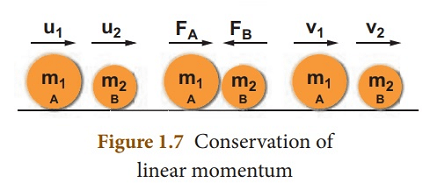
The conservation of linear momentum is a fundamental principle in physics that states that the total momentum of a system of interacting objects remains constant, unless acted upon by an external force. In other words, if two objects interact with each other, the total momentum of the system before and after the interaction must be…