Vrindawan Coaching Center

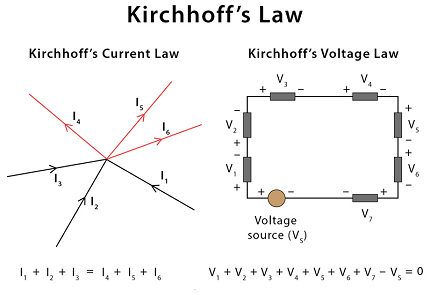
Kirchhoff’s law

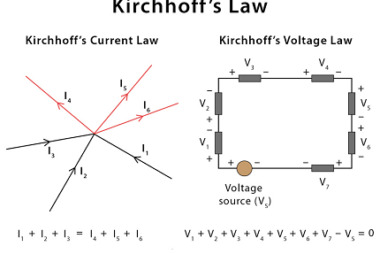
Kirchhoff’s laws refer to two fundamental laws of circuit theory that govern the behavior of electrical circuits. These laws are essential tools in circuit analysis and can be used to solve complex electrical circuits with multiple components and sources. What is Required Kirchhoff’s law Kirchhoff’s laws are fundamental laws of circuit theory and are required…

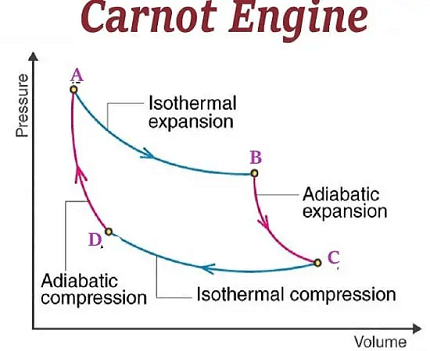
Carnot engine

The Carnot engine is a theoretical heat engine that operates on a reversible thermodynamic cycle. It was developed by French physicist Sadi Carnot in 1824 and is considered to be the most efficient heat engine possible, according to the second law of thermodynamics. The Carnot engine operates between two heat reservoirs, one at a high…

Its applications (only for Ideal gases)

Ideal gases have several applications in various fields such as chemistry, physics, engineering, and even meteorology. Here are some of the applications of ideal gases: These are some of the applications of ideal gases, which have a wide range of uses in various fields. What is Required Its applications (only for Ideal gases) Here are…

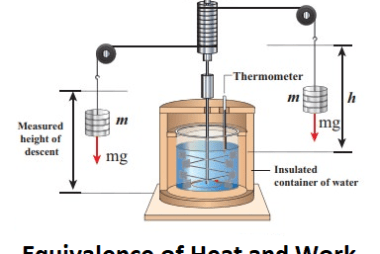
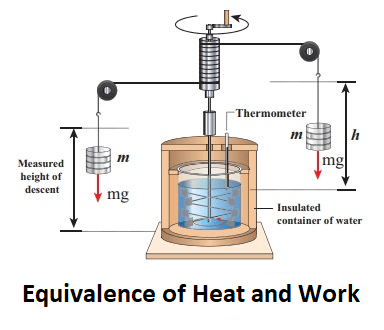
Equivalence of Heat and Work

The equivalence of heat and work is known as the first law of thermodynamics, which states that energy cannot be created or destroyed, but it can be transformed from one form to another. Heat and work are two forms of energy that can be converted into each other. When a system undergoes a change, the…

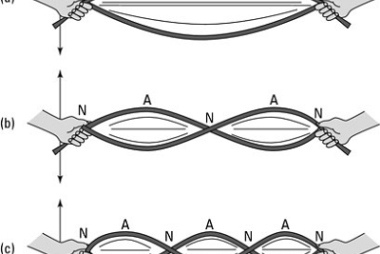
Vibration of strings

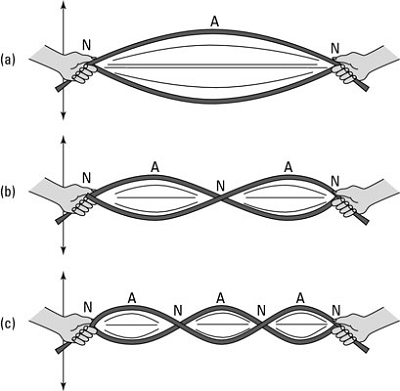
Vibration of strings is a physical phenomenon that occurs when a string, such as that of a musical instrument, is plucked or struck. When a string is plucked, it vibrates back and forth, causing sound waves to be produced. The frequency and amplitude of the vibration determine the pitch and volume of the sound produced.…

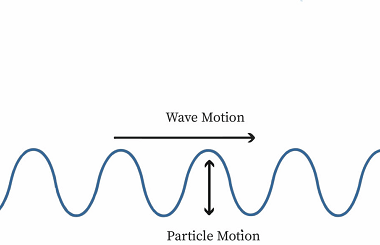
Wave motion (plane waves only)

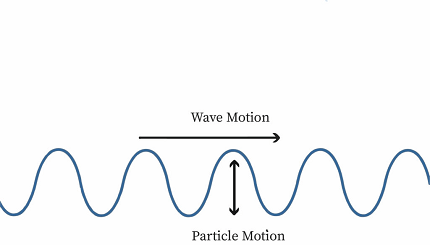
Wave motion refers to the propagation of disturbances or oscillations through a medium. A plane wave is a type of wave that propagates uniformly in one direction and has a constant frequency, wavelength, and amplitude. In a plane wave, the wavefronts are planes perpendicular to the direction of propagation, and the oscillations of the medium…

Streamline flow

Streamline flow is a type of fluid flow where the velocity of the fluid is constant along each streamline. Streamlines are imaginary lines that represent the direction of the fluid flow at each point in space. In streamline flow, the fluid particles move in a smooth, organized manner, without any turbulence or mixing. Streamline flow…

Terminal velocity

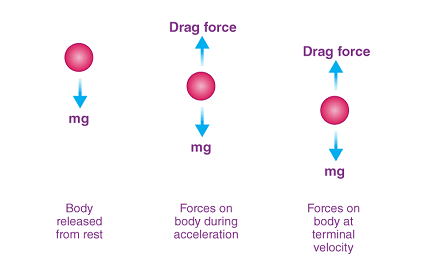
Terminal velocity is the maximum velocity that a falling object can reach when the resistance of the medium through which it is falling (such as air or water) balances the force of gravity. At terminal velocity, the object stops accelerating and falls at a constant speed. The terminal velocity of an object depends on its…

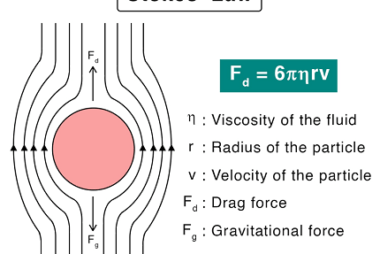
Stoke’s law

Stoke’s law is a scientific principle that describes the behavior of small particles that are suspended in a fluid medium. The law states that the force of viscous drag on a spherical particle in a fluid is directly proportional to the velocity of the particle and the viscosity of the fluid and inversely proportional to…

Bulk modulus in Mechanics

In mechanics, the bulk modulus is a measure of the resistance of a material to compression. It is defined as the ratio of the change in pressure to the fractional change in volume, under conditions of constant temperature. Mathematically, the bulk modulus (K) can be expressed as: K = – V ΔP / ΔV where…