
Vrindawan Coaching Center

Advance Course AIIMS-SYLLABUS Chemistry syllabus Chemical Kinetics

Chemical Kinetics Chemical kinetics is the branch of chemistry that deals with the study of the rates at which chemical reactions occur and the factors that influence these rates. It focuses on understanding the mechanisms by which reactants are transformed into products, as well as the factors that affect the speed of these reactions. Key…
Advance Course AIIMS-SYLLABUS Chemistry syllabus Standard electrode potential

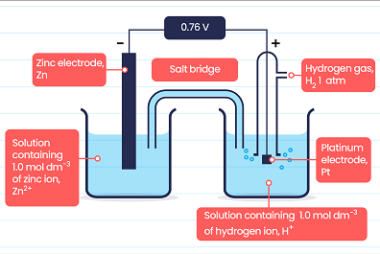
Standard electrode potential Standard electrode potential, also known as standard reduction potential, is a measure of the tendency of an electrode to gain or lose electrons compared to a standard reference electrode under standard conditions. It represents the voltage or potential difference between the electrode and the reference electrode. The standard reference electrode used is…

Advance Course AIIMS-SYLLABUS Chemistry syllabus Laws of Electrolysis

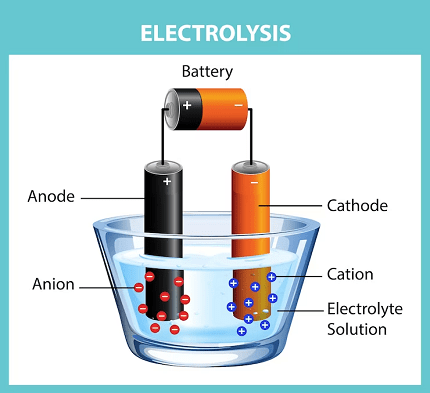
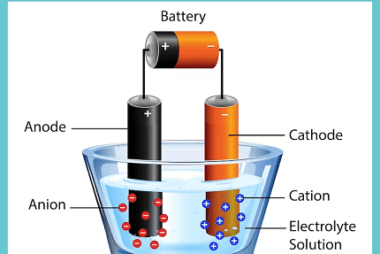
Laws of Electrolysis The Laws of Electrolysis are a set of principles formulated by Michael Faraday that describe the quantitative relationships between the amounts of substances involved in an electrolytic reaction. These laws are: These laws provide a basis for understanding and quantifying the electrolytic processes, such as the deposition of metals during electroplating or…

Advance Course AIIMS-SYLLABUS Chemistry syllabus Kohlrausch’s Law

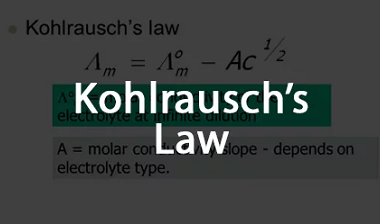
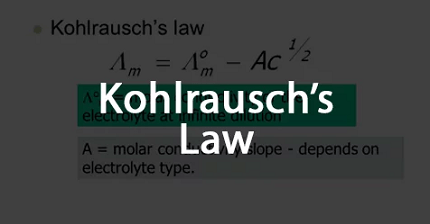
Kohlrausch’s Law Kohlrausch’s Law is a principle in electrochemistry that describes the relationship between the molar conductivity of an electrolyte and its concentration. The law is named after the German physicist Friedrich Kohlrausch, who formulated it in the late 19th century. According to Kohlrausch’s Law, the molar conductivity (Λ) of an electrolyte at a given…

Advance Course AIIMS-SYLLABUS Chemistry syllabus Electrolytic solutions

Electrolytic solutions Electrolytic solutions are solutions that conduct electricity due to the presence of ions. In these solutions, an ionic compound dissolves in a solvent, such as water, and dissociates into positively and negatively charged ions. The movement of these ions allows for the flow of electric current. Key characteristics of electrolytic solutions include: Electrolytic…

Advance Course AIIMS-SYLLABUS Chemistry syllabus Redox reaction

Redox reaction A redox reaction, short for reduction-oxidation reaction, is a chemical reaction in which there is a transfer of electrons between species. In a redox reaction, one substance undergoes oxidation (loses electrons) while another substance undergoes reduction (gains electrons). The key components of a redox reaction are: Redox reactions are commonly encountered in various…

Advance Course AIIMS-SYLLABUS Chemistry syllabus Electrochemistry

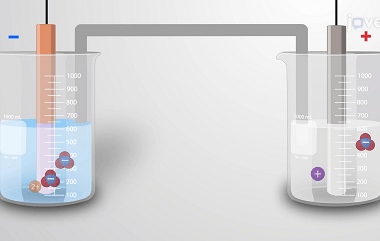
Electrochemistry Electrochemistry is a branch of chemistry that deals with the study of chemical reactions involving the transfer of electrons between species. It focuses on the relationship between electricity and chemical reactions, particularly the interconversion of chemical and electrical energy. In electrochemical reactions, oxidation and reduction processes occur simultaneously. These reactions take place in electrochemical…

Advance Course AIIMS-SYLLABUS Chemistry syllabus Colligative Properties

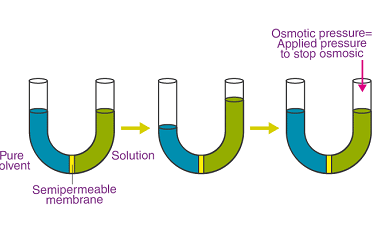
Colligative Properties Colligative properties are the physical properties of a solution that depend on the number of solute particles present, rather than the nature of the solute itself. These properties arise due to the interactions between the solute particles and the solvent molecules. The four main colligative properties are: These colligative properties are widely used…

Advance Course AIIMS-SYLLABUS Chemistry syllabus Solid Solutions

Solid Solutions The Chemistry syllabus for Solid Solutions in the AIIMS (All India Institute of Medical Sciences) advanced course covers the following topics: It is important to note that the specific content and depth of these topics may vary based on the curriculum and teaching approach of the AIIMS advanced course. Solid solutions refer to…

Advance Course AIIMS-SYLLABUS Chemistry syllabus The solubility of the gas in liquids

The solubility of the gas in liquids The solubility of a gas in a liquid refers to the ability of the gas to dissolve in the liquid. It is influenced by factors such as temperature, pressure, and the nature of the gas and liquid involved. When the pressure of the gas above the liquid increases,…