Vrindawan Coaching Center

Advance Course AIIMS-SYLLABUS Physics syllabus Faraday’s law

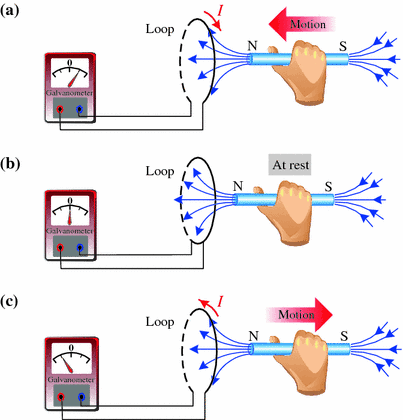
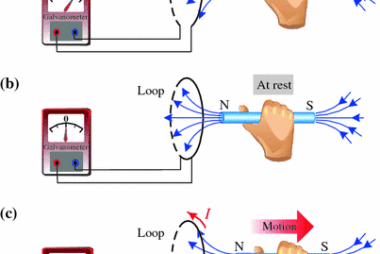
Faraday’s law Faraday’s law refers to a fundamental principle in physics that describes the relationship between a changing magnetic field and the induction of an electromotive force (EMF) or voltage in a conducting loop or circuit. It was discovered by the English scientist Michael Faraday in the 19th century. Faraday’s law states that the magnitude…


Advance Course AIIMS-SYLLABUS Physics syllabus Electromagnetic induction and Alternation of currents

Electromagnetic induction and Alternation of currents Electromagnetic Induction and Alternating Currents are important topics in physics. Here’s a concise overview of these subjects: Electromagnetic Induction: Alternating Currents: This brief overview covers the key concepts and ideas related to Electromagnetic Induction and Alternating Currents. The AIIMS Physics syllabus for the advanced course includes the topics of…

Advance Course AIIMS-SYLLABUS Physics syllabus Factors affecting them

Factors affecting them The factors that can affect the syllabus of the Advanced Course AIIMS Physics (or any other syllabus) include: It’s important for syllabi to be dynamic and adaptable, taking into account the evolving needs of the field, the students, and the society. Regular reviews and updates help ensure that the syllabus remains relevant…

Advance Course AIIMS-SYLLABUS Physics syllabus Electromagnetic

Electromagnetic Electromagnetic refers to the interaction between electric and magnetic fields. It encompasses the study of electromagnetic waves, which include visible light, radio waves, microwaves, infrared radiation, ultraviolet radiation, X-rays, and gamma rays. Electromagnetic phenomena are described by Maxwell’s equations, which are a set of mathematical equations that describe the behavior of electric and magnetic…

Advance Course AIIMS-SYLLABUS Physics syllabus Ferromagnetic devices

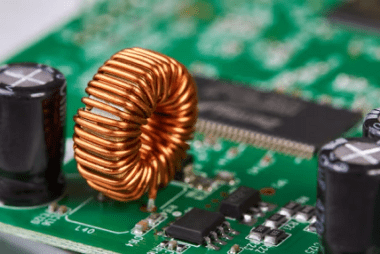
Ferromagnetic devices Ferromagnetic devices are electronic or electromechanical devices that utilize the properties of ferromagnetic materials for various applications. These devices rely on the ability of ferromagnetic materials to exhibit a strong magnetic response when subjected to an external magnetic field. Here are some common examples of ferromagnetic devices: These are just a few examples…

Advance Course AIIMS-SYLLABUS Physics syllabus Current loop as a magnetic dipole

Current loop as a magnetic dipole A current loop can behave like a magnetic dipole, exhibiting magnetic properties similar to those of a bar magnet. When a current flows through a loop of wire, it generates a magnetic field around it. This magnetic field is a result of the circular path of the current and…

Advance Course AIIMS-SYLLABUS Physics syllabus Cyclotron

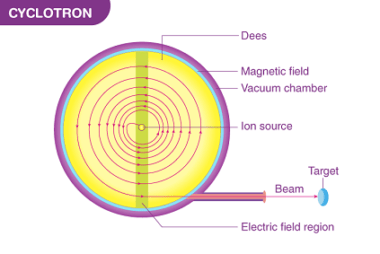
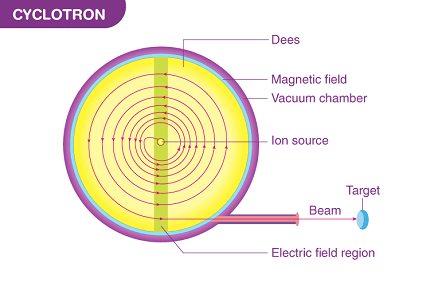
Cyclotron A cyclotron is a type of particle accelerator used to accelerate charged particles, such as protons or ions, to high speeds. It consists of two D-shaped hollow metal electrodes called “dees” placed in a strong magnetic field. The dees are connected to an alternating voltage source, which creates an electric field that accelerates the…

Advance Course AIIMS-SYLLABUS Physics syllabus Ampere’s Law

Ampere’s Law Ampere’s Law is a fundamental principle in electromagnetism that relates the magnetic field to the electric current flowing through a closed loop. It was formulated by the French physicist André-Marie Ampère. Ampere’s Law states that the line integral of the magnetic field, denoted as B, around a closed path, known as an Amperian…

Advance Course AIIMS-SYLLABUS Physics syllabus Biot-Savart Law

Biot-Savart Law The Biot-Savart Law is a fundamental principle in electromagnetism that describes the magnetic field generated by a steady electric current. It states that the magnetic field at a point in space is directly proportional to the current flowing through a small segment of a wire and inversely proportional to the distance between the…

Advance Course AIIMS-SYLLABUS Physics syllabus Magnetic field

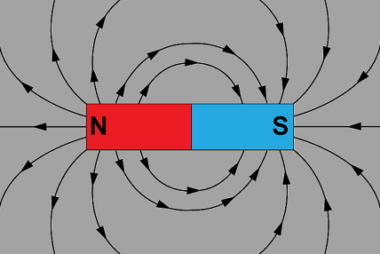
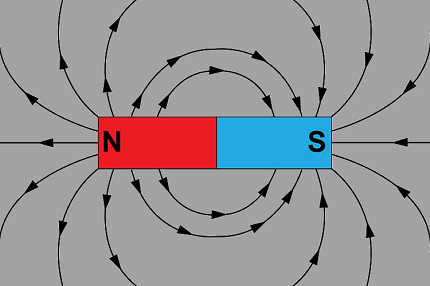
Magnetic field The magnetic field is a fundamental concept in physics that describes the region surrounding a magnet or a current-carrying conductor where magnetic forces are exerted on other magnets, moving charges, or current-carrying conductors. Key points about the magnetic field include: Understanding the magnetic field and its effects is crucial in various areas, including…