Vrindawan Coaching Center

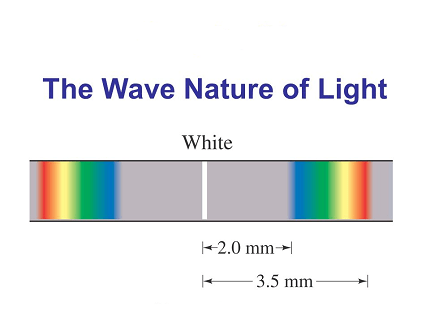
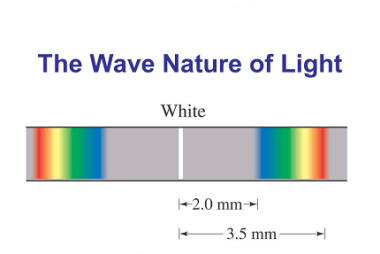
Wave nature of light

The wave nature of light is one of the fundamental properties of electromagnetic radiation, which includes light as well as other types of electromagnetic waves such as radio waves, microwaves, X-rays, and gamma rays. According to the wave theory of light, light is a form of energy that travels through space in the form of…


Magnification

Magnification refers to the process of making something appear larger than it actually is. In optics, magnification is the ratio of the size of an image produced by a lens or mirror to the size of the object being viewed. Magnification can be expressed as a numerical value or as a percentage. In microscopy, magnification…

Their Conversions

Conversions typically refer to the process of turning a prospect or potential customer into an actual paying customer. In digital marketing, conversions can refer to a specific action that a user takes on a website, such as filling out a form, making a purchase, or subscribing to a newsletter. The conversion rate is the percentage…

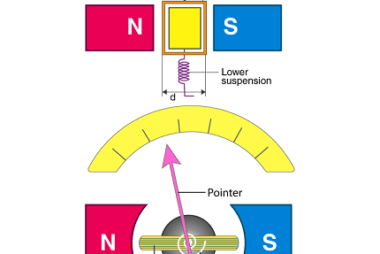
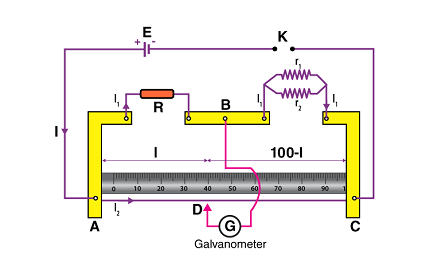
Moving coil galvanometer

A moving coil galvanometer is an instrument used to measure small electric currents. It consists of a coil of wire suspended between the poles of a permanent magnet. When a current flows through the coil, it experiences a torque due to the interaction between the magnetic field of the coil and the magnetic field of…

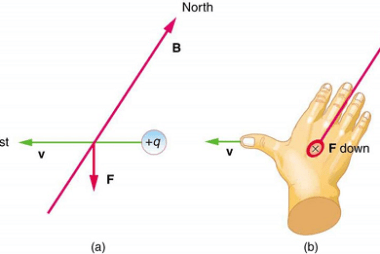
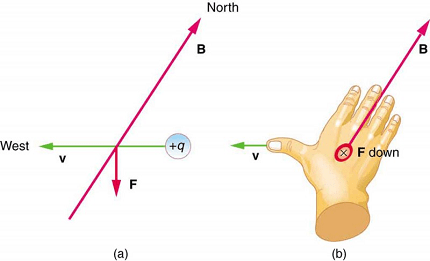
Force on a moving charge

A moving charge in an electric field experiences a force that is proportional to the strength of the electric field and the magnitude of the charge. The direction of the force is given by the direction of the electric field and the sign of the charge. The mathematical expression for the force on a moving…

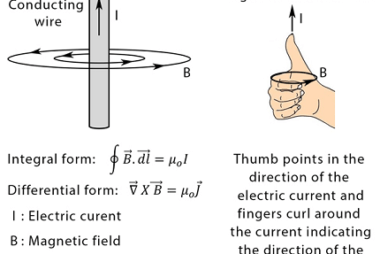
Ampere’s law

Ampere’s law is a fundamental law in electromagnetism that relates the magnetic field to the electric current that produces it. It states that the magnetic field around a closed loop is proportional to the electric current passing through the loop. Mathematically, Ampere’s law can be expressed as: ∮B·dl = μ0I where: Ampere’s law is an…

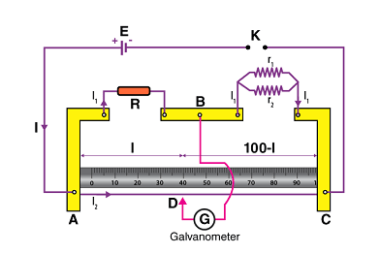
Parallel arrangements of resistances

When resistors are arranged in parallel, they are connected in such a way that the same voltage is applied across each resistor, and the current is divided among the resistors. The total resistance of the parallel circuit is less than the value of the smallest resistor in the circuit. The current flowing through each resistor…

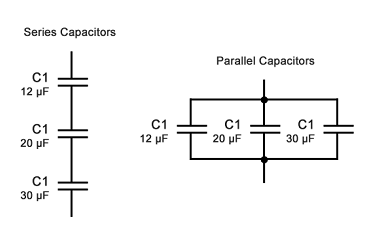
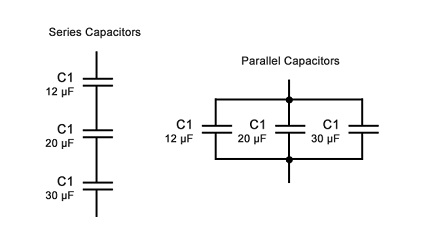
Capacitors in Series and Parallel

Capacitors are electronic components that store electrical charge and energy. They are commonly used in circuits to filter signals, block direct current, and stabilize voltage. When capacitors are connected in series, their total capacitance decreases, and their total voltage rating increases. This is because the charge on each capacitor is the same, and the voltage…

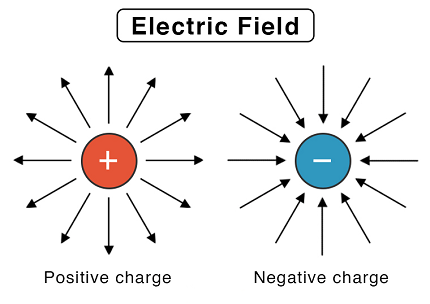
Electric field

An electric field is a vector field that describes the influence exerted by electric charges on other charges in their vicinity. It is defined as the force per unit charge that a test charge would experience if placed in the field. Electric fields are produced by stationary charges, as well as by changing magnetic fields…

Stefan’s law

Stefan’s law, also known as the Stefan-Boltzmann law, is a fundamental law of physics that relates the total amount of energy emitted by a blackbody per unit area per unit time (i.e., its radiative flux) to its temperature. It states that the radiative flux emitted by a blackbody is proportional to the fourth power of…