Vrindawan Coaching Center

Electromagnetic spectrum

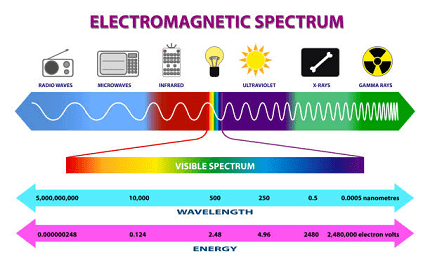
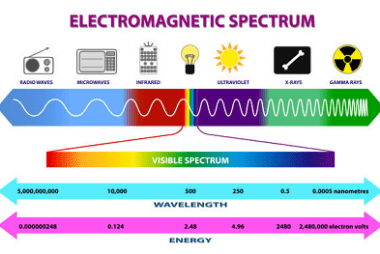
The electromagnetic spectrum is the range of all types of electromagnetic radiation. It includes all the frequencies of electromagnetic radiation, which includes radio waves, microwaves, infrared radiation, visible light, ultraviolet radiation, X-rays, and gamma rays. The electromagnetic spectrum is arranged in order of increasing frequency and decreasing wavelength. Radio waves have the longest wavelengths and…
Electromagnetic waves and Their characteristics

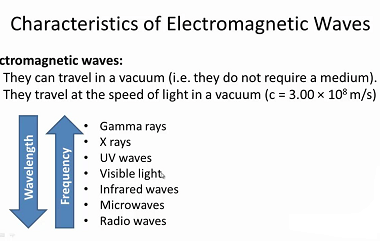
Electromagnetic waves are a type of wave that consists of oscillating electric and magnetic fields that propagate through space. These waves are characterized by several properties, including: What is Electromagnetic waves and their characteristics Electromagnetic waves are a type of wave that consists of oscillating electric and magnetic fields that propagate through space. These waves…

With d.c. and a.c. sources

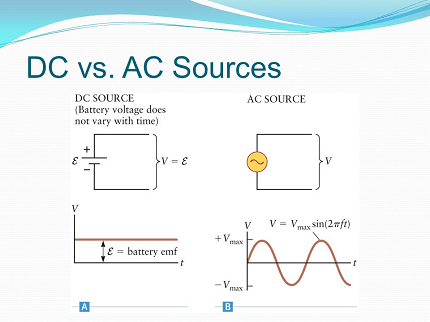
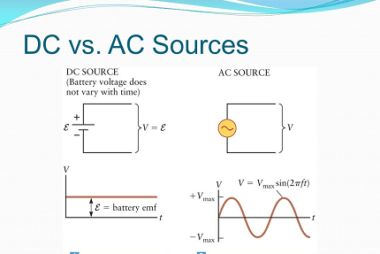
DC (direct current) and AC (alternating current) are two types of electrical power sources. DC sources provide a steady and constant flow of electrical energy in one direction. Batteries, fuel cells, and photovoltaic cells are common examples of DC sources. AC sources, on the other hand, provide electrical energy that alternates in direction and magnitude…

RC, LR, LC and LCR(in series) circuits

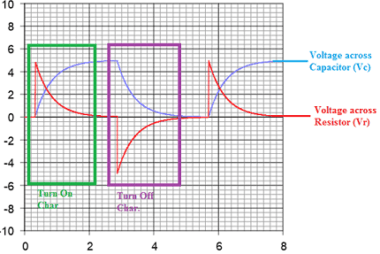
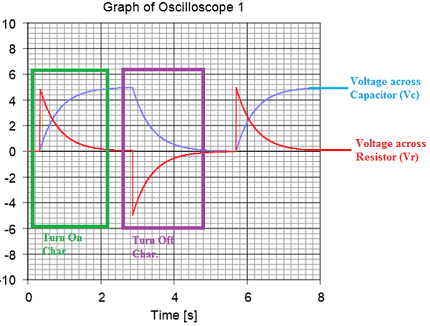
RC, LR, LC, and LCR are different types of electrical circuits that consist of resistors (R), capacitors (C), and inductors (L). RC Circuit: An RC circuit is a circuit that consists of a resistor and a capacitor connected in series or parallel. In a series RC circuit, the resistor and capacitor are connected in series,…

Self and Mutual Inductance

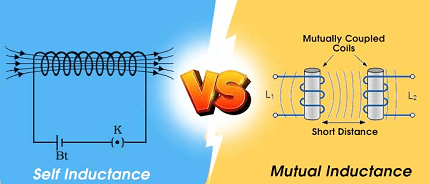
Self-inductance and mutual inductance are two important concepts in the field of electromagnetism. Self-inductance refers to the property of a circuit element, such as a coil or solenoid, to generate an electromotive force (EMF) in itself when the current through it changes. The EMF produced is proportional to the rate of change of the current…

Electromagnetic induction: Faraday’s law, Lenz’s law

Electromagnetic induction is the process of generating an electric current or electromotive force (EMF) by a changing magnetic field. It was discovered by Michael Faraday in the 1830s and is one of the most important principles of electromagnetism. Faraday’s law of electromagnetic induction states that when a magnetic field changes with time, it induces an…

Their Conversions

Conversions typically refer to the process of turning a prospect or potential customer into an actual paying customer. In digital marketing, conversions can refer to a specific action that a user takes on a website, such as filling out a form, making a purchase, or subscribing to a newsletter. The conversion rate is the percentage…

Ammeter

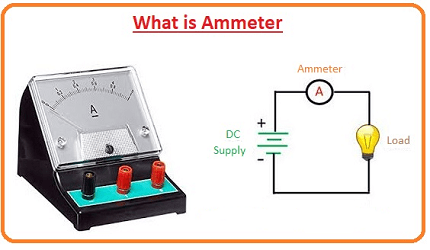
An ammeter is a device used to measure the electric current in a circuit. It is typically connected in series with the circuit, which means that the current flows through the ammeter itself. The unit of measurement for electric current is the ampere (A), so an ammeter will measure the current in amperes. Ammeters are…

Voltmeter

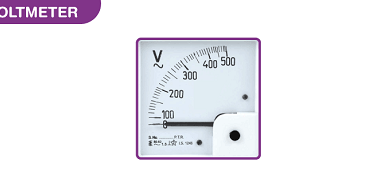
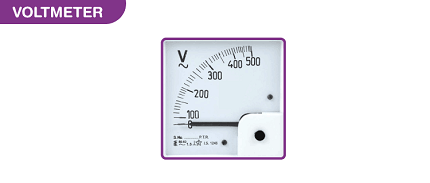
A voltmeter is an instrument used to measure the voltage difference between two points in an electric circuit. It is typically connected in parallel with the component or circuit being measured, and it provides a reading of the voltage across that component or circuit. Voltmeters can be analog or digital and can be designed to…

Moving coil galvanometer

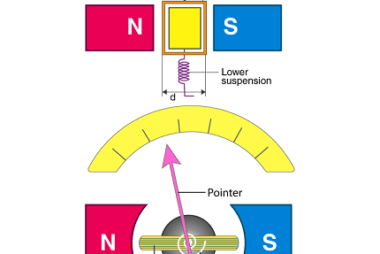
A moving coil galvanometer is an instrument used to measure small electric currents. It consists of a coil of wire suspended between the poles of a permanent magnet. When a current flows through the coil, it experiences a torque due to the interaction between the magnetic field of the coil and the magnetic field of…