Vrindawan Coaching Center

Effect of a uniform magnetic field on a current loop

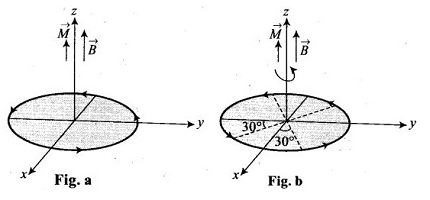
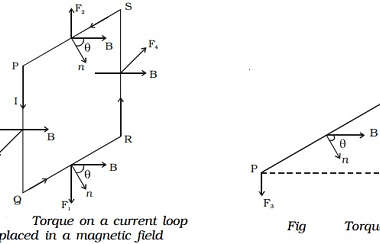
When a current loop is placed in a uniform magnetic field, it experiences a torque that tends to align the plane of the loop perpendicular to the direction of the magnetic field. This is known as the magnetic moment of the current loop. The torque acting on the current loop is given by the equation:…
Magnetic moment of a current loop

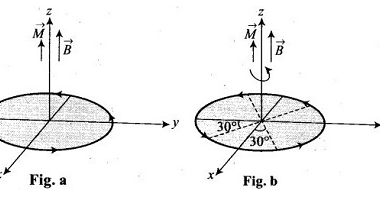
The magnetic moment of a current loop is a measure of the strength of its magnetic field. It is defined as the product of the current in the loop and the area enclosed by the loop, and is given by the equation: μ = I A where μ is the magnetic moment, I is the…

On a current-carrying wire in a uniform magnetic field

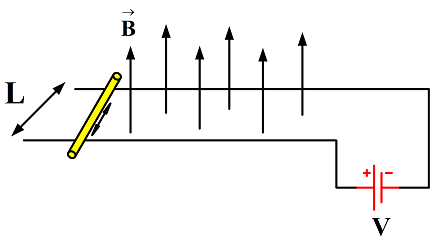
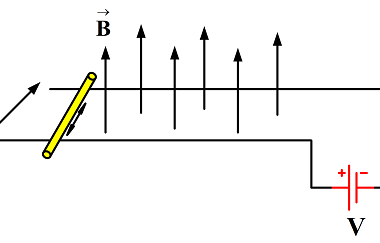
When a current-carrying wire is placed in a uniform magnetic field, a magnetic force is exerted on the wire. This force is perpendicular to both the direction of the current in the wire and the direction of the magnetic field. The magnitude of the force is given by the equation F = BIL, where F…

Force on a moving charge

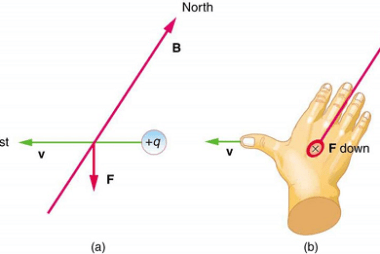
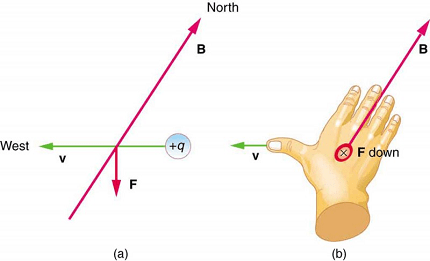
A moving charge in an electric field experiences a force that is proportional to the strength of the electric field and the magnitude of the charge. The direction of the force is given by the direction of the electric field and the sign of the charge. The mathematical expression for the force on a moving…

Inside a long straight solenoid

Inside a long straight solenoid, there is a uniform magnetic field that runs parallel to the axis of the solenoid. The magnetic field lines inside the solenoid are tightly packed, which makes the field nearly uniform throughout the solenoid’s length. The strength of the magnetic field inside the solenoid depends on the current passing through…

Along the axis of a circular coil

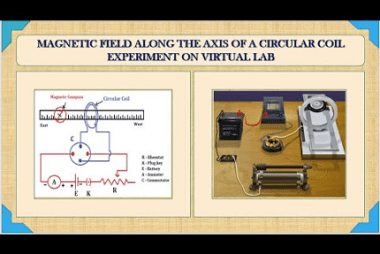
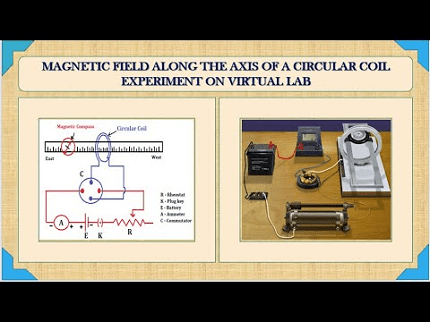
If a circular coil is oriented perpendicular to a magnetic field, then the induced current in the coil will be maximum when the coil is rotated along an axis that is parallel to the magnetic field. This is because the maximum change in magnetic flux, which is required to induce an electric current, occurs when…

Magnetic field near a current-carrying straight wire

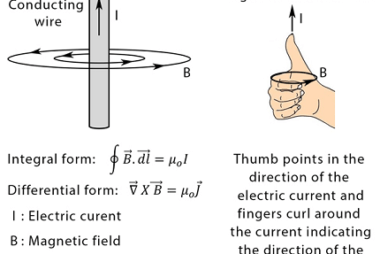
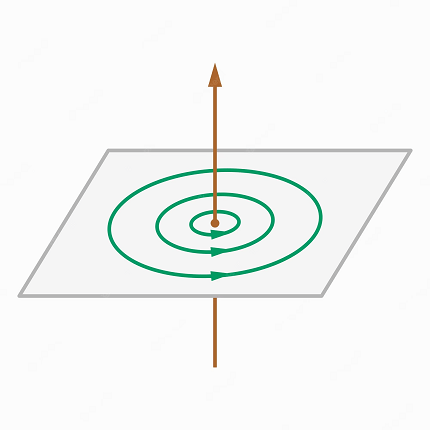
When an electric current flows through a straight wire, it creates a magnetic field around the wire. This magnetic field is known as the “magnetic field near a current-carrying straight wire.” The magnetic field is perpendicular to the wire and its direction is given by the right-hand rule. If you point your right thumb in…

Ampere’s law

Ampere’s law is a fundamental law in electromagnetism that relates the magnetic field to the electric current that produces it. It states that the magnetic field around a closed loop is proportional to the electric current passing through the loop. Mathematically, Ampere’s law can be expressed as: ∮B·dl = μ0I where: Ampere’s law is an…

Biot–Savart’s law

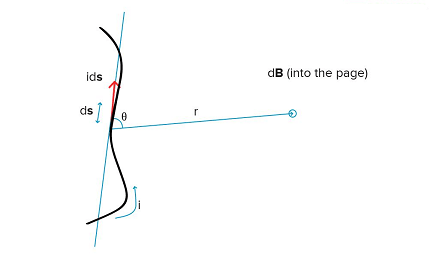
Biot-Savart’s law is a fundamental law in electromagnetism that describes the magnetic field produced by a steady current in a wire. It states that the magnetic field at a point in space due to a current-carrying wire is directly proportional to the current in the wire and the length of the wire segment, and inversely…

Heating effect of current

The heating effect of current refers to the phenomenon of electrical energy being converted into heat energy when a current flows through a conductor. The amount of heat produced is directly proportional to the square of the current, the resistance of the conductor, and the time for which the current flows. This effect is commonly…