
Vrindawan Coaching Center

Simple applications

There are countless simple applications that can be developed depending on the platform and programming language used. Here are a few examples: These are just a few examples of simple applications that can be developed. The possibilities are endless, and the complexity of the app will depend on the user’s requirements and the platform they…
Kirchhoff’s laws

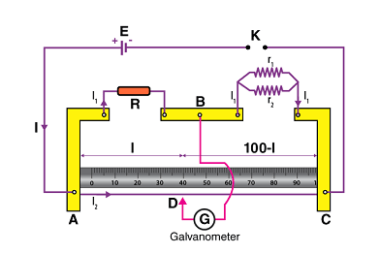
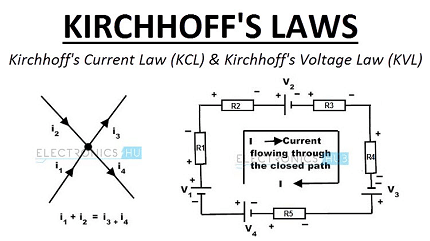
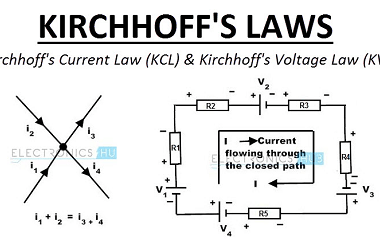
Kirchhoff’s laws, also known as Kirchhoff’s circuit laws, are fundamental principles in electrical engineering and physics that describe the behavior of current and voltage in a closed circuit. There are two laws: Mathematically, KCL can be expressed as: Σ I = 0 where Σ I is the sum of all currents flowing into and out…

Cells

Cells are the basic unit of life and are the smallest structural and functional unit of living organisms. All living organisms, from the simplest unicellular organisms like bacteria to the most complex multicellular organisms like humans, are made up of cells. Cells have several components, including a cell membrane, cytoplasm, and genetic material. The cell…

Parallel arrangements of resistances

When resistors are arranged in parallel, they are connected in such a way that the same voltage is applied across each resistor, and the current is divided among the resistors. The total resistance of the parallel circuit is less than the value of the smallest resistor in the circuit. The current flowing through each resistor…

Series

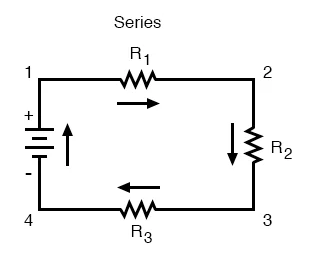
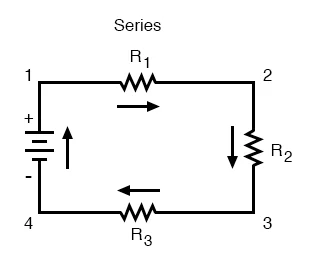
A series is a sequence of numbers, usually written as a sum of terms. Each term is obtained by applying a rule or formula to the previous term or terms in the series. There are different types of series, such as arithmetic series, geometric series, harmonic series, and more. The properties and behavior of a…

Ohm’s law

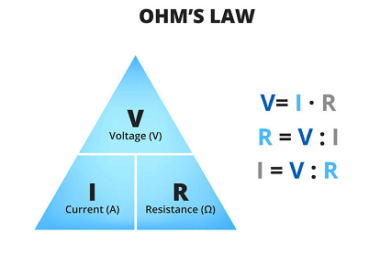
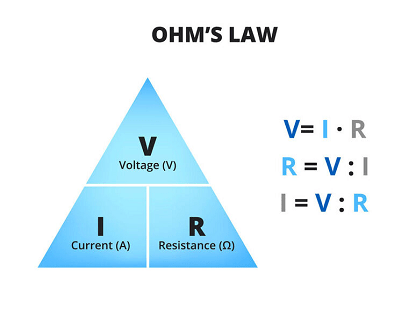
Ohm’s law is a fundamental law of electrical engineering and physics that describes the relationship between electric current, voltage, and resistance in a conductor. It states that the current flowing through a conductor between two points is directly proportional to the voltage across the two points and inversely proportional to the resistance between them. Mathematically,…

Electric current

Electric current refers to the flow of electric charge in a conductor or circuit. It is the rate at which electric charges, typically electrons, move through a material. The unit of electric current is the ampere (A), which is defined as the flow of one coulomb of charge per second. Electric current can be either…

Energy stored in a capacitor

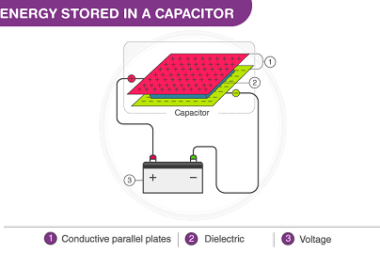
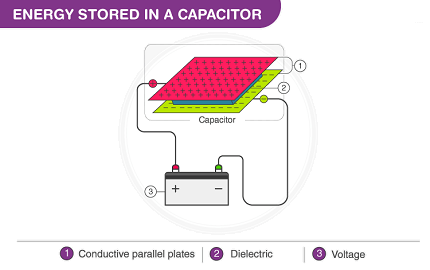
The energy stored in a capacitor is given by the formula: E = (1/2) * C * V^2 where E is the energy stored in joules, C is the capacitance of the capacitor in farads, and V is the voltage across the capacitor in volts. This formula shows that the energy stored in a capacitor…

Capacitors in Series and Parallel

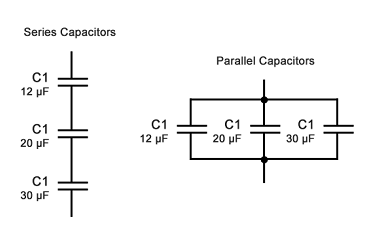
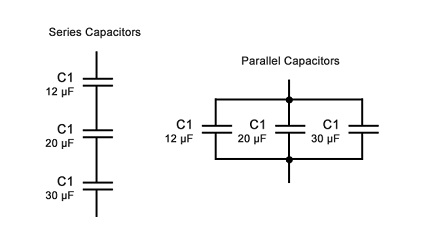
Capacitors are electronic components that store electrical charge and energy. They are commonly used in circuits to filter signals, block direct current, and stabilize voltage. When capacitors are connected in series, their total capacitance decreases, and their total voltage rating increases. This is because the charge on each capacitor is the same, and the voltage…

Without dielectrics

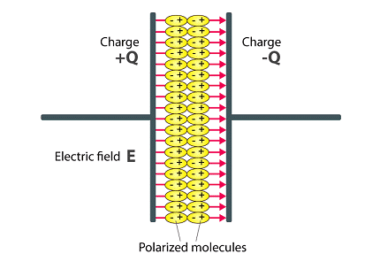
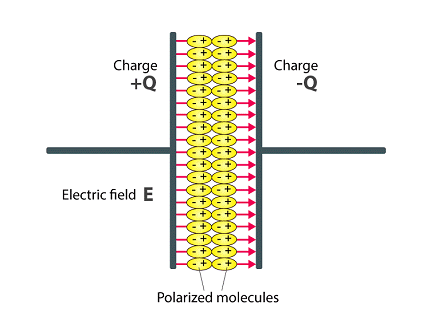
Dielectrics are materials that do not conduct electricity, but can store electric charges. They are used in various applications, such as capacitors, insulation, and in electronic devices to prevent short-circuits. Dielectrics are also known as insulators and have high resistivity to the flow of electric current. Without dielectrics, electrical systems would not be able to…